English
 Español
Content
- 1 What an A-frame lift actually is
- 2 Set capacity, span and lifting height first
- 3 Steel or aluminium frame
- 4 Matching the hoist and the trolley
- 5 Floors, casters and moving with a load
- 6 When an A-frame lift beats a jib crane or a forklift
- 7 What to check before you order
- 8 Safety points that are easy to skip
- 9 Common questions
A maintenance crew needs to lift a 1.5 t pump off its concrete plinth. There is no overhead crane in the building, the aisle is too narrow for a forklift, and the nearest fixed jib crane is two buildings away. An A-frame lift solves this in about ten minutes: two people roll it into position, set it over the load and lift straight up.
Choosing one comes down to four decisions: rated capacity, span between the legs, under-beam lifting height and frame material. The hoist, trolley, casters and storage method all follow from those four. Get them in the right order and the frame works for years. Get them wrong and you own either something too heavy to move or something not rated for the lift you actually need.
What an A-frame lift actually is
An A-frame lift is a mobile gantry crane. Each end has two legs angled inward and braced so they meet at the top in the shape of the letter A, with a horizontal beam sitting in the apex. The frame stands on four swivel casters, so it needs no foundation bolts, no runway beam and no building structure. Vertical load runs down the legs into the casters, while the A shape and the top bracing absorb the spreading force that the load creates.
That design keeps the lifting point above the load, so the hoist pulls vertically instead of dragging a load sideways, and it lets the same frame move from bay to bay. It suits pump rooms, fabrication shops and small warehouses where a permanent crane cannot be justified.
The trade-off is that stability depends on base width, caster condition and floor flatness, so a frame on a broken slab behaves differently from the same frame on a level slab. The name is also used loosely: some suppliers mean a mobile gantry, some an adjustable shop gantry, and some an A-frame hand truck, which is a different product with a different job. Confirm what is being quoted before comparing prices.
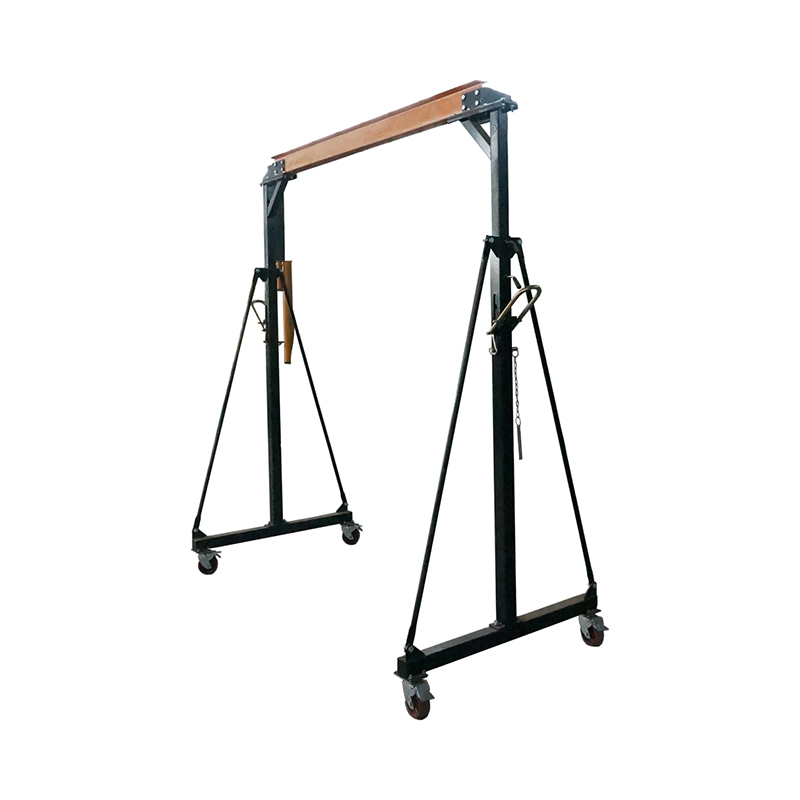 Movable Gantry Crane for Adjustable Lifting ApplicationsA movable gantry crane whose rated capacity depends on span and beam extension; compare frame, hoist and trolley limits before buying for mobile lifting tasks.View Product →
Set capacity, span and lifting height first
Rated capacity
Capacity is the capacity of the frame at a stated span, not a single fixed figure. On adjustable-beam gantries the rating drops as the beam is pulled out, so a frame rated at 3 t at minimum span may only be rated at 1.5 t when extended. The hoist and trolley carry their own ratings, and the real limit for the lift is the lowest of the three.
Add up everything that hangs from the beam: the load, the hook block, slings, shackles and any spreader beam. Then allow for the small dynamic surge when the load comes off the floor. If your total is within 10 to 15 percent of the rating, moving up one capacity class is the safer purchase.
Span
Span is the usable distance between the legs at the point where the load hangs. It must be wide enough to straddle the load and its support, and narrow enough for the frame to enter the aisle. Measure the base footprint at floor level, not just the beam length, because the legs splay outward and often need more room than the beam suggests.
Lifting height
Under-beam height is not hook travel. Subtract the trolley build height and the hook block from the under-beam figure and you have the usable lift. A frame with 3 m under-beam height and a low-profile trolley often gives around 2.6 m of hook travel, and that number usually decides whether a motor can be cleared from its mounting frame.
| Frame class | Typical rated capacity | Frame and beam | Casters | Typical work |
|---|---|---|---|---|
| Light shop frame | 0.5 t to 1 t | Aluminium, pinned height positions | 125 mm swivel, nylon or polyurethane | Bench work, small motor and pump service |
| Medium duty | 1 t to 2 t | Steel or heavy aluminium, adjustable beam | 150 mm swivel with brakes | Machine installation, mould changing |
| Standard duty | 2 t to 3 t | Steel beam, fixed or pinned height | 200 mm steel casters | Valve, pump and gearbox removal in plants |
| Heavy duty | 5 t and above | Fixed steel beam, often stayed legs | Heavy casters or rail wheels | Structural fabrication, precast yards |
Steel or aluminium frame
Aluminium frames are light enough for one or two people to move, and most use pinned height positions so the beam can be raised or lowered in steps. They suit intermittent work at lower capacities, typically up to 1 t or 2 t. Aluminium deflects more under load, so the same nominal capacity feels softer than on a steel frame.
Steel frames are heavier and stiffer. They hold their shape under continuous use, tolerate rough handling and can often be pushed with a pallet truck when larger casters are fitted. The cost is weight, because a 2 t steel frame is not a one-person tool. If the frame stays in one bay for weeks, steel is usually the better buy. If it travels in a van or up a stairwell, aluminium wins on practicality.
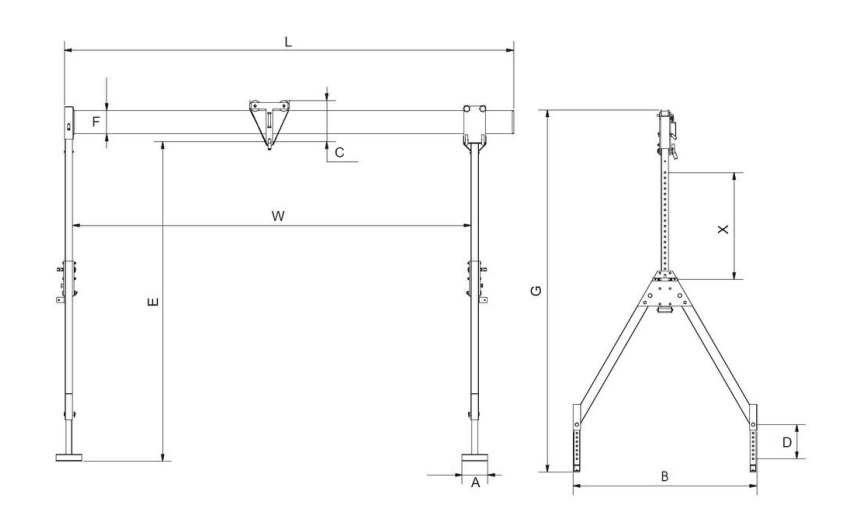 Foldable Aluminium Gantry Crane for Portable LiftingA lightweight foldable aluminium gantry frame suited to transport and stairwell use; choose it when portability matters more than the stiffness of steel.View Product →
Matching the hoist and the trolley
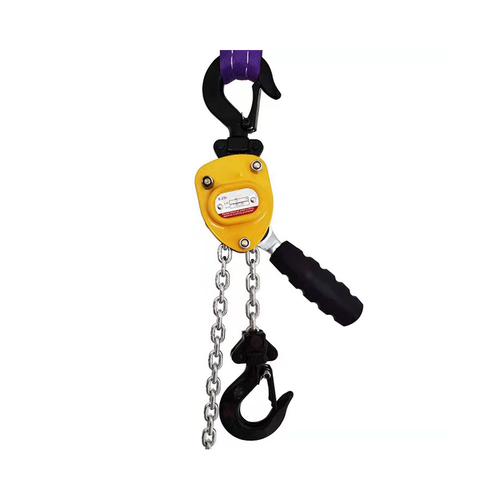
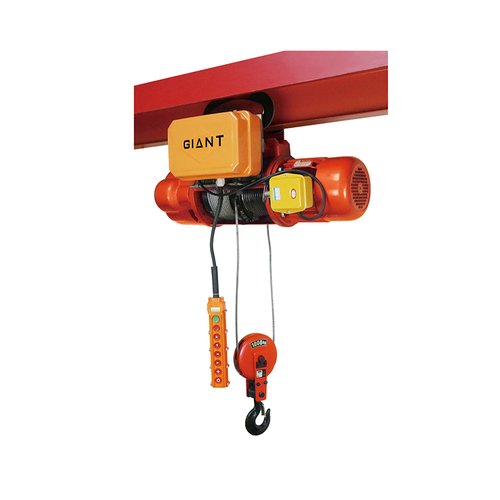
The frame is only the structure. The lifting comes from the hoist and the trolley that runs along the beam. A manual chain hoist keeps cost down and needs no power, but lifting 2 t by hand is slow work. An electric chain hoist gives steadier speed and better control for repetitive jobs, and it needs a power supply or a battery unit within reach of the working position.
Check the trolley flange range against the real beam width, and check the headroom the trolley adds. A geared trolley lets one person move a loaded hoist along the beam, while a plain trolley needs more effort. In confined spaces, a low-clearance hoist can recover 100 mm or more of hook travel, which matters more than a small difference in price.
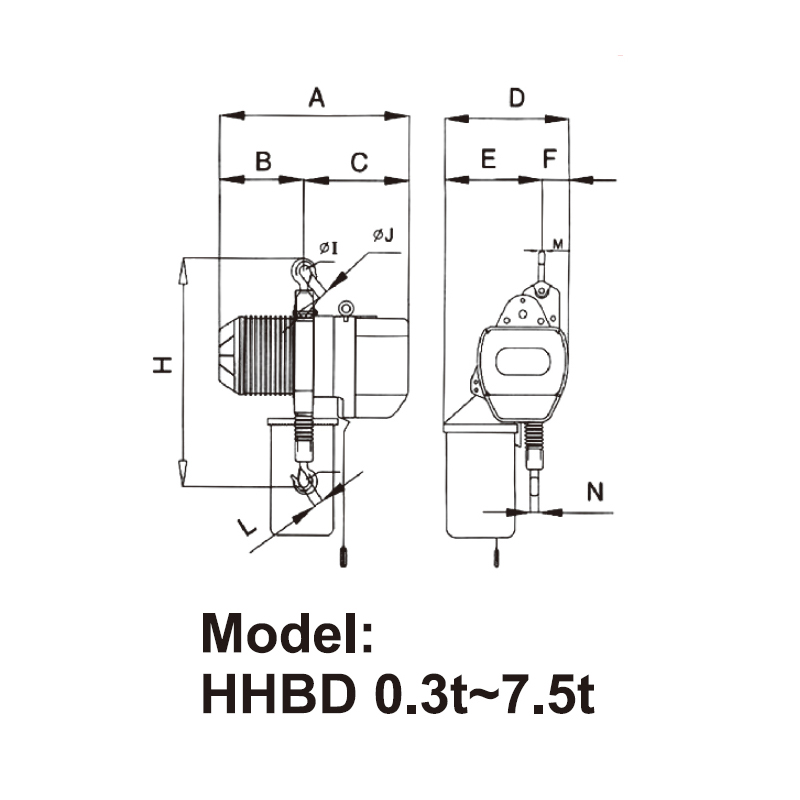 Classic Electric Chain Hoist HHBD for Controlled LiftingAn electric chain hoist with aluminium alloy shell, limit switch, side magnetic brake and 24V/36V safety device; pairs with a trolley for repetitive lifting.View Product →
Floors, casters and moving with a load
Caster choice decides how the frame behaves on your floor. Polyurethane and nylon wheels roll quietly on smooth concrete and protect epoxy coatings, but they can flatten if the frame is parked for long periods under full load. Steel wheels survive expansion joints and debris but mark soft floors.
Moving an A-frame lift with a load suspended deserves care. On a level, joint-free slab, with the load close to the floor, a slow straight push is normal practice in many plants. Across a threshold, on a slope, or with the load at height, lower the load, move the frame and lift again. Side pulling is never acceptable, because the frame is built for vertical load rather than dragging.
When an A-frame lift beats a jib crane or a forklift
A fixed jib crane needs a foundation or a column and occupies the same floor space permanently. An A-frame lift is the better answer when lifts happen in several locations, when the floor cannot be cut, or when the building is leased. The trade-off is slower setup and a real dependency on floor conditions.
A forklift is the wrong tool when a load must rise vertically. The mast needs clear approach space, the forks cannot reach over obstacles, and using forks to lift from the side or drag a load is unsafe. An A-frame straddles the load instead, so a pump, gearbox or machine base can be raised straight up inside the frame footprint. Setup, capacity and floor requirements for this type of mobile lifting are covered in more detail in this guide to movable gantry cranes in industrial settings.
What to check before you order
- Rated capacity at maximum span, in writing, not only at minimum span.
- Beam section and material grade, so the rating can be verified.
- Base footprint and leg clearance against your doors, aisles and pallet widths.
- Caster size, bearing type and brake arrangement for your floor.
- Trolley flange range against the beam width, plus the headroom it adds.
- Hoist duty rating and lifting speed for the number of lifts per shift.
- Availability of chain, brake parts and casters as spare parts.
- Load test certificate, capacity marking and labels in the destination language.
Quotations are only comparable when capacity, span, lifting height and whether a hoist is included are all identical. A cheaper frame rated at a shorter span, or supplied without a trolley, is not the same product.
Safety points that are easy to skip
- Load test a new frame before first use, typically at 125 percent of rated capacity, and record the result.
- Never exceed the rated capacity at the span in use, and never lift people.
- Inspect welded joints, leg pins and caster forks for cracks or distortion before each job.
- Keep the load close to the ground when moving and apply the caster brakes when parked.
- Store frames indoors, because aluminium frames and hoist chain both suffer outdoors.
Common questions
How do I know what size A-frame lift I need?
Start from the heaviest load, add the rigging and hook block, then look for a frame rated above that figure at the span you need. Then check the two dimensions that get overlooked: base width against the aisle, and hook travel against the height you must clear.
Can an A-frame lift be moved with a load on it?
Only on a level, smooth floor with the load low, and only if the manufacturer allows it. Otherwise lower the load, move the frame and lift again.
Does the price include the hoist?
Usually not. Frame, trolley and hoist are often quoted separately, so confirm what is included before comparing suppliers.
An A-frame lift is a simple machine, and the selection process can be just as simple if you settle capacity, span, lifting height and frame material before you look at prices. Write those four figures down, match them against the beam rating at full extension, and confirm the hoist and trolley that come with the frame.
Giant Lift supplies mobile and foldable gantry frames together with chain hoists, trolleys, shackles and slings, so structure, lifting unit and rigging can be specified as one package. Browse the lifting and material handling range, or send the four figures above and ask for a matching configuration.