English
 Español

Content
A cable drum on a site floor is not a lifting plan. It is a load with a weight, a center of gravity, a minimum bend radius, and a route that must be controlled from the first pull to the final tie-off.
For most electrical contractors, a safe electric cable lift is not just a hoist with enough tonnage. It is a matched system: an electric wire rope hoist or winch, suitable wire rope hardware, controlled speed, and a cable path that respects the cable maker's limits. The purchase decision should start with the cable and the route, then move to the machine.
What an electric cable lift must control
Electric cable lift work covers several jobs that are often mixed together. One job is raising a cable drum or reel to a stand. Another is suspending cable during overhead line work. A third is pulling cable through conduit, tray, or duct. A fourth is holding tension while terminations are made. Each job creates a different load profile.
- Drum lifting needs stable attachment, controlled lowering, and a brake that holds without drift.
- Overhead suspension needs smooth starting, limited swing, and a defined working load limit.
- Cable pulling needs line speed control, tension monitoring, and a clear stop signal between the winch operator and the cable crew.
- Tension holding needs a system that does not creep when the power is removed.
The equipment should be selected for the actual task, not for the widest possible use. A winch that is good for long horizontal pulls may be a poor choice for lifting a drum over a trench. A compact chain hoist may fit a tight cabinet room but offers less control for long cable routes.
Compare electric cable lift methods before quoting
The table below is a first filter for common electrical installation tasks. It does not replace a load calculation, but it helps a buyer ask better questions before comparing prices.
| Method | Best use | Main control point | Watchouts |
|---|---|---|---|
| Electric wire rope hoist | Vertical lifting of drums, cable reels, and hardware | Brake, limit switch, and rope condition | Rope routing and fleet angle |
| Electric winch | Long pulls, tensioning, and recovery | Line pull, speed, and emergency stop | Duty cycle and anchor strength |
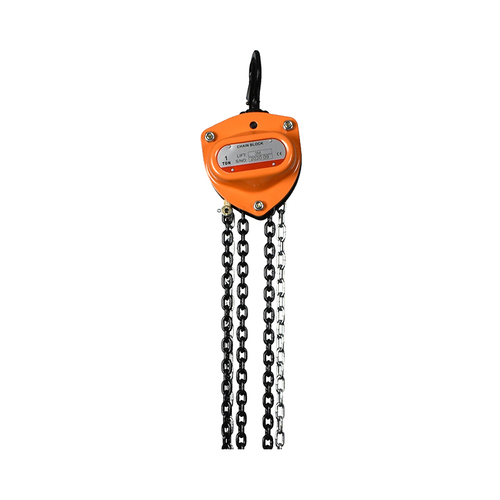
| Chain hoist in a temporary frame | Short lifts in confined spaces | Load holding and chain inspection | Limited smooth speed control |
| Wire rope grip and puller set | Connecting the pull line to the cable | Grip fit and cable jacket protection | Wrong grip size can damage cable |
Use the table to rule out methods that do not fit the route. Then check capacity at the worst point in the lift, not at the easiest point. A cable reel that is light at the start may become a high-load lift when the pull line is tensioned or when the drum is raised from a slope.
For repeated lifting at fixed heights, an electric wire rope hoist can remove much of the manual handling from the job. This guide to reducing manual labor with an electric wire rope hoist explains how controlled lifting changes workflow in factory and assembly settings.
 Mini Electric Wire Rope Hoist HGS SeriesCompact single- or double-hook hoist with optional voltages, limit device and emergency stop; check its models for repeated fixed-height lifting.View Product →
Capacity, speed, and control decide the real cost
Headline tonnage is only one number. For cable work, the more useful figures are the working load limit, the line speed range, the duty cycle, the brake type, and the number of starts per hour the motor can accept. A hoist that is rated for the load but not for the starting frequency will overheat or wear out early.
Calculate the load with the cable attached
Add the cable weight, the reel or drum weight, the pull line, the grips, and the shackles. Include a margin for dynamic load when the cable is lifted from the floor or when the pull starts under tension. Do not size the lift at 100 percent of the hoist rating and then add a side pull. Side pull shortens rope life and can damage the hoist frame.
Set speed for the cable crew
Fast is not always productive. Cable pulling needs a speed that the crew can watch, especially at a duct mouth or a tray bend. A variable speed electric winch gives the operator a slow start and a controlled stop. That matters when the cable jacket is expensive, when the route has several bends, or when a stop signal must travel along a long site.
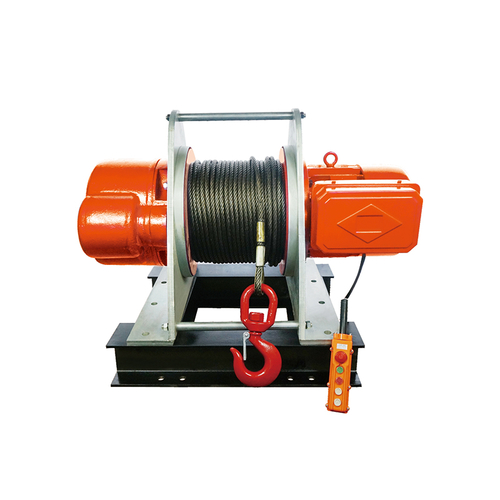
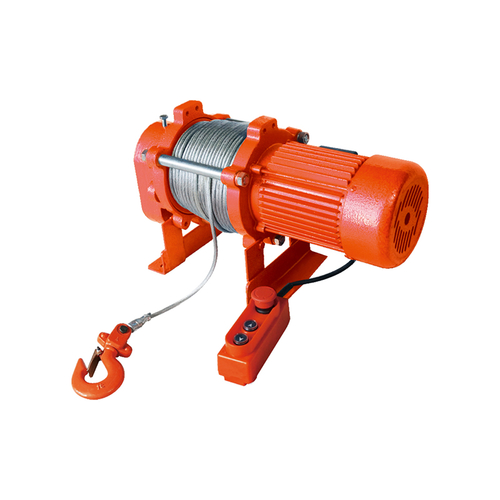
For long horizontal pulls and tensioning, an electric winch with a defined line pull and a reliable brake is often the better fit than a hoist used outside its intended motion. The winch should have an emergency stop, a guarded drum, and an anchor point that is stronger than the pull.
 Heavy Duty Electric Winch KDJ-E3 SeriesFor lifting, towing and positioning, this winch series offers models from 1 T to 5 T with 36V contactor control and overload protection option.View Product →
Wire rope routing and hardware protect the cable
The lifting machine is only one part of the electric cable lift. The connection between the machine and the cable often decides whether the jacket survives. Wire rope grips, thimbles, shackles, and sheaves must match the rope diameter and the pull direction. A grip that is one size too large can slip under load. A grip that is too small can crush the rope or damage the cable jacket.
Check the fleet angle at the drum. A rope that comes off the drum at a sharp angle will rub the flange and wear unevenly. Use a sheave or pulley to redirect the line where the route changes. The sheave diameter should be large enough for the rope, and the cable bend radius should follow the cable manufacturer's limit, not the installer's convenience.
- Inspect wire rope for broken wires, flattening, kinks, and corrosion before each shift.
- Use a thimble in eye terminations to spread the load and protect the rope.
- Keep the pull line clear of sharp tray edges and concrete openings.
- Mark the working load limit on the frame or hoist so the crew can see it.
A double cam wire rope grip is a practical choice when the pull line must be connected and released several times a day. The grip should be matched to the rope size and checked for wear. If the job uses synthetic cable or a soft jacket, add a protection sleeve at the grip point.
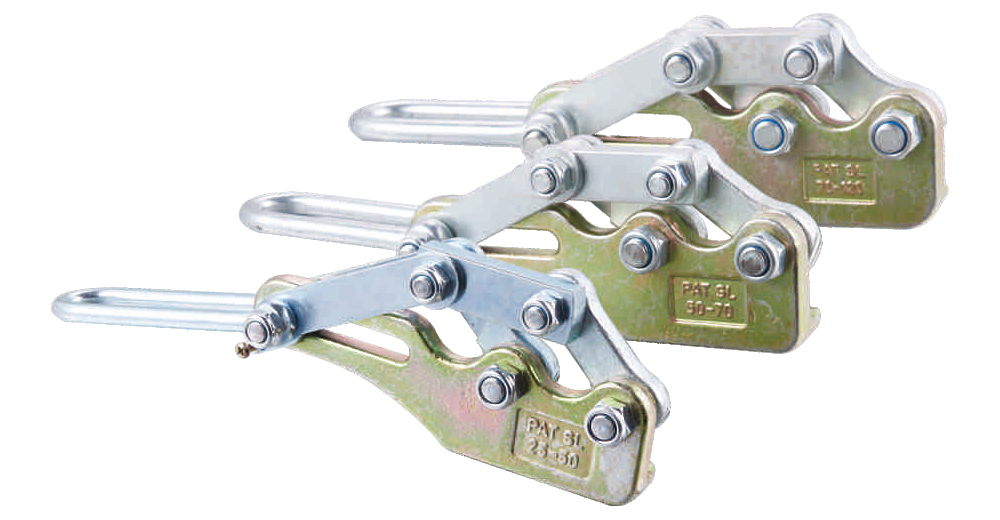 Double Cam Wire Rope GripA reusable grip for wire rope pulling and tensioning, available in three models with rated loads from 10 kN to 30 kN.View Product →
Site conditions and compliance checks
Electrical work often takes place in wet, dusty, or confined areas. The electric cable lift should have a protection rating that matches the site, not just the warehouse. Outdoor work needs attention to cable and control protection. Confined work needs a control pendant that reaches the operator, a low voltage control option where appropriate, and a clear escape route.
Ask for the test certificate, the rated capacity plate, and the maintenance manual before the order is confirmed. Check that the voltage and plug type match the destination market. For export projects, the supplier should be able to review the product against the local standard or explain which standard the declaration is based on. A quote that gives only a price and a tonnage is not enough for a cable lift that will be used around people and expensive cable.
Also check the power supply. A long extension cable can cause voltage drop and motor overheating. The control system should fail safe if power is lost. The brake should hold the load without depending on the motor. Limit switches should stop the hook or pull line before it reaches the frame.
Procurement checklist for electric cable lift systems
Use this list when comparing suppliers. It keeps the discussion on the actual job and away from generic capacity claims.
- Confirm the cable type, diameter, weight per meter, and minimum bend radius.
- Measure the route length, the number of bends, the height of the lift, and the worst pull angle.
- Calculate the load with the drum, hardware, and dynamic margin included.
- Select the lifting method: hoist for vertical lift, winch for long pull, or a combined setup.
- Check the duty cycle and starts per hour against the real work pattern.
- Review the brake, limit switch, emergency stop, and control pendant position.
- Match wire rope grips, sheaves, and shackles to the rope and load.
- Ask for test certificates, capacity plates, manuals, and spare parts availability.
For buyers who handle several sites, standardizing the control layout and the load markings across a fleet reduces training time. It also makes pre-use inspection faster. A supplier that can provide the hoist, winch, wire rope hardware, and cable cutters from one supply chain can simplify spare parts planning, but each item still needs its own capacity check.
The practical answer for an electric cable lift is to design the lift around the cable route. Start with the cable, calculate the real load, choose the lifting method, then set the speed and hardware. A hoist or winch with the right capacity and control will do more for safety and productivity than a larger machine with the wrong rope, grip, or anchor.
When the job mixes vertical lifts, long pulls, and repeated handling, match each task to a dedicated tool. That approach keeps the electric cable lift within its working limits and gives the crew a predictable process from the first drum lift to the final termination.