English
 Español

Content
Two people, one 2.4 m sheet of 18 mm MDF, and a dolly rated at 150 kg. On paper the numbers work. In the aisle, the sheet starts to lean because the backrest stops at 1.1 m, the front castor jams on a 15 mm expansion joint, and the load ends up dragged across the floor. That gap between the label and the real job is where most dolly panel purchases go wrong. The rated capacity is rarely the limiting factor. Panel format, backrest height, wheel diameter and floor surface decide whether the tool helps or fights you.
What a Dolly Panel Is Really For
A dolly panel is a compact carrier built around flat sheet goods. It moves a board, door, glazing unit or composite panel 10 to 50 m without a lift, then hands it to the next operation. Three families cover most workshop and site work:
- Two-wheeled upright units with a fixed or adjustable backrest and a low nose plate. Cheap, quick to turn, common in narrow aisles.
- Four-wheeled platform units with a low deck and a removable post, so sheets travel flat or slightly tilted.
- A-frame or board trucks that hold several sheets on edge at an angle and carry them in one trip.
None of these is a lifting device. A dolly will not place a panel at ceiling height, and it will not replace a panel lifter or a hoist for overhead installation. It also is not a substitute for a general hand truck on boxes and crates, because a narrow nose plate supports only a thin strip of a heavy sheet. Where space is tight and sheets are occasional, a sturdy two-wheel truck with a solid frame does the work of both.
 Hand Truck-HT300 Material Handling Hand TruckHand Truck-HT300 is listed under Material Handling as a hand truck for tight-space, occasional handling tasks; view the page for model identification and quote prompts.View Product →
Four Numbers That Decide the Purchase
- Rated capacity against real sheet weight. An 18 mm MDF sheet at 2.4 x 1.2 m weighs about 38 kg, the same size in plywood about 31 kg, and a 6 mm glass unit about 43 kg. Three MDF sheets already reach 114 kg, which leaves very little margin in a 150 kg unit once a slope or a threshold is added. Keep 25 to 30 percent headroom on smooth floors, more on ramps.
- Backrest height against panel height. A backrest covering 60 to 70 percent of sheet height keeps the load from buckling sideways. A 1.1 m frame under a 2.4 m board leaves the upper half unsupported.
- Wheel diameter against obstacles. As a rule, wheel diameter should be at least three times the height of the obstacle it must roll over. A 100 mm castor meeting a 20 mm joint is a jam, not a bump.
- Footprint against openings. An 800 mm door with a 700 mm wide truck leaves 50 mm per side, which is fine straight on and awkward in a turn. Check turning space at the machine or bench where the sheet is unloaded, not only in the aisle.
Configurations Compared
| Configuration | Best for | Typical capacity | Watch out for |
|---|---|---|---|
| Two-wheel upright dolly | Single sheets up to 2.4 m, short runs, tight aisles | 100 to 300 kg | Backrest height, tipping on thresholds |
| Four-wheel platform dolly | Wide or heavy sheets, low loading height | 150 to 500 kg | Deck flex, castor quality, floor joints |
| A-frame board truck | 5 to 15 sheets per trip, workshop to vehicle | 300 to 1000 kg | Overall width, stability on ramps |
| Tilting lift table | Transferring sheets to benches and machines | 150 to 500 kg | Hydraulic maintenance, floor space |
| Vacuum panel lifter | Vertical installation, overhead placement | 100 to 600 kg | Operator training, air or battery supply |
For a shop moving 5 to 15 sheets a day over 20 to 40 m, an A-frame truck usually beats a flat dolly on cycle time, because one trip replaces three. The trade-off is width at doorways and a higher centre of gravity when the frame is loaded on one side only.
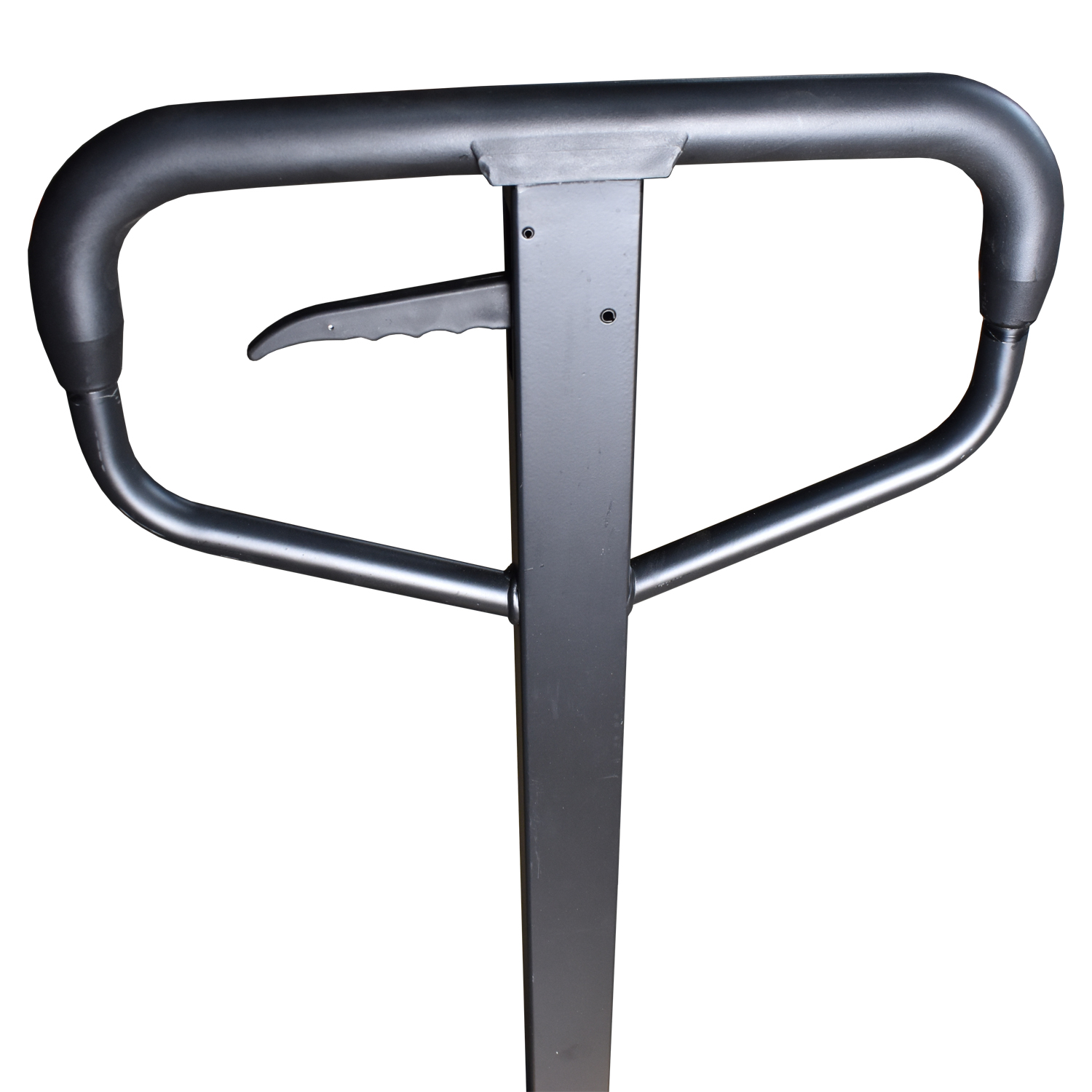 A-Frame Traction Truck-TW300 for Textile Factory UseA-Frame Traction Truck-TW300 is described for textile factory use with ergonomic design and flexible steering; consider it where A-frame sheet handling suits the route.View Product →
Wheels, Floors and Rolling Effort
Wheel choice is where quiet savings or daily irritation is decided. Polyurethane castors run quietly and roll easily on sealed concrete, but they flat-spot under static loads and slide on grit. Nylon wheels are hard wearing and noisy, and they mark soft flooring. Solid rubber absorbs vibration at the cost of a higher push force. Pneumatic wheels handle gravel, kerbs and outdoor yards, but they need pressure checks and are vulnerable to sidewall damage.
Two practical additions matter more than the wheel compound. First, at least two castors should have brakes if the dolly ever stands on a loading bay with a slight fall. Second, swivel castors at the load end and fixed castors at the handle end track straighter than four swivels, which wander under a tall panel. A poorly matched set can double the push effort on a 200 kg load, which is the difference between one operator and two.
Loading, Strapping and Centre of Gravity
Most incidents with sheet goods come from a load that was never fully seated. The bottom edge should rest flat on the nose plate or deck, with the sheet in contact with the backrest along its full width, and the centre of gravity inside the wheelbase. A single strap at mid height is not enough for a 2.4 m panel, because the sheet can still rotate about the strap line. Two straps, one at roughly one third and one at two thirds of sheet height, hold the load against the frame.
Two people should handle panels longer than about 2 m or heavier than 25 kg, not because the dolly cannot carry them but because the operator cannot see past them. Ramps deserve separate attention: above roughly a 10 percent grade, a two-wheel unit will try to run away from the operator, and the load should be walked down with the wheels leading. For shops that lift sheets from a dolly straight onto a bench, a tilting table keeps the work at waist height and removes the manual lift that causes most strain injuries in panel work.
 Tilting Lift Table-SPT Manual Lift TableTilting Lift Table-SPT is a manual hydraulic lift table that tilts to 45° for ergonomic tote loading and unloading; relevant where bench-height handling reduces strain.View Product →
Where the Payback Shows Up
The economics are easiest to see in four settings. Joinery and cabinet shops save on sheet handling between the saw, the edge bander and the assembly bench. Glazing and facade crews save on the number of carries per unit. Drywall and fit-out teams save by pre-assembling panels flat and moving them upright in one trip. Warehouses holding flat-packed furniture and board stock save by cutting double handling at the picking face. In each case the calculation is the same: carries per shift, metres per carry, and the number of people needed. A structured selection checklist helps here, because the cheapest unit that meets the load rating is often not the cheapest per move.
Buyers who compare equipment by job requirement rather than by price alone usually end up with fewer units that are used more often. That principle is set out in more detail in this guide to choosing material handling equipment by job requirements.
Questions Worth Putting to a Supplier
Before a container is booked, five questions separate a workable specification from a hopeful one:
- Is the rated capacity supported by a test report, and at what load was the frame deflection measured?
- Are wheels and castors available as spare parts in the same mounting pattern two years from now?
- Can the deck width or backrest height be adjusted for our panel format?
- Which standard does the unit need to meet in our destination market, and is documentation supplied?
- How is the unit packed, and what is the minimum order for a mixed container?
A supplier with in-house product development and a separate quality inspection department can usually answer the first, third and fourth without a delay, and can review a sample against the buyer's local standard before shipment. That matters most for importers consolidating several categories in one order, where a single non-compliant item can hold up a whole container. Suppliers positioned as one-stop sources for material handling equipment are worth asking directly whether panel carriers can be specified alongside pallet trucks, stackers and lift tables, since mixed loading is where freight cost per unit is won.
Maintenance That Keeps a Dolly Tracking Straight
A panel dolly has almost nothing to service, which is exactly why small failures go unnoticed until a sheet drops. A monthly check covers four points:
- Castor mounting bolts and the welds where the nose plate meets the frame, looking for cracks or elongation.
- Wheel condition, including flat spots from standing loaded and cuts from glass or metal edges.
- Brake function on at least two wheels, tested with a loaded unit on a slight slope.
- Strap condition, since webbing frayed by sharp panel edges fails without warning.
Replace polyurethane wheels as a set rather than one at a time, and store units unloaded and upright. A dolly left under three sheets of MDF for a month will develop a memory in the wheels that shows up as a wobble at walking speed.
Choosing a dolly panel comes down to matching three things: panel format to backrest geometry, total load to a capacity figure with real headroom, and wheel size to the floor the unit will actually cross. Everything else, from brake count to strap positions, is detail that becomes obvious once those three are settled. Get them right and a simple carrier removes hundreds of manual lifts a month. Get them wrong and the same carrier stays in the corner while two people carry the sheet by hand.