English
 Español

Content
Moving a loaded cart between two levels is one of those jobs that looks simple until someone has to do it by hand. A pallet of parts at ground level, a service counter 1.2 metres up, a mezzanine that needs restocking twice a shift: these are the situations where an elevator cart earns its place. The practical answer is this: pick the cart platform by load capacity and lift height first, then check deck size, wheel configuration and safety devices. Most buyers get into trouble because they start with price or with the platform height they think they need, and only later discover that their floor surface, aisle width or load distribution does not match the machine.
What an elevator cart actually does
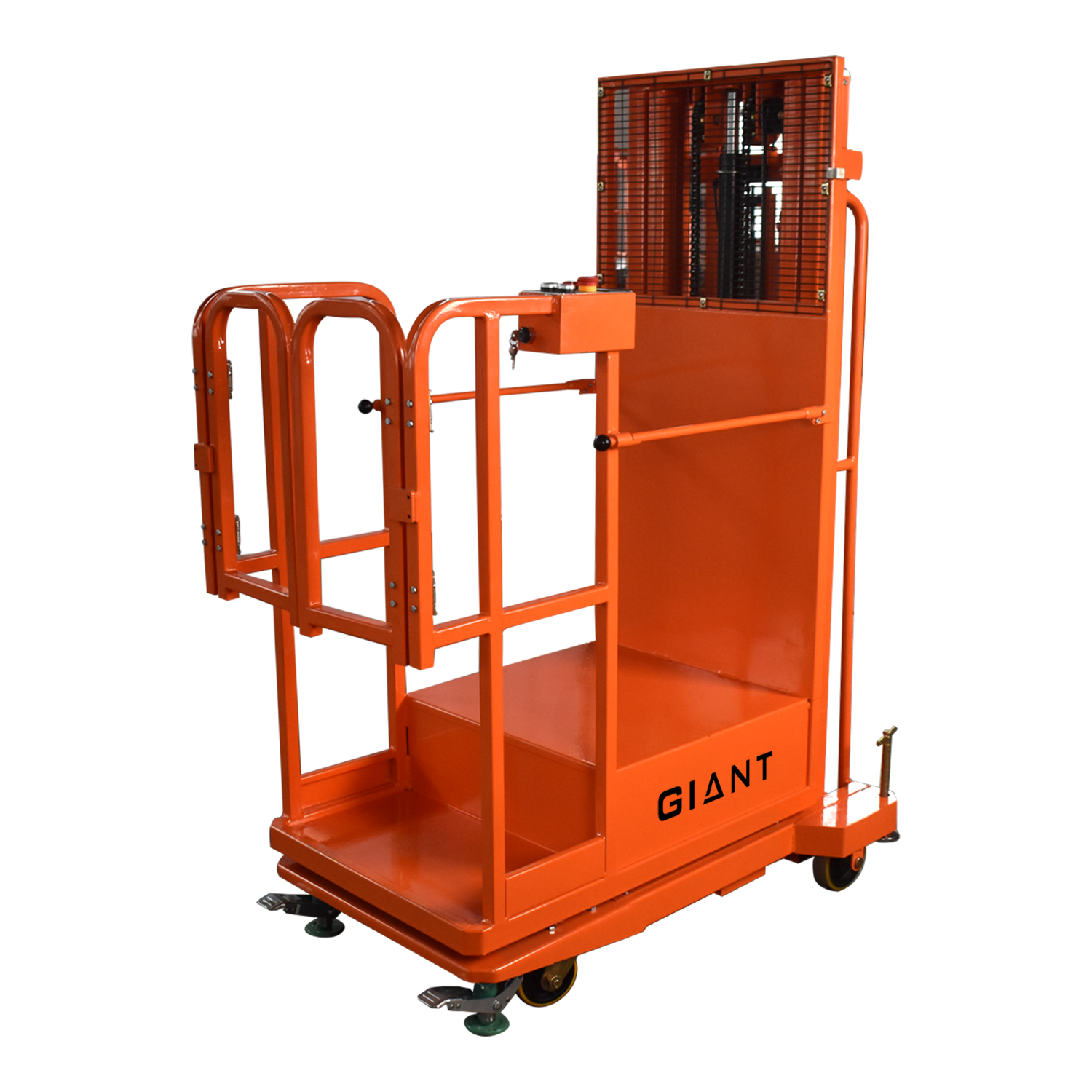
An elevator cart is a wheeled platform with a lifting mechanism, so the same unit transports a load and raises it. In material handling catalogues it appears under several names: lift table cart, scissor lift cart, hydraulic platform cart, or simply lift trolley. The mechanism is usually a scissor set driven by a hydraulic cylinder, with a foot pedal, hand pump or electric pump doing the lifting. Manual units raise the deck with pedal strokes; electric units use a small pump and battery, which matters when a cart is lifted dozens of times per shift.
This dual function is the whole point. A standard pallet jack moves a load horizontally. A fixed lift table raises a load in one place. An elevator cart does both, which removes one transfer step and one manual handling risk. In practice that saves time at workstations, loading docks, assembly cells and maintenance bays, and it reduces the number of times an operator bends, reaches or waits for an overhead crane.
Match the cart to the job before comparing prices
The specification that decides most purchases is not the price, it is the combination of load and height. A cart rated at 300 kg that needs to reach 900 mm behaves very differently from one rated at 500 kg with a 1,500 mm reach. Work out three numbers before you open a catalogue: the heaviest load including packaging, the highest working height you genuinely need, and the footprint you have to work in. Then add a margin rather than operating at the rated limit.
Consider the following points when you shortlist models.
- Rated capacity, and whether it applies evenly across the deck or only at the centre.
- Maximum platform height and the lower closed height, since a low closed height helps with loading pallets and tight underframes.
- Deck size and whether the load needs to overhang, which affects stability.
- Wheel type and diameter: nylon or polyurethane castors for smooth concrete, larger wheels for rough or outdoor surfaces.
- Lifting method: foot pedal for occasional use, electric pump for high-frequency work.
- Braking, and whether castors lock during lifting.
- Spare parts availability, especially seals, hoses and pump components.
Buyers who run mixed fleets often standardise on one capacity band rather than buying several sizes. That simplifies training and spare parts, but it only works if the smallest cart in the fleet still suits the heaviest routine task on site.
Safety points that deserve attention
Lift carts combine two hazards: a raised load and a moving chassis. The raised load can drop if a hose fails or a valve leaks, so a hydraulic check valve or a mechanical safety lock matters. The chassis can roll while the deck is up, which is why locking castors or a brake pedal are worth insisting on. If the cart is used near people, a perimeter stop, a toe guard or a scissor guard reduces the chance of a foot or hand being caught as the deck descends.
There is also a habit problem. Operators often load a cart beyond its rated capacity because the pump still lifts it. Hydraulic systems can lift more than the plate permits, but frames, welds and castors cannot. A clear capacity plate on the deck, plus a short induction for new staff, prevents most of this. Where carts are used in public-facing areas such as retail back rooms, add a simple rule that the deck must be fully lowered before the cart is moved.
Manual, electric or customised
Manual lift carts suit intermittent work, low ceilings and sites without power at the point of use. They are lighter and cheaper to maintain, and there is little to go wrong beyond seals and the pedal linkage. Electric lift carts suit repetitive lifting, high deck heights and heavier loads, but they need charging infrastructure and a battery maintenance routine. A middle option is a cart with a battery-powered mini pump, which keeps the unit compact while reducing operator effort.
Customisation is common in this category. Deck size, top surface material, wheel arrangement, handle position, lifting height and even the colour of the frame can be adjusted for a specific production line. For export buyers, the practical questions are whether the supplier can document the load test, supply a manual in the target language, and confirm compliance with the relevant local standard. A cart that arrives without these documents can stall at customs or fail a site audit.
How the main types compare
| Type | Typical capacity | Best use | Watch out for |
|---|---|---|---|
| Manual scissor lift cart | 150 to 500 kg | Workstations, assembly, occasional height change | Pedal effort rises with load; slower cycle |
| Electric lift cart | 300 to 1,000 kg | Repetitive lifting, loading docks, heavy parts | Battery charging routine and pump maintenance |
| Mobile lift table with brakes | 500 kg and above | Mezzanine transfer, machine feeding | Needs firm, level floor; larger turning radius |
| Special application cart | Project specific | Production lines, custom deck or fixtures | Longer lead time and drawing approval |
Practical checks on site
Before ordering, walk the route the cart will take. Measure the narrowest aisle, the door width, the lip height of any ramp and the floor joints. A cart that fits the storeroom but not the lift lobby is an expensive mistake. Check the floor loading too: a 500 kg cart plus load concentrates weight on small castors, which can damage thin floor coatings or suspended slabs.
Then check the working height in use, not just the maximum. If operators load at 800 mm and lift to 1,100 mm, a short-travel cart is cheaper and more stable than a tall scissor unit. Consider how the load is placed: side loading, end loading and overhang all change the effective centre of gravity. For heavy or awkward items, a cart with a wider deck and a lower closed height is usually the better compromise.
Maintenance is straightforward when planned. Inspect hoses for cracking, check fluid level, keep the pump clean and confirm the safety lock engages. In dusty workshops, clean the scissor pivot points monthly. In cold stores, use low-temperature hydraulic fluid and check that seals remain flexible.
Where an elevator cart fits in a wider equipment plan
A lift cart rarely works alone. On a typical warehouse floor it sits alongside pallet trucks, stackers and order pickers, and the choice between them depends on whether the job is horizontal movement, vertical placement or both. Our lift table range covers manual and electric platforms for stationary and mobile work, while the broader material handling equipment category shows how carts, stackers and platforms combine in one layout.
For maintenance and assembly work, a hydraulic shop press or a double scissor lift table often replaces a lift cart entirely when the load does not need to travel. Getting that distinction right at the planning stage avoids buying capacity you will never use.
Frequently asked questions
Can one cart handle both transport and lifting?
Yes, that is its purpose. The limits are floor condition, aisle width and load stability. Very heavy or tall loads may still need a stacker or a crane.
How much capacity margin should I allow?
A working margin of around 20 to 25 percent above the routine load is a reasonable starting point. Continuous use at the rated limit shortens seal and castor life.
Is an electric cart worth the extra cost?
If the deck is raised more than about 20 times per shift, or the load exceeds what an operator can comfortably pump, yes. Otherwise a manual unit is simpler to own.
What documents should come with an export order?
At minimum, a load test record, an operation manual and a declaration of conformity for the destination market. Ask before the order is confirmed, not after.
The short version: size the cart by load and lift height, confirm the route and floor, insist on a safety lock and locking castors, then decide between manual and electric on cycle frequency. Doing those steps in that order keeps a straightforward piece of equipment from becoming a recurring problem on the floor.