English
 Español
Content
- 1 What an air powered hoist actually is
- 2 Why plants specify air instead of electricity
- 3 The trade-offs that appear after commissioning
- 4 Sizing an air powered hoist: the numbers that decide performance
- 5 Air quality and maintenance routines
- 6 Where an air powered hoist earns its keep
- 7 The hoist is only one part of the lifting system
- 8 A practical buying checklist
If a hoist has to work inside a paint booth, a solvent room, or an offshore maintenance bay, electrical equipment is usually the first item removed from the drawing. That single constraint is why the air powered hoist still holds its place on production floors while electric chain hoists have taken over most general workshop duties.
The short answer: an air powered hoist replaces the electric motor with a compressed air vane motor. It makes no sparks, has no windings to overheat, and can often run a full shift without a thermal duty rating. In exchange it demands a disciplined air supply, correct hose sizing, and stable pressure at the inlet. Nearly every field failure traces back to one of those three items rather than to the hoist itself.
The sections below cover how these units work, where they beat electric and manual alternatives, the trade-offs that appear after commissioning, the sizing values that decide performance, and the maintenance routines that keep vane motors alive.
What an air powered hoist actually is
An air powered hoist is a lifting unit driven by a rotary vane motor instead of an electric motor. Compressed air, normally between 4 and 7 bar, enters the motor housing, pushes the vanes around a rotor, and the rotor drives the gearbox, the load wheel or drum, and the brake. Control is usually through a pendant with two or four buttons, although pull cord control remains common on smaller units where the operator wants the load to move only while the cord is held.
Two families cover most industrial work. The air chain hoist uses a calibrated link chain and a pocketed load wheel, with capacities from roughly 125 kg to 20 t and above. The air wire rope hoist uses a grooved drum and steel rope, which suits longer lift heights, higher capacities, and applications where chain weight at the hook becomes a handling problem. Both are offered as hook suspended units, trolley mounted units that travel along a beam, and low headroom versions built for runways that sit close to the roof structure.
The mechanical detail that matters most on site is what happens when the air stops. On a properly designed unit the load brake engages and the load holds. There is no electrical holding circuit to fail and no contactor to weld shut, which is why air units are often chosen for holding duties above walkways, process vessels, and loading bays.
Why plants specify air instead of electricity
The reasons are practical rather than theoretical, and they usually fall into five groups.
- Hazardous areas. An air motor cannot produce a spark, so it avoids the flameproof enclosures, cable glands, and inspection regime that an explosion proof electric hoist requires. In Zone 1 and Zone 2 environments that difference alone often settles the specification.
- Continuous duty. Vane motors tolerate long running periods and frequent starts because there is no winding insulation to heat up and no thermal overload to trip.
- Heat and contamination. Foundries, die casting cells, kilns, and washdown areas punish electrics. An air motor runs cool, tolerates dust and moisture, and can be hosed down when the unit is built for it.
- Stall behaviour. If an air hoist is overloaded, the motor stalls and the load stops. An electric hoist in the same situation draws excess current until a protection device acts.
- Speed control. Throttling the air gives smooth, stepless speed variation, from a crawl for alignment work to full speed for production lifting.
The trade-offs that appear after commissioning
Air power is not free, and the costs usually surface in the first month of operation rather than at the quotation stage.
Compressed air is the most expensive utility in a typical plant when measured per unit of energy delivered. A one tonne air hoist may consume between 1 and 2 cubic metres of free air per minute at full speed. Multiply that by the number of units running at the same time, add the receiver and dryer capacity needed to hold pressure steady, and the running cost can exceed a comparable electric hoist, even though the purchase price is often higher to begin with.
Pressure drop is the second issue. The hoist needs its rated pressure at the inlet, not at the compressor outlet. A long run of undersized hose, a sharp bend, or a partly closed valve can cost one bar or more. On a vane motor that shows up as slower lifting, weaker holding, and faster vane wear. Use a hose bore one size larger than the minimum and measure pressure with a gauge at the hoist.
Air quality and exhaust behaviour cause the rest of the trouble. Moisture corrodes rotors and makes vanes stick. Too little lubrication wears them out, too much gums the motor and can contaminate product in food or pharmaceutical areas. Expanding exhaust air also cools sharply and can drop below freezing at the muffler, which is how ice forms on a unit running continuously in a humid plant. Silencers bring 80 to 95 dB exhaust noise down to a tolerable level.
Sizing an air powered hoist: the numbers that decide performance
Most complaints about air hoists come from a mismatch on one of the values below. Checking them before the order is placed is cheaper than correcting them after the runway is installed.
| Sizing input | What to check | Field consequence if missed |
|---|---|---|
| Rated capacity | Load weight plus slings, spreader beams, and a shock allowance | Unit runs near its stall point and vane, brake, and chain wear accelerate |
| Inlet pressure | Measured at the hoist under load, not at the compressor | Slow lifting, weak holding, erratic lowering |
| Air consumption | Free air delivery per unit multiplied by simultaneous users | Pressure collapse when two hoists lift at the same time |
| Hose bore and length | Friction loss over the full run including fittings and bends | One bar or more lost before the air reaches the motor |
| Duty cycle | Starts per hour and continuous running time | Motor copes, but brake and chain life shorten |
| Headroom | Hook to beam distance on the existing runway | Standard trolley will not fit and a low headroom version is needed |
| Environment | Temperature, humidity, dust, corrosive atmosphere | Sticking vanes, rusted chain, ice at the exhaust |
Air quality and maintenance routines
Treat the air preparation unit as part of the hoist rather than as an accessory. A filter, regulator, and lubricator placed within a few metres of the inlet solves most of the recurring problems that generate service calls.
Lubrication: a narrow band between too little and too much
Vane motors need a light oil film on the rotor and cylinder wall. Use the grade the manufacturer specifies, typically an ISO VG 32 airline oil, and set the lubricator so the exhaust shows a faint mist rather than a visible spray. Over lubrication is as damaging as none, because excess oil collects dust, gums the vanes in their slots, and turns a clean motor into a maintenance item. Where oil mist is unacceptable, specify an oil free unit and accept a shorter vane service interval.
Routine checks that pay for themselves
- Drain filters and receiver traps daily in humid climates, since water is the most common cause of seized vanes.
- Record inlet pressure weekly under a known load so a gradual drop can be traced before it becomes a breakdown.
- Inspect hooks, latches, chain links, and end anchors at the intervals your local lifting regulations require.
- Check the load brake together with the chain or rope, because these are the parts that decide whether a load is held.
- Plan a teardown for vanes, bearings, and seals as a scheduled cost. Vane sets are consumables, not failures.
Where an air powered hoist earns its keep
Air hoists concentrate in environments where electricity is unwelcome or unreliable. The list is short but consistent across industries.
- Paint, coating, and solvent handling areas where flammable vapour is present during normal operation.
- Refineries, LNG terminals, tank farms, and offshore platforms, including maintenance work in confined spaces.
- Chemical and fertiliser plants where corrosive atmospheres shorten the life of electrical enclosures.
- Foundries, forges, and die casting cells where radiant heat is constant.
- Food, beverage, and pharmaceutical rooms where washdown is frequent and oil free lifting is specified.
- Shipyards, dry docks, and ballast tank work, where damp conditions and tight access are normal.
- Metal fabrication bays where welding arcs, plasma cutting, and grinding make a spark free lifting device a practical choice rather than a theoretical one.
For fabrication shops weighing the change, the shop floor guide to air powered lifting in metal fabrication looks at cycle time, layout, and where an air unit pays back compared with a battery or electric alternative.
The hoist is only one part of the lifting system
Buyers who focus only on the hoist often underestimate the rest of the assembly. An air hoist needs a structure to hang from, a trolley if the load has to travel, and something to move the load once it is down. On an existing runway a low headroom trolley keeps the hook height you already have. Where no runway exists, a movable gantry crane turns any flat floor into a lifting station without structural steel work.
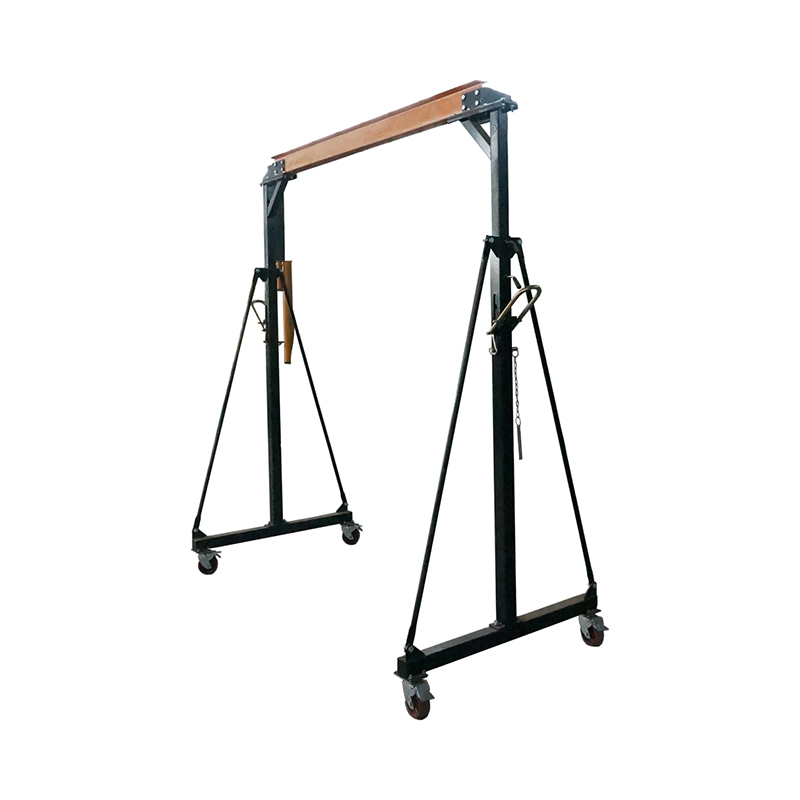 Movable Gantry Crane for Portable Lifting and Low-Ceiling SpacesLightweight gantry with adjustable height and quick assembly, suited to workshops, rooftops, and sites where no runway exists.View Product →
For horizontal movement and positioning, air driven equipment keeps the same spark free logic as the hoist. A pneumatic hydraulic shop crane is built for engine, gearbox, and machinery handling in workshops where electric drives are restricted, while an air powered toe jack slides under machine bases and skids to lift and reposition heavy equipment in low clearance spaces.
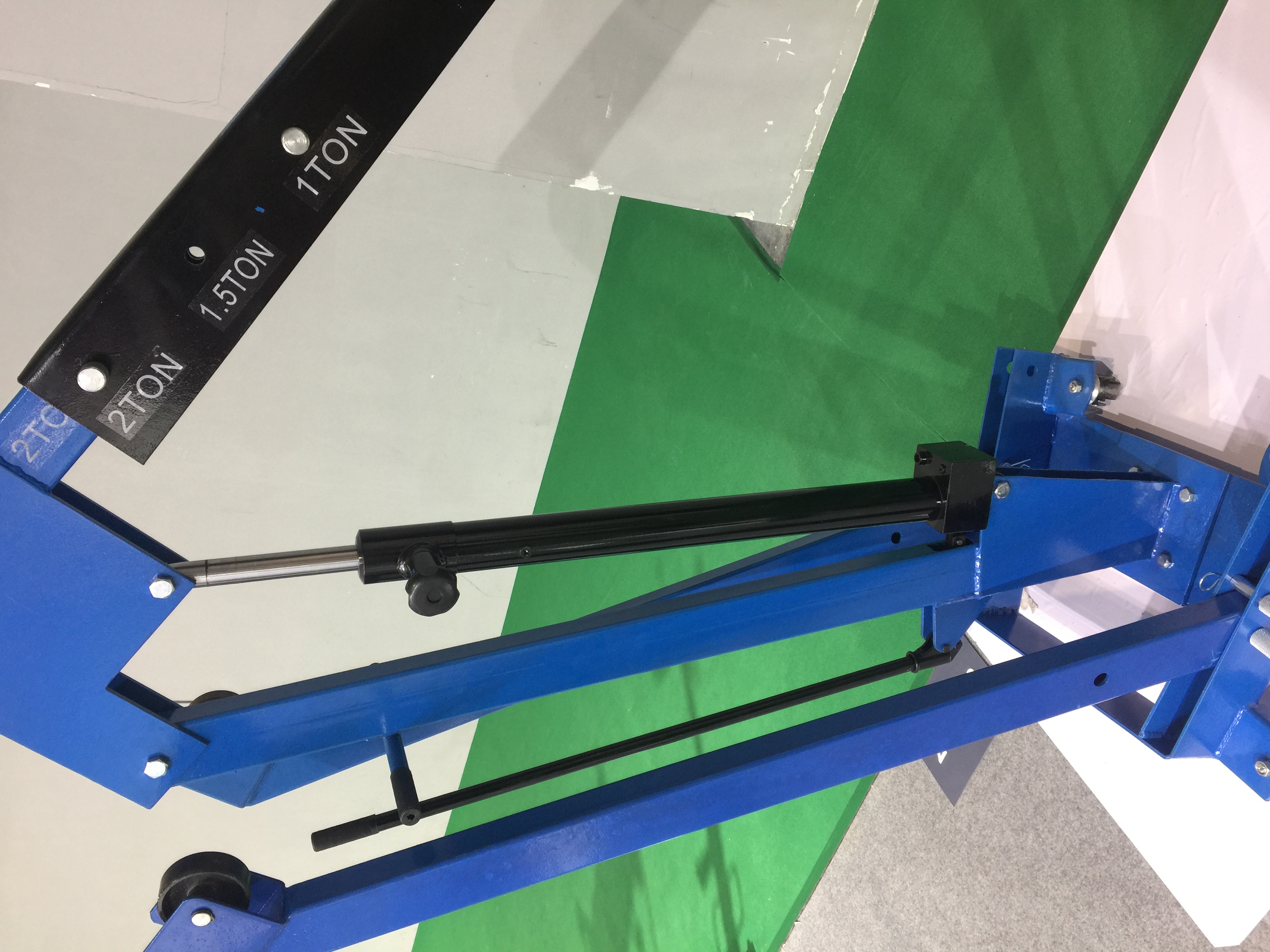 Pneumatic Hydraulic Shop Crane for Restricted Workshop LiftingFoldable air-driven shop crane with long pump handle and H-frame steel build, intended for engine and machinery handling where electric drives are restricted.View Product →
 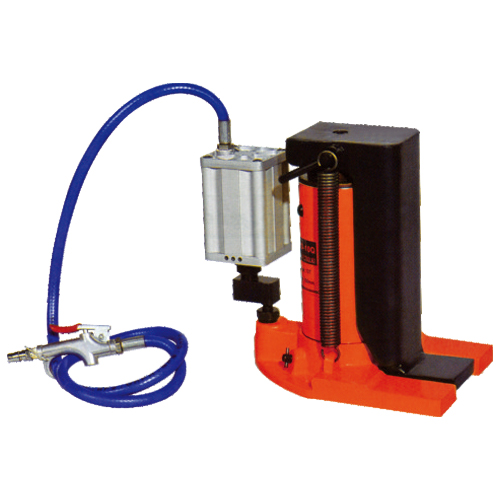 Air Powered Hydraulic Toe Jack for Low-Clearance Machine HandlingCompact toe jack with extra-low toe height and 360-degree rotating housing, useful for lifting heavy equipment in tight spaces without spark risk.View Product →
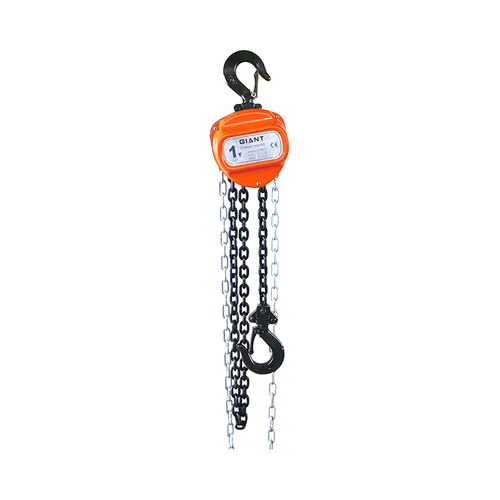
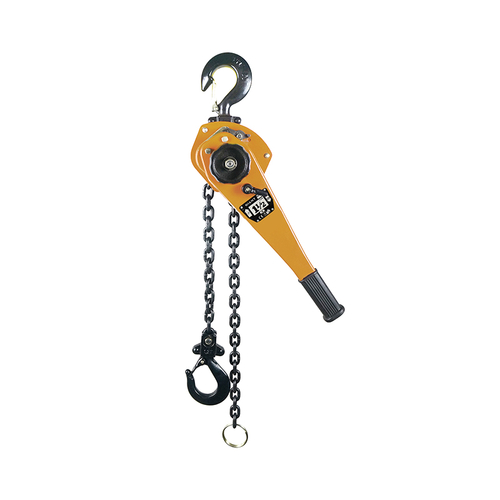
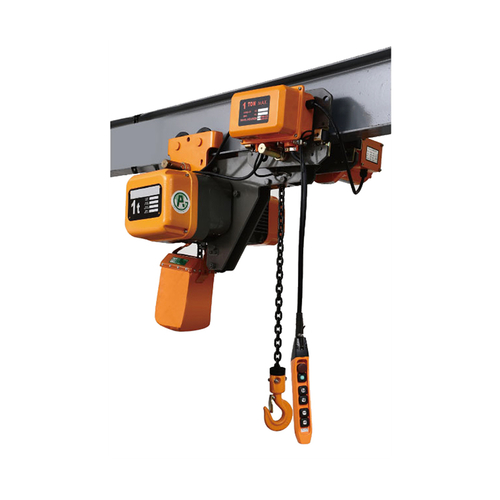
If the application does not actually require spark free operation, an electric chain hoist is usually cheaper to buy and cheaper to run, and a manual chain hoist stays the most dependable option where lifts are occasional and no power is available. Matching the drive type to the environment decides the outcome, not the nameplate on the housing.
A practical buying checklist
- Confirm the area classification and whether spark free lifting is genuinely required by your risk assessment.
- Measure the real inlet pressure at the hoist position under load before choosing a capacity.
- Calculate total air demand for every unit that may run at the same time, including planned additions.
- Verify usable hook height and headroom on the runway or structure you intend to use.
- Decide the control type: pendant for frequent production lifting, pull cord for occasional positioning work.
- Ask for the air consumption figure and the minimum hose bore in writing, stated at rated pressure.
- Confirm spare parts support for vanes, brake components, chains, and hooks before the order is placed.
- Check that the unit can be tested against the standard your market requires and ask for the documentation that proves it.
An air powered hoist is rarely the cheapest lifting option on the quotation sheet, and it is not meant to be. It is the option that keeps working where sparks, heat, moisture, or corrosive vapour would end the service life of an electric unit. Get the air supply right, size the hose generously, keep the lubricator honest, and the motor will outlast several sets of electrical equipment elsewhere in the same plant.
Hangzhou Giant Lift supplies air driven and electric lifting equipment, trolleys, gantry and shop cranes, rigging hardware, and material handling tools to buyers in more than 50 countries, with standard and customised configurations, documentation support for local market requirements, and an in house quality department that tests before shipment. If you are comparing drive types for a specific site, describe the environment, the load, and the available air supply, and the specification can be narrowed from there.