English
 Español
Content
- 1 What the 2 Ton Rating Covers
- 2 Lift Height, Chain Fall and Headroom
- 3 Reading a 2 Ton Chain Hoist Datasheet
- 4 Manual, Electric or Lever Hoist for 2000 kg
- 5 Where Quality Shows Up After a Year of Use
- 6 Inspection and Maintenance for a 2 Ton Hoist
- 7 Procurement Risks When Buying a 2 Ton Chain Hoist
- 8 How Giant Lift Supports 2 Ton Chain Hoist Buyers
- 9 Common Questions About 2 Ton Chain Hoists
A maintenance team lifts a 2 ton gearbox off a skid. The hoist is rated for the load, the beam is rated for the load, and the job still fails because the hook cannot reach the floor or the hoist body does not fit under the beam. That is how most 2 ton chain hoist problems begin, and none of them are about capacity alone.
The short version: a 2 ton chain hoist lifts 2000 kg in a vertical direction, and it only does that well when three numbers match the work, which are rated capacity, lift height and headroom. Buy on those three first, then on chain, hook and brake quality. Everything below explains how to check each item before you place an order.
What the 2 Ton Rating Covers
Rated capacity is a working load limit of 2000 kg, and that figure includes everything hanging below the hook: the load, slings, shackles, spreader beams and any extra force created by snatching or jerking the hand chain. A 2 ton hoist asked to lift 2050 kg is overloaded even if nothing breaks that day.
Design margins are protection, not spare capacity. Manual chain hoists are built with a factor of safety of roughly four to one, and most makers proof test each unit at 1.5 times rated capacity before shipment. Ask for the test record showing the serial number, because site audits and insurance claims usually require it.
Capacity also has a direction. A manual chain hoist is a lifting device and not a pulling device, so it should not be used for horizontal dragging, recovery work or cable tensioning. A lever hoist is the right tool for those jobs. If you want the mechanism clear in your head first, this explanation of how a chain hoist works helps the limits make sense on the workshop floor.
Lift Height, Chain Fall and Headroom
Lift height, also called chain fall, is the distance the hook travels from its lowest working position to its highest. A standard 2 ton manual hoist ships with a 3 m lift, which covers most benches, machine skids and truck beds. Longer options such as 5 m, 6 m and 10 m are common, and they are not simply a longer chain: more chain means more weight to pull by hand, a larger chain container and a slower lift per stroke.
Headroom is the space between the beam and the top of the load with the hook fully raised. Low headroom versions shorten the hoist body and give up a little lift, which is often the only way to work in plant rooms, under mezzanines or inside containers. Measure headroom before the beam is installed, not after.
Mounting follows the same logic. A hook mounted hoist hangs from a lug or shackle, while a plain or geared trolley lets it run along an I beam. Check trolley flange width and beam capacity alongside hoist capacity, because a 2 ton hoist on an undersized beam is still an unsafe lift.
Reading a 2 Ton Chain Hoist Datasheet
Datasheets are written in different orders by different makers, so compare them field by field instead of by price. The table below lists the parameters that decide whether a 2 ton hoist suits your work.
| Parameter | What to expect on a 2 ton unit | Why it matters |
|---|---|---|
| Rated capacity | 2000 kg working load limit | Must cover the load plus slings and shackles |
| Lift height | 3 m standard, with 5 m, 6 m and 10 m on request | A short chain fall leaves the load out of reach |
| Load chain | Roughly 6 mm to 8 mm diameter, one or two falls depending on design | Defines the main wear parts and replacement cost |
| Hand chain effort | Comfortable for one operator across a full shift | High effort usually points to a dry chain or a brake issue |
| Net weight | Commonly around 15 kg to 25 kg | Affects trolley choice and one person handling |
| Hooks | Forged hooks with working latches | An open hook lets a sling jump out under slack |
| Headroom | Measured from the beam to the hook at top position | Low headroom designs are the only fit in tight spaces |
| Documentation | Proof load test record and material certificate | Needed for tenders, insurance and site audits |
If a supplier cannot state the chain grade, the lift height and the test standard in writing, treat that as a warning sign rather than a bargain.
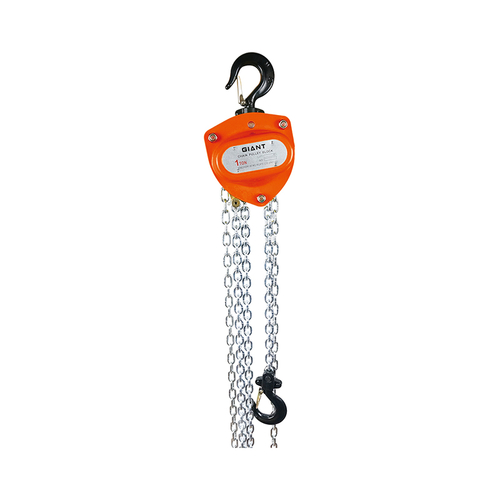
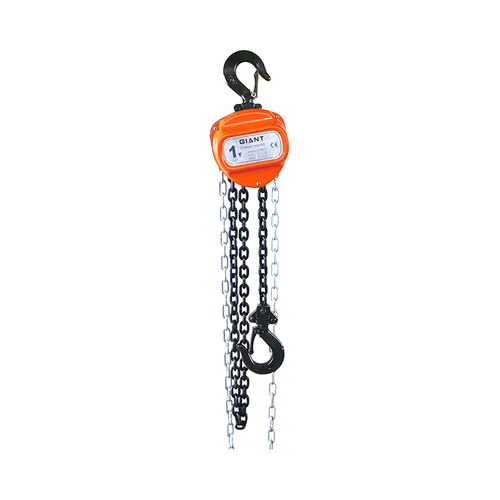
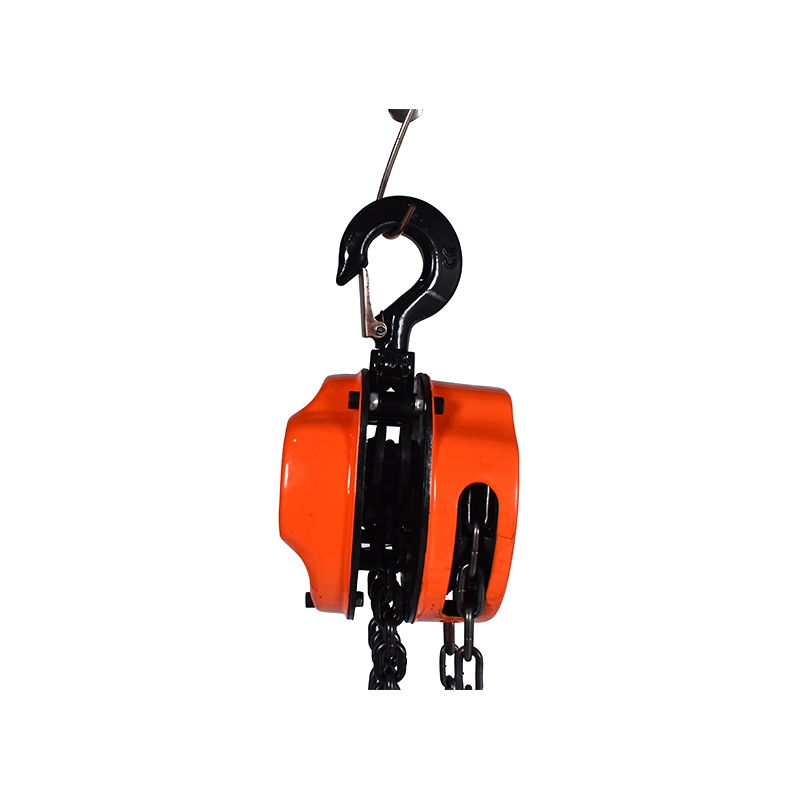 Standard Chain Hoist HSZRobust light weight steel construction is resistant to external shock.View Product →
Manual, Electric or Lever Hoist for 2000 kg
All three families handle 2000 kg, but they earn their place in different work. Manual chain hoists suit occasional lifts where there is no power supply. Electric chain hoists suit repetitive duty such as assembly stations, loading bays and production cells. Lever hoists cover pulling, tensioning and rigging, including the horizontal work a chain hoist must not be used for.
| Type | Best suited to | Power supply | Maintenance focus |
|---|---|---|---|
| Manual chain hoist | Occasional lifts, remote sites, precise hand control | None | Load chain, brake, hook latch |
| Electric chain hoist | Repetitive duty in workshops, warehouses and assembly cells | Single phase or three phase | Motor, limit switch, brake, chain |
| Lever hoist | Pulling, tensioning and rigging at any angle | None | Lever, brake, chain, hooks |
For a production cell that lifts the same 2 ton load dozens of times per shift, the extra cost of a powered unit is usually recovered in operator time and fatigue within the first year.
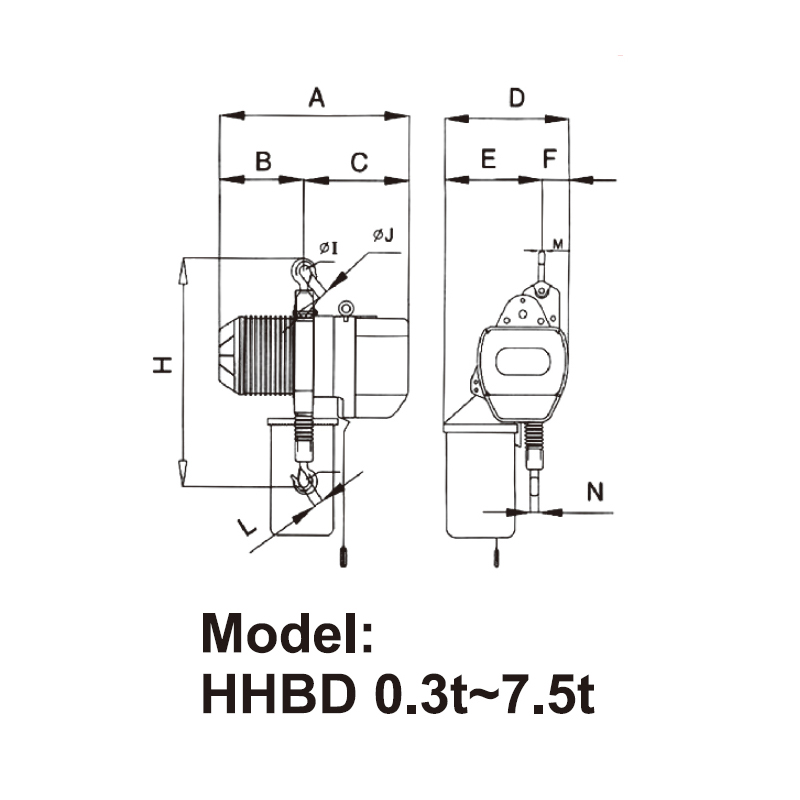 Classic Electric Chain Hoist HHBDFeatures: She ll: Light aluminum alloy shell shall be adopted which is light but hard and fit for the use in the terrible work environment with a high heat dissipation...View Product →
Where Quality Shows Up After a Year of Use
Two hoists with the same 2 ton stamp behave differently after twelve months of daily work, and the gap is almost always in four parts.
- Load chain: grade 80 or grade 100 alloy chain is standard lifting duty, and black oxide or galvanized finishes resist humid and salty air. A hand chain must never be substituted for a load chain.
- Hooks: forged hooks with working latches, sized so your slings sit properly in the throat of the hook.
- Brake: a double pawl or twin brake system holds the load when you release the hand chain. Creeping under load means the brake needs service, not a harder pull.
- Bearings and gears: sealed ball bearings reduce hand effort and keep abrasive dust out of the transmission, which matters in foundries, cement plants and outdoor yards.
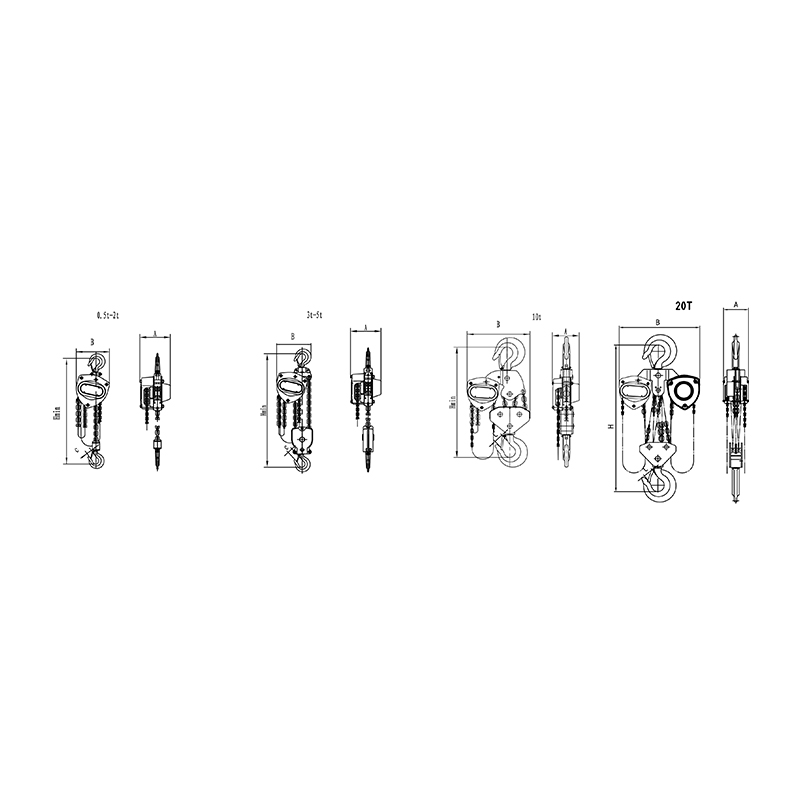 Industrial Chain hoist HSZ-KAll steel construction-impact resistant covers that provide durability and protection.View Product →
Inspection and Maintenance for a 2 Ton Hoist
Most 2 ton chain hoists fail for unglamorous reasons: a stretched chain, a dry chain, a worn hook or a brake that was never checked. A short routine prevents nearly all of it.
- Before each shift, check the hook latch, look for twisted or kinked chain, confirm the brake holds a light load, and inspect the hand chain for bent links.
- Weekly, lubricate the load chain with the maker's recommended oil and wipe off grit so the chain does not collect dust.
- Periodically, measure chain elongation against the maker's discard limit, check hook throat opening and wear, and confirm the brake holds rated load without creeping.
- Annually, arrange a documented inspection by a competent person and a load test if local rules require one.
Chain wear is the item most often missed. Replace load chain when pitch elongation reaches the maker's limit, because a stretched chain no longer sits correctly in the guide and can jump under load. Never repair a cracked hook, a bent guide or a stretched chain by welding, as replacement parts cost far less than the consequences.
Procurement Risks When Buying a 2 Ton Chain Hoist
When a 2 ton hoist is priced far below the market, the difference usually sits in documentation or in parts you cannot see.
- Capacity markings with no proof load record, which fails site audits and insurance checks.
- Unstated chain grade, which makes matching spare chain impossible later.
- Short chain fall delivered against a long lift order, leaving the load out of reach.
- No spare parts for brake discs, pawls and chain guides, turning a small repair into a new purchase.
- No support for local standards, which leaves the importer carrying the compliance risk alone.
How Giant Lift Supports 2 Ton Chain Hoist Buyers
Hangzhou Giant Lift Co., Ltd. has grown from a sales department formed in 1999 into an independent exporter serving buyers in more than 50 countries, with in house product development, quality control and procurement teams. The company positions itself as a one stop source for lifting, handling, hydraulic and construction tools, which matters when a single order includes hoists, trolleys, shackles, slings and beam clamps that must work together.
For a 2 ton chain hoist order, that means capacity, lift height, chain container and mounting can be specified as one package, and the quality team can test units against the standards your market requires. Importers and distributors who want to review the full selection before ordering can start with the chain hoist range and confirm chain length, labelling and packaging requirements with the supplier.
Common Questions About 2 Ton Chain Hoists
How often should a 2 ton chain hoist be inspected?
Give it a visual check before every shift, a closer look at chain elongation, hooks and brake function at intervals set by your own risk assessment, and a documented annual inspection. Heavy use, outdoor work and dirty environments shorten those intervals.
Can a 2 ton chain hoist be used outdoors?
Yes, if the chain and hooks suit moisture and the unit is lubricated and stored dry. Galvanized or black oxide chain plus covered storage makes a large difference over a season of outdoor work.
What is the difference between a 2 ton chain hoist and a 2 ton lever hoist?
A chain hoist lifts vertically and is designed around that motion. A lever hoist can pull, tension and lift at angles, which makes it the right tool for rigging and recovery work at the same 2 ton capacity.
Choosing a 2 ton chain hoist comes down to matching three numbers to the job, which are capacity, lift height and headroom, then checking the chain, hooks and brake that will still be working in five years. Get those right, keep the proof load record on file and hold the chain inside its wear limit, and the hoist will do exactly what the nameplate promises.
.jpg?imageView2/2/w/500/h/500/format/jpg/q/100)