English
 Español
Content
- 1 What is a lifting eye bolt and when should you use one
- 2 Plain machinery eye bolts versus shoulder nut eye bolts
- 3 Working load limits by thread size and bolt pattern
- 4 Angular loading: where eye bolt selections go wrong
- 5 Installation rules that protect the rating
- 6 Inspection and retirement decisions
- 7 When a swivel lifting ring is the safer choice
- 8 Selection checklist and final advice
Two lifting eye bolts can look identical on a shelf and still have very different working load limits. A plain machinery eye bolt rated for 2,000 pounds in a straight pull can become unsafe at a 30 degree angle, while a shoulder type of the same size keeps a reduced but defined rating. This guide covers the eye bolt types used in industrial lifting, how working load limits are assigned by size, what happens when the load direction changes, and the installation and inspection rules that keep a lifting point reliable. The conclusion comes first: decide the loading direction before you select the bolt, and use a shoulder pattern or a lifting ring whenever the load can move out of a straight vertical line.
What is a lifting eye bolt and when should you use one
A lifting eye bolt is a steel fastener with a closed loop at one end and a threaded shank at the other. It screws into a tapped hole in machinery, dies, molds, valves, or structural steel to create a lifting point. The sling or shackle engages the eye, and the lifting force passes through the bolt into the supporting structure. Eye bolts are compact, inexpensive, and available in many thread sizes, which makes them the default choice when the load direction is known and controlled.
Plain machinery eye bolts versus shoulder nut eye bolts
Two patterns cover most industrial lifting work. A plain machinery eye bolt has no shoulder under the eye, and its eye is formed in line with the shank. It is designed for straight vertical pulls only. A shoulder nut eye bolt has a machined shoulder between the eye and the threads, and this shoulder seats firmly on the workpiece to carry part of the bending load when the pull is not perfectly vertical. Under a purely in-line pull both patterns handle their rated load, but once the sling angle moves away from the bolt axis, the plain pattern loses capacity quickly.
| Comparison point | Plain machinery eye bolt | Shoulder nut eye bolt |
|---|---|---|
| Structure | No under-eye shoulder | Machined shoulder seats on the surface |
| Recommended loading | In-line vertical pull | In-line pull plus limited angular pull |
| Angular capacity | Not rated for angles above 15 degrees | Up to 45 degrees with reduction |
| Typical use | Dead vertical lifts, temporary points | Angled slings, fixture lifting |
| Standard reference | ASME B18.15 and maker load tables | ASME B18.15 and maker load tables |
Use this table as a starting point, not as a substitute for the load chart supplied with the bolt you buy. Material, finish, thread size, and the strength of the tapped hole all change the real rating.
Working load limits by thread size and bolt pattern
For a shoulder type eye bolt loaded straight in line, ratings follow the thread size closely. The chart below uses representative values for a carbon steel bolt seated on a steel surface with full thread engagement. Plain machinery eye bolts usually carry lower ratings, and stainless versions can differ, so always verify with the supplier test certificate.
Representative in-line ratings for carbon steel shoulder type eye bolts.
The chart above shows representative in-line WLL values for shoulder type eye bolts from 1/4 inch to 1 inch thread size. The step from 1/4 inch to 3/8 inch doubles the rating, and every increase in diameter adds capacity faster than the previous step. A 1 inch shoulder eye bolt carries roughly 20 times the in-line load of a 1/4 inch bolt, which is why thread size is the first specification a buyer should confirm. These values apply to the bolt alone, not to the whole assembly. The tapped material, thread engagement, edge distance, and surface condition all contribute to the real capacity of the lifting point. If the receiving part is aluminum or cast iron, the assembly rating may be well below the bolt rating, so confirm the substrate before relying on the chart.
Angular loading: where eye bolt selections go wrong
A sling pulling at an angle creates two forces: a direct pull along the shank and a bending force at the eye. The bending force is what punishes ordinary eye bolts. For a shoulder eye bolt, reduce the working load to about half at a 15 degree angle and to one quarter at a 30 degree angle. Beyond 45 degrees, a standard shoulder eye bolt is not a safe lifting point. A plain machinery eye bolt is limited to a straight pull or a maximum offset of 15 degrees with a large reduction.
Capacity retention for shoulder, plain, and swivel lifting points.
The line chart shows how quickly capacity disappears once the pull moves away from the bolt axis. The red line for the shoulder eye bolt drops from 100 percent in line to 50 percent at 15 degrees, 25 percent at 30 degrees, and about 12 percent at 45 degrees. The gray dashed line for the plain machinery eye bolt is even stricter and reaches zero at 30 degrees because this pattern is not approved for angular loading. The green line for a swivel lifting ring stays near full capacity because its swivel base tracks the load direction. The practical meaning is direct: a 10,000 pound shoulder eye bolt at 30 degrees is only good for roughly 2,500 pounds. Treat any change in sling angle as a change in the lifting point rating, and verify the final angle before every lift.
Installation rules that protect the rating
The best eye bolt in the catalog fails early if installation is wrong. Start with clean threads on the bolt and in the tapped hole; dirt, paint, and burrs change the seating and create a false clamp. Thread engagement should reach at least one bolt diameter in steel and about one and a half diameters in softer materials. When the eye does not line up with the load direction, add washers or a spacer under the shoulder until it does; never back the bolt out to align the eye. The sling should lie in the plane of the eye, and a shackle is preferable to a hook when the connection will move.
- Verify that the tapped hole is deep enough for full thread engagement.
- Seat the shoulder completely on a flat surface.
- Orient the eye so the load pulls in line with the plane of the eye.
- Use a spacer or washers to align the eye instead of leaving threads exposed.
- Never paint a lifting eye bolt, because paint hides cracks and wear.
- Do not modify, machine, weld, or heat an eye bolt.
Inspection and retirement decisions
Lifting hardware has a service life, and an eye bolt deserves the same inspection habit as a sling or shackle. Check before each use for a bent shank, an opened or deformed eye, cracked threads, corrosion pitting, and signs that the bolt has been pulled at an angle. A visual check catches most problems, but damaged threads inside the tapped hole can be just as dangerous. If the eye is no longer centered, the shank shows a bend, or the shoulder no longer seats flat, retire the bolt immediately. Do not straighten, weld, or reuse a deformed eye bolt; the cost of a replacement is small compared with a dropped load.
When a swivel lifting ring is the safer choice
Some lifting jobs push an eye bolt past its natural shape. If the load is lifted at a steep angle, if it can rotate, or if the sling may slide during the lift, a fixed eye bolt creates bending stress that is hard to predict. A swivel lifting ring is the correct tool for these conditions.
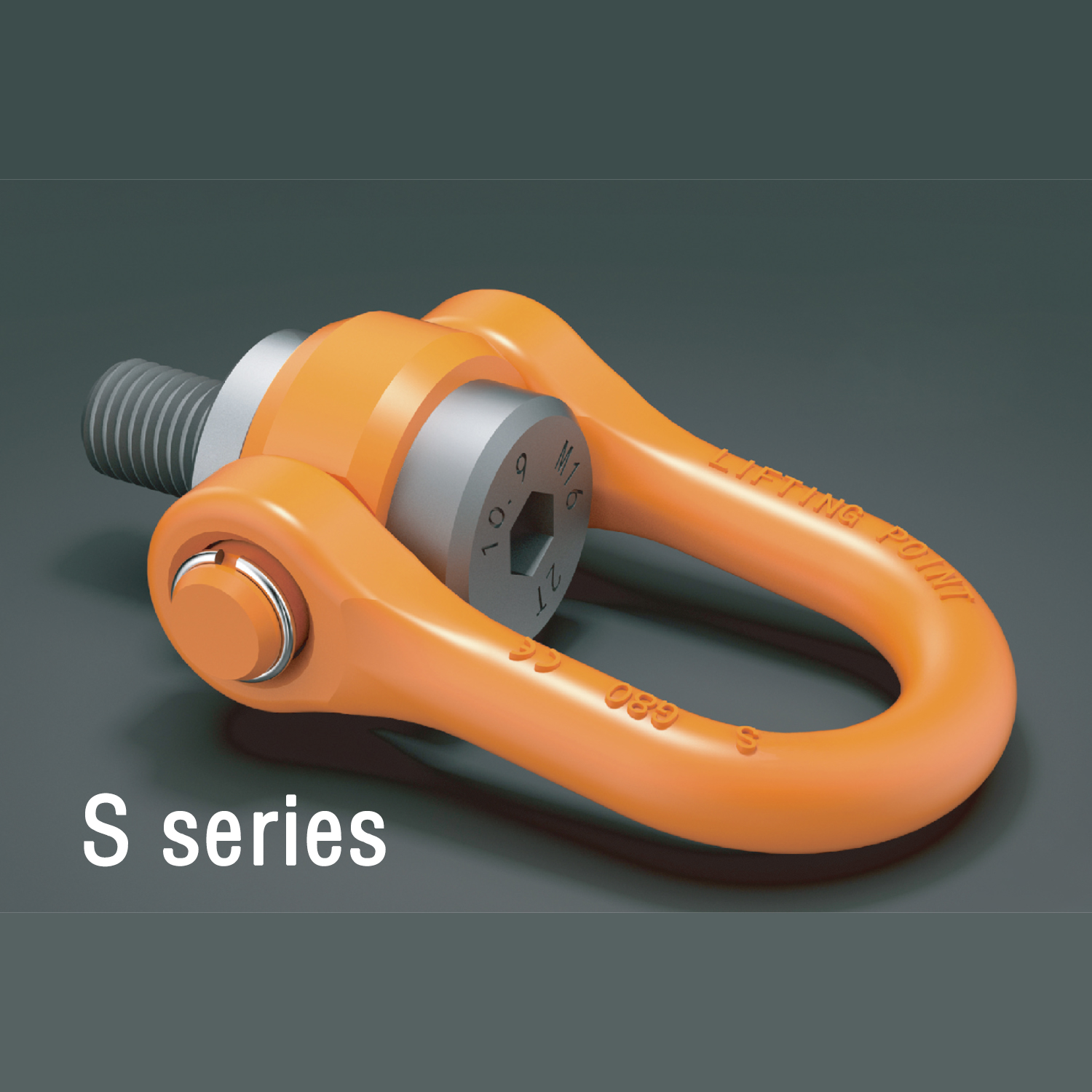 Swivel Rotate Type Lift Ring with 360-Degree BaseThis lifting ring rotates to keep the load path aligned, avoiding bending stress that fixed eye bolts face at angles. Suitable for heavy dies, molds, and multi-directional picks.View Product →
A swivel lifting ring has a base that rotates 360 degrees and a bail that articulates with the sling, so the load path stays aligned with the ring instead of bending a fixed eye. This removes most of the angle penalty that reduces eye bolt ratings, which is why lifting rings are preferred for heavy dies, molds, and machine components picked up from several directions.
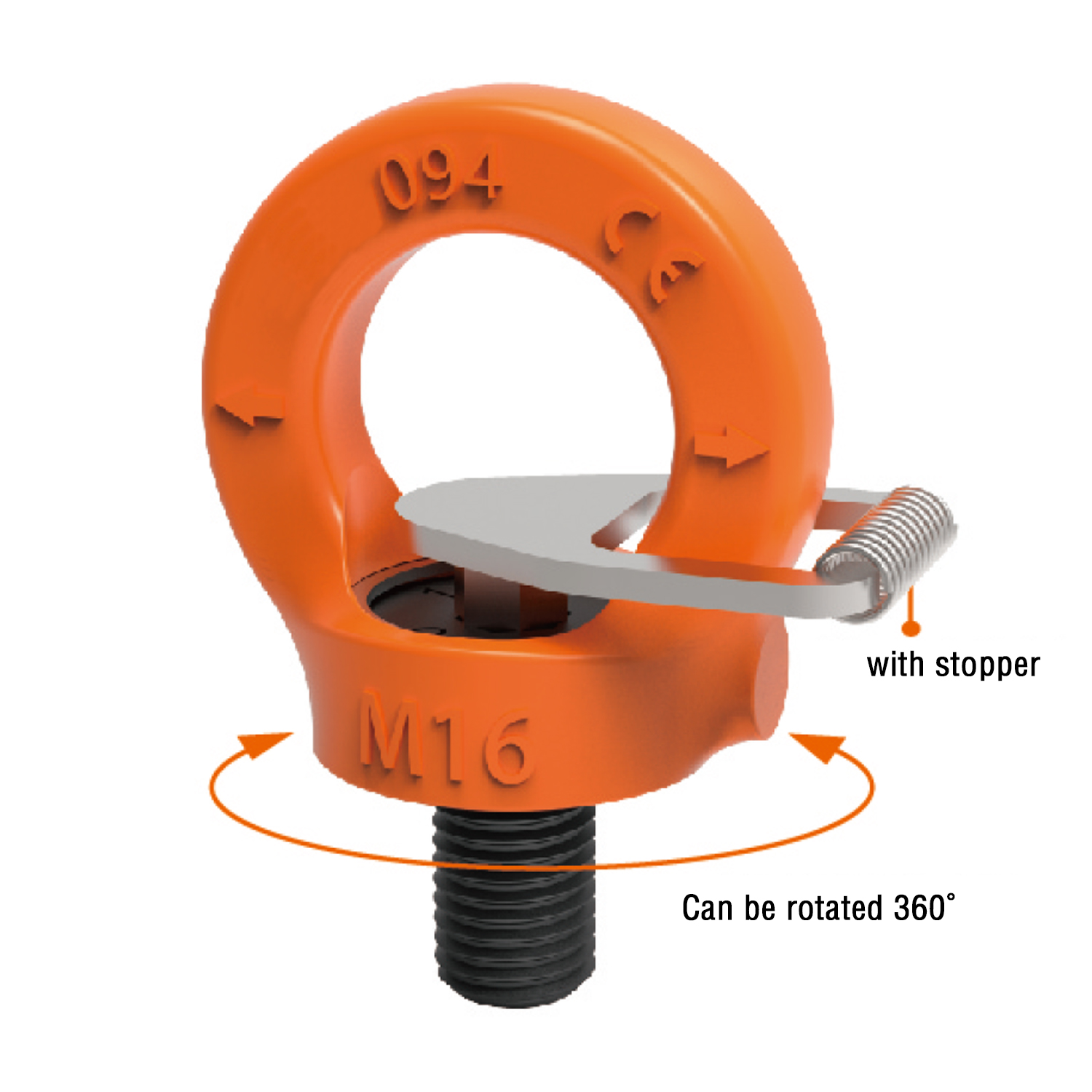 Straight Hanging Round Type Lift Ring for Vertical PullsA quality lifting ring that handles vertical lifts reliably, offering a cost-effective alternative where angles are predictable. Consider standardizing on this for straight pulls.View Product →
The trade-off is price: a quality lifting ring costs more than an eye bolt, and inspection rules are similar or stricter. For a buyer managing many lifting points, the practical policy is to standardize on eye bolts for straight vertical pulls and use lifting rings wherever the angle or rotation is uncertain.
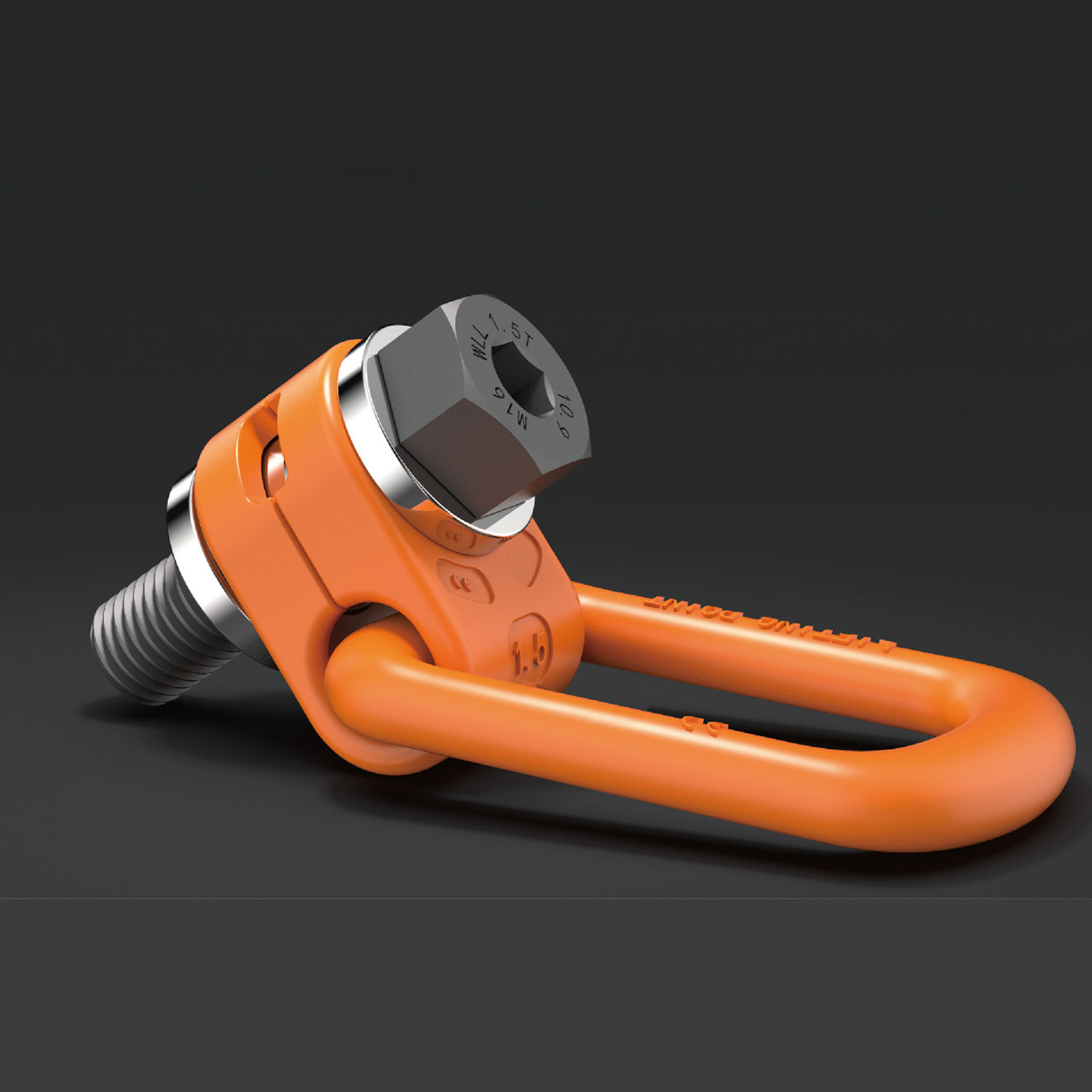 Side Hanging Swing Type Lift Ring for Angled LoadsDesigned for side-hanging applications, this swing-type ring accommodates load rotation and angle variations. Use it when lifting points demand a flexible attachment solution.View Product →
A 30 degree angle separates the three lifting point designs clearly.
The column chart compares the usable capacity of three lifting point types when the load pulls at a 30 degree angle. The plain machinery eye bolt has zero approved capacity in this condition, so it is marked as not allowed. The shoulder eye bolt keeps about one quarter of its in-line rating, which may suit light fixtures but becomes marginal for heavy components. The swivel lifting ring keeps most of its rating because the ring articulates and carries the load in a straight line. The same bolt diameter and the same weight can therefore produce very different safety margins depending on the lifting point design. Buyers planning angled lifts should compare the lifting point type before they compare the price.
Most field failures around lifting points come from a few repeatable causes. Our review of common lifting product issues and solutions lists the failures that show up most often in the field.
Selection checklist and final advice
The selection process comes down to a few questions. Define the load weight, the number of lifting points, the material that will hold the threads, and the worst loading direction that may happen during the lift. Check that the working load limit covers the worst case angle, confirm the thread size, material, and finish, and ask the supplier for test documentation. If the answer is a shoulder eye bolt, apply the angle reductions from the charts above; if the load direction is uncertain, move to a lifting ring.
- Load weight and the share carried by each lifting point.
- Thread size and thread class of the tapped hole.
- Minimum angle between the sling and the bolt axis at every lift stage.
- Material and hardness of the receiving structure.
- Working load limit of the eye bolt and the mating shackle or sling.
- Inspection records and certification documents.
Radar comparison of the three lifting point families.
The radar chart compares plain machinery eye bolts, shoulder nut eye bolts, and swivel lifting rings across five selection factors. The plain eye bolt leads on cost economy and inspection simplicity but scores the lowest on angular load tolerance and fatigue resistance. The shoulder eye bolt balances price and performance and remains the most practical standard choice for vertical and mildly angled lifts. The swivel lifting ring dominates the angular load and alignment factors while giving up some cost economy and inspection simplicity. The shapes of the three polygons show the trade-offs at a glance. Use this comparison as a final check before committing to a lifting point family.
Buying hardware is the easy part; defining the loading condition is what keeps people safe. Giant Lift supplies eye bolts, lifting rings, and the surrounding rigging components so the whole load path stays consistent. Apply the same angle check to every new lift plan, and a few minutes spent on the worst case direction will prevent most of the failures that come from side-loaded eye bolts.