English
 Español
Content
- 1 What a lifting jack actually does with the load
- 2 The main lifting jack families and where each one wins
- 3 Capacity, lift height and the numbers buyers should check
- 4 Effort, speed and control: hydraulic against mechanical
- 5 Safety standards, inspection and the paperwork trail
- 6 Choosing between families: the trade-offs in one view
- 7 Maintenance that decides service life
A jack rated at 3 tonnes can still fail under a 1.5 tonne load. That sounds like a contradiction, yet it is the most common failure pattern we see when a first container of lifting jacks reaches a distributor or a workshop: the number on the label was treated as a working limit, the load was applied slightly off centre, and the base was resting on a surface that could not carry the force.
So here is the conclusion first. A lifting jack is a force machine, not a support device. It moves a load a short distance along one axis, and it is meant to be backed up by stands, blocking or a mechanical lock before anyone reaches under the load. Choose the family first, then the rated capacity, then the lift height, then the release control and the paperwork. Buyers who work in that order get fewer warranty claims and usually pay less per unit, because they stop adding spare capacity to cover uncertainty.
What a lifting jack actually does with the load
Every lifting jack is a mechanical advantage device, but the common families get there in different ways. Hydraulic jacks use Pascal's principle: a small pump plunger pushes oil into a much larger ram, and force is multiplied by the ratio of the two areas. Screw jacks turn torque on a handle into linear travel through a threaded shaft, and a correctly cut thread is self-locking, so the load stays where it is even when the operator lets go. Farm or high-lift jacks use a rack and pawl, which gives long travel and holds the standing load with a steel pin rather than with fluid pressure. Air hydraulic and toe jacks keep the hydraulic principle and change the geometry, so the lifting point can sit under a low machine bed.
Those differences change how a load is held. A hydraulic jack holds by closing a release valve, and a worn or contaminated valve can creep downwards over an hour. A screw jack holds by friction in the thread and needs no pressure at all. A jack rated at 5 tonnes is rated at 5 tonnes on a flat, rigid base with the load centred on the saddle. Tilt the ram, or let the load hang off one corner, and the effective capacity falls quickly. Ground bearing pressure is the other half of the equation, which is why the same jack that is stable on a concrete slab will sink into warm asphalt.
The main lifting jack families and where each one wins
Bottle jacks are compact, upright and cheap for the capacity they deliver, which is why they dominate vehicle service and structural shoring. Floor jacks trade height range for mobility: a long chassis rolls under a car, the saddle rises 400 to 530 mm, and the handle does the pumping. Screw and mechanical jacks are slower, but they are the default answer for holding a load for hours and for hot, dirty or freezing environments. Toe jacks for machinery moving start as low as 15 mm, so they can slide under mill beds and machine bases. Farm jacks offer the longest travel of any hand tool in this group, up to about 1.2 m, but they are recovery and lifting tools rather than precision positioning devices.
| Family | Typical capacity | Typical lift height | Release and holding | Where it fits |
|---|---|---|---|---|
| Bottle jack | 2 t to 50 t | 150 mm to 450 mm | Hydraulic valve, holds on pressure only | Vehicle service, shoring, structural work |
| Floor jack | 1.5 t to 3 t | 130 mm to 530 mm | Hydraulic valve with controlled lowering | Service bays, wheel and brake work |
| Screw jack | 5 t to 20 t | 100 mm to 350 mm | Self-locking thread, holds without pressure | Long holds, alignment, hot or dusty sites |
| Scissor jack | 1 t to 2 t | 100 mm to 400 mm | Screw thread, low cost | Emergency tyre changes, light vehicles |
| Farm jack | 1 t to 2 t | Up to 1200 mm | Rack and pawl with shear pin | Recovery, off-road work, rough ground lifting |
| Toe jack | 2.5 t to 12 t | 15 mm to 150 mm | Hydraulic or mechanical, low profile | Machinery moving, mill and press beds |
The bars show why capacity ceilings cluster the way they do in real order books. Scissor jacks and farm jacks sit at the bottom of the range because they are built around occasional, short-travel tasks rather than continuous service. Floor jacks reach roughly 3 tonnes, which covers most passenger cars and light vans and explains why that figure dominates service bay purchasing. Toe jacks climb to around 12 tonnes because they are used on machinery where the load is heavy but the travel is tiny. Screw jacks commonly reach 20 tonnes and bottle jacks 50 tonnes, and beyond that range hydraulic cylinders and strand jacks take over. The practical lesson is that capacity alone does not tell you which jack to buy, because the bar only shows how much headroom a family offers before you have to change technology.
A typical service bay solution is a 2 to 3 tonne floor jack with a low profile chassis, a wide saddle and a controlled lowering valve, because that combination covers wheel, brake and suspension work without lifting the vehicle twice.
.jpg) FLOOR JACK● Portable , compact structure and light weight. ● Easy and labor-saving: Fast lifting and falling, stable, owning higher efficiency.View Product →
FLOOR JACK● Portable , compact structure and light weight. ● Easy and labor-saving: Fast lifting and falling, stable, owning higher efficiency.View Product →Capacity, lift height and the numbers buyers should check
Rated capacity is the easiest number to quote and the least useful one on its own. The three figures that decide whether a jack suits a job are minimum height, maximum height and the usable travel between them. A machine base sitting 18 mm off the floor needs a toe jack, and a 3 tonne bottle jack with a 190 mm collapsed height simply will not fit, no matter how much capacity it has.
This column chart compares useful lift height rather than capacity, and the ranking changes completely. Toe jacks give the least travel, often around 150 mm, because their job is to break a machine off the floor so a roller or a larger jack can take over. Bottle jacks and screw jacks work in a similar 350 to 400 mm band, which is enough for shoring, axles and structural props. Floor jacks go a little higher, near 530 mm, because the saddle has to clear a raised chassis and let a wheel come off. Farm jacks dominate the right of the chart with travel measured in metres, but that travel comes with a coarse pawl release and no fine adjustment. Reading both charts together is how you avoid the classic mistake of buying a high capacity jack that is too tall to fit under the load.
Before confirming a purchase order, check these points against the actual job site:
- Minimum height against the lowest clearance on site, plus 5 to 10 mm of margin for floor debris.
- Maximum saddle height, measured from the floor rather than from the ram.
- Capacity with at least 20 percent headroom for off-centre or dynamic loads.
- Base diameter against the floor material, because soft ground cuts effective capacity.
- Handle arc and handle length, since a jack that cannot be pumped under a low chassis is useless.
- Release control type, because a slow screw release is safer than a fast lowering valve.
Long travel and rough ground usually point to a farm jack, and it is the only family here that can lift a vehicle out of a ditch or pull a post from soft soil with the same tool.
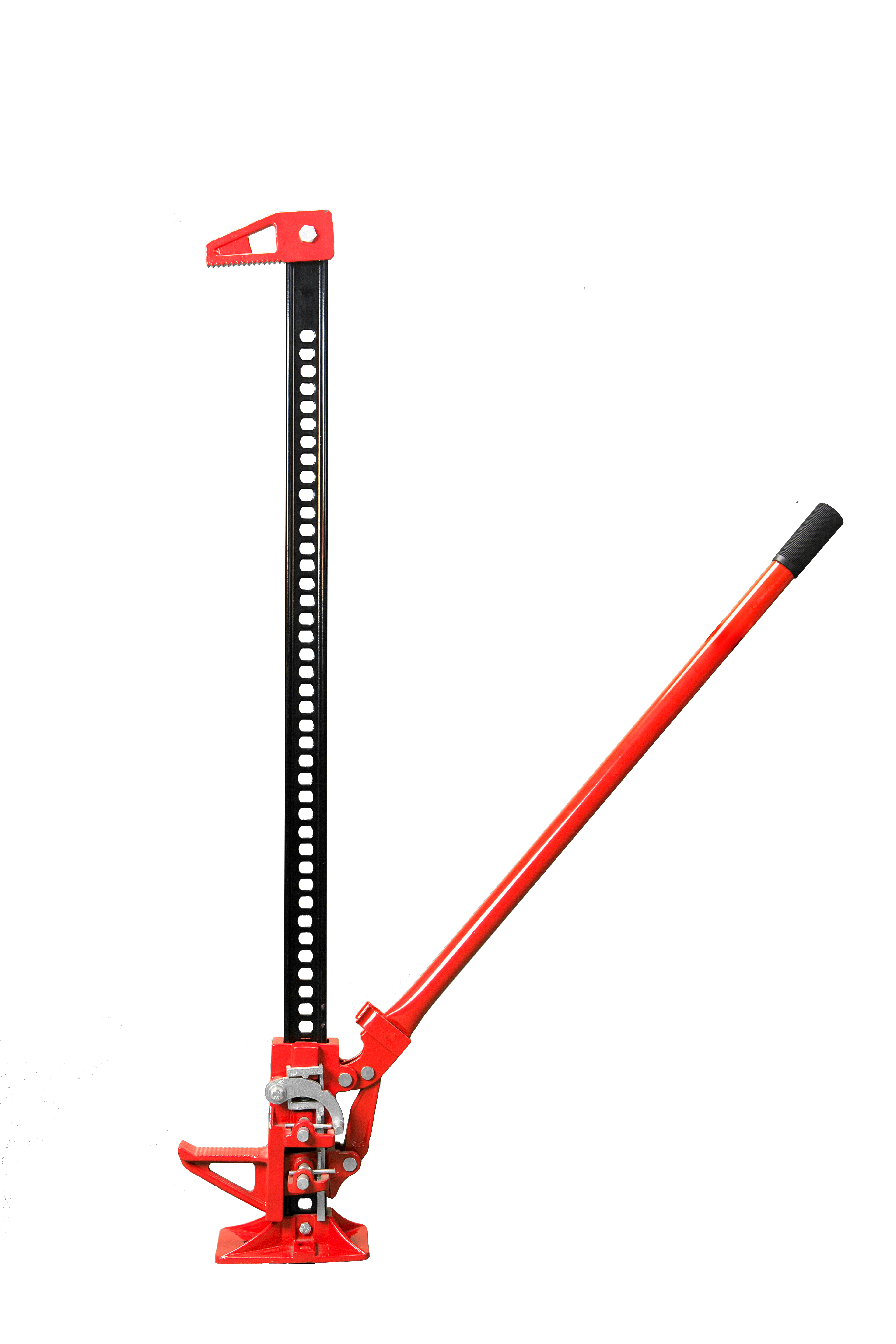 Farm JackRECOMMENDED PRODUCTS:View Product →
Effort, speed and control: hydraulic against mechanical
Hydraulics win on effort per stroke, and mechanical jacks win on holding. The chart below shows where the two curves separate, and it explains why heavy mechanical jacks are normally supplied with a long handle or a socket drive instead of a short lever.
This chart shows a pattern that every experienced operator recognises on the shop floor. Up to about 40 percent of rated capacity the difference between a hydraulic jack and a screw jack is modest, and a fit operator can work either one without thinking about it. Past 60 percent the gap opens quickly, because a hydraulic jack multiplies force through the ram area while a screw jack multiplies it only through thread pitch and handle length. At rated capacity a screw jack demands roughly twice the handle force of a comparable hydraulic jack, which is why heavy mechanical jacks come with long handles or socket drives. The trade-off is control, because the same thread that makes a screw jack hard work also makes it self-locking and able to hold a load for hours without pressure. Where a load must stay up overnight, or the site is hot, dusty or freezing, that extra effort is usually worth paying.
Mechanical jacks also tolerate abuse that would destroy a hydraulic unit, and the selection points are quite different from the ones used for a service jack: how to choose a durable mechanical jack for heavy-duty lifting comes down mostly to thread quality, nut material and handle geometry.
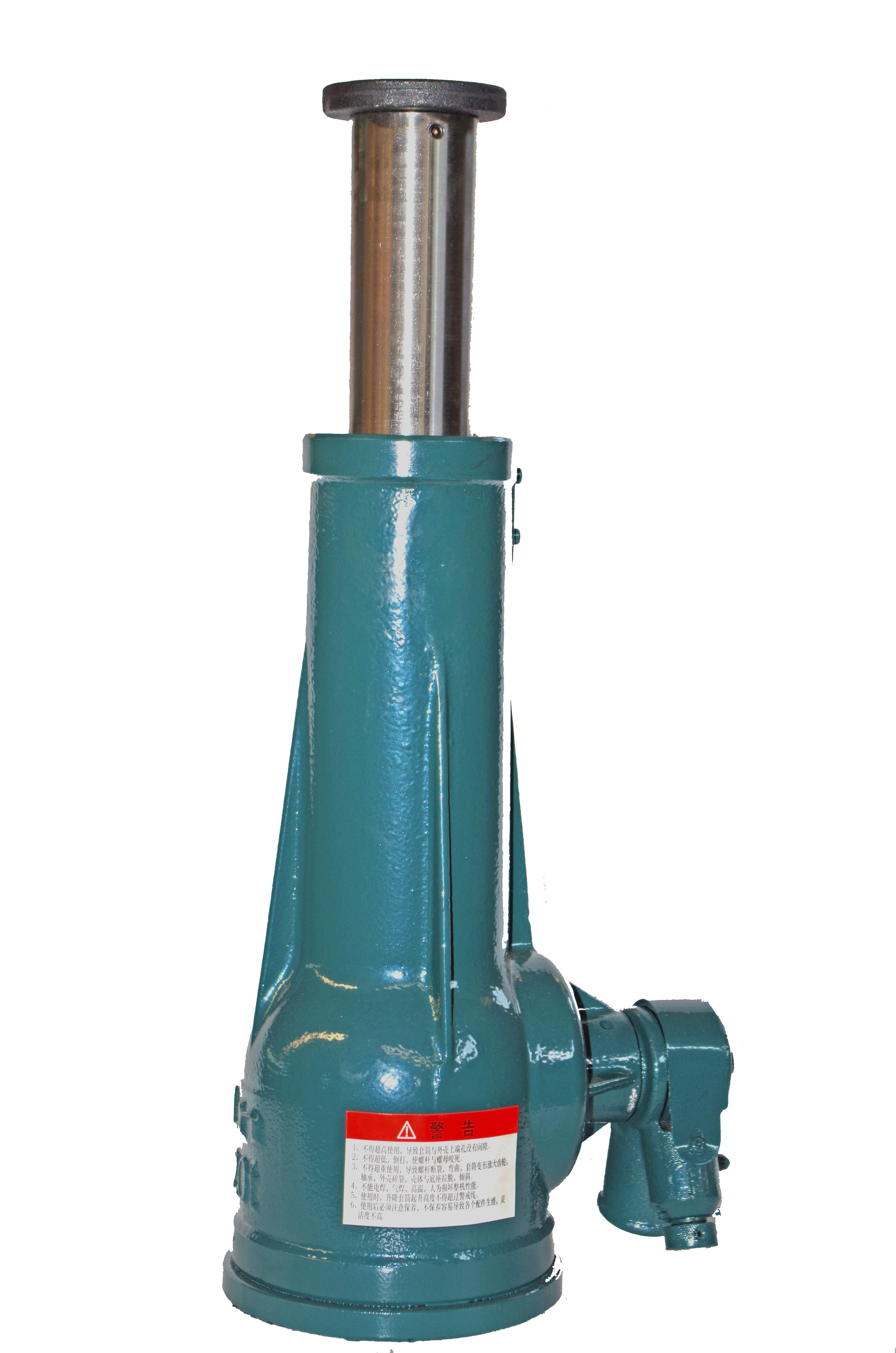 Screw Jack● Portable , compact structure and light weight.View Product →
Safety standards, inspection and the paperwork trail
A jack is only as good as the standard it was built and tested against, and this is where import buyers get caught. In North America, portable jacks are covered by ASME B30.1, which sets out design, marking, testing and inspection requirements. In Europe, mobile or movable jacks fall under EN 1494, and any declaration of conformity has to match the product that actually arrives in the container. Whichever standard applies, the practical requirements look similar: a permanent and legible rating mark, a clear manufacturer identity, a documented test before shipment, and a written inspection routine on site.
What to inspect on incoming goods
Hydraulic jacks should be checked for seal leaks, valve creep and bent rams before they go into stock. Mechanical and farm jacks need the thread, the pawl and the shear pin checked, because a bent pin or a chipped tooth is a warning rather than a cosmetic defect. The shear pin on a farm jack is a safety device, not a spare part, and replacing it with a hardened bolt removes the overload protection entirely. For the procurement file, ask for the test certificate, batch traceability on load bearing parts, an operator manual in the destination language, and a spare parts list that includes seal kits.
Choosing between families: the trade-offs in one view
Specification sheets list numbers, but buyers actually weigh six things at once: headroom, speed, precision, portability, maintenance and price. The radar comparison below puts three common families on the same axes.
This radar view summarises the trade-offs that a plain specification sheet hides. A hydraulic bottle jack scores well on capacity headroom and lift speed, but it depends on fluid, seals and a clean release valve to stay reliable. A screw jack performs best on positioning precision and low maintenance, and it is the only family here that holds a load indefinitely without pressure. A farm jack wins on purchase cost, portability and sheer travel, but its coarse ratchet travel makes fine positioning difficult. No single shape covers the whole chart, which is exactly why most workshops and importers keep two or three jack types on the shelf instead of one. When a customer asks for the best lifting jack, the honest answer starts with three questions about load, height and holding time.
Maintenance that decides service life
Hydraulic jacks die from contamination more often than from overload. Keep the oil clean, bleed air after any top up, avoid storing the ram fully extended where the chrome can be scratched, and confirm that the release valve closes fully before each use. Screw jacks need the opposite routine: grease the thread and thrust bearing, inspect the nut for wear, and keep grit out of the thread, because abrasive dust turns a smooth self-locking thread into a rough one. Farm jacks need the rack teeth, the pawl and the shear pin checked every time they return from a job, and any bent or worn pin replaced immediately. A jack that lives in a service van should be wiped down and stored upright with the valve closed. Records matter as much as parts, because a simple inspection log with date, user and finding is often the document that settles a warranty or insurance question.
Nothing about a lifting jack is complicated on its own, but the decisions stack: family, capacity, minimum height, maximum height, release control, standard and spare parts. Get those seven right and the tool quietly does its job for years. Get them wrong and the failure usually appears on the first heavy job, in a place where nobody wants to be standing. For buyers who would rather place one order across several categories, working with a supplier that builds both hydraulic and mechanical jacks makes it easier to keep ratings, documentation and spare parts consistent, which is how Hangzhou Giant Lift Co., Ltd. supports its export customers across lifting and material handling ranges.