English
 Español

Content
- 1 Hoist and crane are two separate purchases
- 2 The main hoist types and where each fits
- 3 Chain or wire rope is mostly a height and frequency decision
- 4 Duty class drives price more than capacity does
- 5 Mounting, headroom and hook approach
- 6 Power supply, controls and site conditions
- 7 Safety devices and documents worth checking
- 8 Specification checklist before you request a quotation
- 9 Installation and the maintenance rhythm
A 2 t electric chain hoist quoted at one price and a second 2 t unit quoted at nearly double is rarely a pricing mistake. The gap usually sits in the duty class, the number of chain falls, whether a trolley is included, and how much headroom the hook needs at full lift. A crane structure can often be re-rated or reinforced. An under-classed crane hoist cannot, and it tends to keep failing in service long after the invoice has been paid.
The short answer for anyone specifying one: a crane hoist is the lifting machine, not the crane. It provides the vertical motion, the holding brake, the hook and the load path. Everything above it provides the structure and the horizontal travel. Buy the hoist against the real duty cycle and the real geometry first, then confirm that the crane and its runway can carry what you have chosen.
Hoist and crane are two separate purchases
A hoist is a single lifting component. It lifts and holds. A crane is the machine that carries that component and moves it across a floor, along a bay or around a jib. On an overhead bridge crane the hoist rides a trolley along the bridge girder. On a gantry crane the same hoist sits under a beam supported by legs. On a jib crane it hangs from an arm that slews.
That boundary matters commercially. If you buy only the hoist, you own the responsibility for matching it to the trolley gauge, the beam flange width, the hook approach and the rated load of the structure. A hoist marked 2 t on a 2 t beam is not a 2 t system once a 250 kg vacuum lifter or a spreader beam is added to the hook. Rated capacity applies to the hook load, and every attachment below it counts.
The main hoist types and where each fits
Most industrial lifting falls into four families. Capacity alone does not separate them; the lifting medium, the duty expectation and the installation geometry do.
| Hoist type | Lifting medium | Common capacity band | Where it fits | Watch point |
|---|---|---|---|---|
| Manual chain hoist | Hand chain driving a load chain, G80 or G100 | 0.5 t to 20 t | Maintenance work, rigging, sites without reliable power | Operator effort rises quickly with lift height |
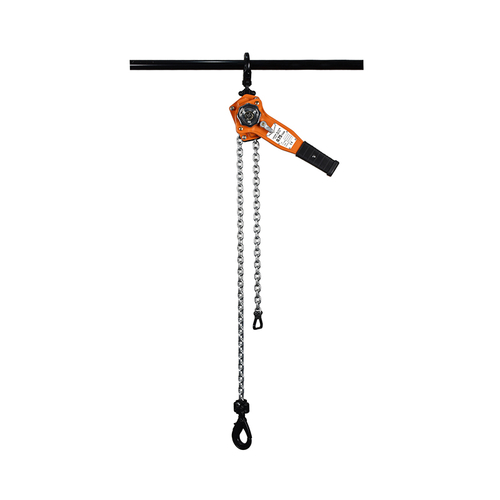
| Lever hoist | Short chain with ratchet lever | 0.75 t to 9 t | Pulling, tensioning, tight or angled lifts | Not built for repeated cycling in production |
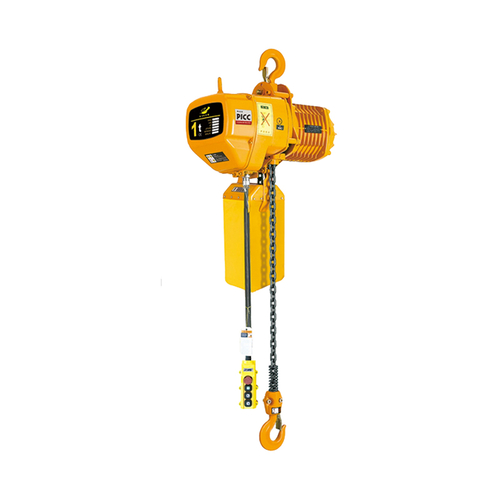
| Electric chain hoist | Motor driven load chain, single or multi fall | 0.25 t to 5 t, higher with multi fall | Low headroom, short to medium lift, machine tending | Chain wear accelerates in abrasive dust |
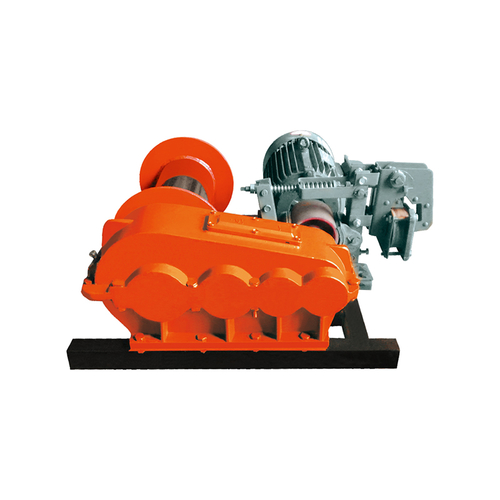
| Electric wire rope hoist | Grooved drum and steel rope | 1 t to 20 t and above | High lift, high starts per hour, long travel | Larger body, rope inspection schedule needed |
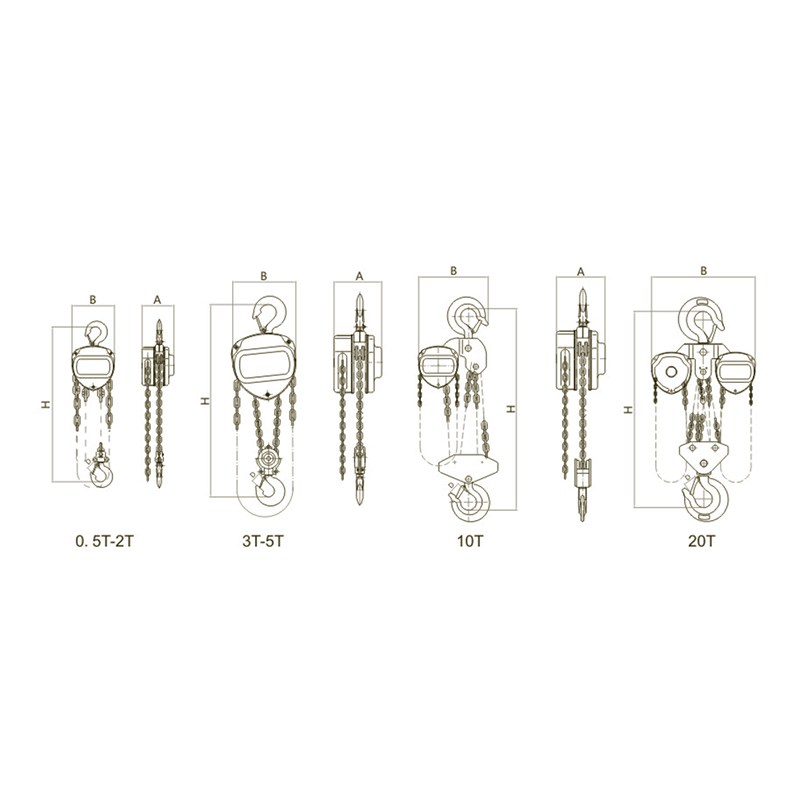 HSZ Standard Manual Chain HoistManually operated hoist for maintenance crews without power; robust steel body, double pawl mechanism, forged hooks and enclosed load brake.View Product →
Manual chain hoists remain the default for mixed maintenance crews because they need no power supply and no control voltage decisions. Electric units take over as soon as the same lift repeats several times an hour, because the labour cost of pulling hand chain usually outweighs the price difference within a few months of steady use.
Chain or wire rope is mostly a height and frequency decision
Chain hoists win on compactness. The load chain needs no drum, so the body stays short and the hook can travel close to the beam. That makes chain the practical choice where ceiling height is fixed and every millimetre of headroom counts, and where lift heights stay in single digits. Chain is also simple to inspect, because each link can be checked individually.
Wire rope hoists win on lift height and speed. Above roughly 8 m of lift, or where the hoist starts more than about 120 times an hour, a grooved drum and rope give smoother control, less chain swing and a longer working life. The trade-off is a taller body, a rope that must be inspected and replaced on a schedule, and a higher purchase price for the same capacity.
A useful habit is to write the lift height, the headroom and the starts per hour on one line before opening any catalogue. That single line eliminates most of the wrong options immediately.
Duty class drives price more than capacity does
Two hoists with the same rated capacity can differ by a factor of two in price because one is built for occasional use and the other for continuous production. Duty class is defined by the proportion of time the motor runs, the number of starts per hour and the load spectrum, meaning how often the hoist lifts full rated load rather than a fraction of it. The common classification systems, FEM and ISO, express this as a group such as M4 or M6, and regional variants exist.
| Working pattern | Approximate on-time | Starts per hour | Sensible class |
|---|---|---|---|
| Occasional workshop maintenance | Under 15 percent | Under 30 | Light duty |
| Assembly or machine tending, single shift | 20 to 25 percent | 60 to 120 | Medium duty |
| Two or three shifts, steady flow | 30 to 40 percent | 120 to 180 | Heavy duty |
| Foundry, coil handling, continuous process | Above 40 percent | 200 and above | Severe duty |
Buyers who skip this step usually discover it through overheating, brake slip or short chain life in the first year. If the cycle is genuinely uncertain, look at the factors that decide the right chain hoist before fixing the capacity, and specify one class above your estimate rather than one below it.
Mounting, headroom and hook approach
A hoist is only as useful as the space it leaves for the load. Three numbers govern that. Lift height is the usable travel of the hook. Headroom is the distance from the beam to the highest hook position, and it is set by the hoist body plus the trolley. Hook approach is how close the hook can get to the runway beam or the wall, which decides whether a load can be set down where the operator actually needs it.
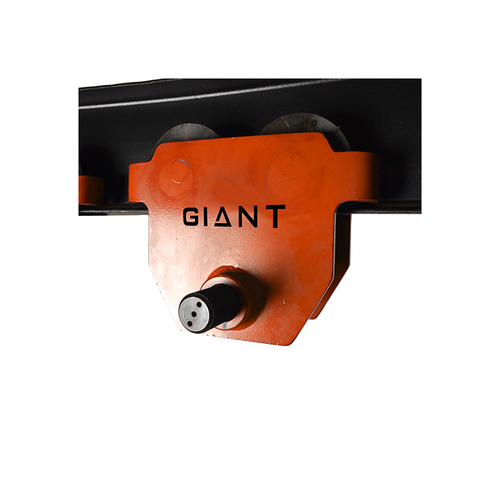
The mounting style changes all three. Hook suspension is the most compact but offers no travel. A push trolley adds a little height and lets one person move the load by hand. A motorised or geared trolley adds more height again but removes the manual effort on long beams. Where the beam flange is unusual, a beam clamp or a dedicated beam trolley rated for the flange width is safer than adapting a standard unit. Standard trolleys and monorail trolleys are covered under beam trolleys and monorail trolleys if you need to check flange compatibility.
Power supply, controls and site conditions
Voltage mismatch is one of the most common causes of a rejected shipment. Export buyers frequently receive a hoist built for 380 to 415 V three phase 50 Hz when the site runs 440 V three phase 60 Hz, or the reverse. Single phase units are common at small capacities, but the plug, the control cable length and the pendant voltage all need to be fixed at the order stage, not on site.
Control voltage matters for safety. A low voltage pendant circuit, typically 24 V or 48 V, reduces the risk to the operator if the control cable is damaged. Beyond that, check the ingress protection rating against the environment, the ambient temperature range, and whether the atmosphere is dusty, humid, salty or potentially explosive. Coastal and food processing sites often justify galvanised chain, stainless fittings or a sealed enclosure.
 HGS Mini Electric Wire Rope HoistCompact electric wire rope hoist with single or double hook, 110–380 V options, upper limit device, emergency stop and IP54 protection.View Product →
Safety devices and documents worth checking
The hardware list is short and worth memorising. A hoist should have a mechanical holding brake and a separate motor or regenerative brake, an upper and lower limit switch, a hook with a working latch, and a chain or rope guide that keeps the medium in the groove. An overload limiter and a phase failure relay protect against the two failure modes that most often come from the supply side rather than the operator.
On the paperwork side, ask for the load test certificate, the declaration of conformity for the destination market, the chain or rope grade certificate and a spare parts list with part numbers. A manual in the destination language is not a formality; it is what the insurer will ask for after an incident. Hoists with no traceable test record are difficult to put into service on any site with a formal lifting equipment policy.
Specification checklist before you request a quotation
Send these eight points with your enquiry and most of the back and forth disappears.
- Rated capacity and the total hook load, including spreader beam, slings and any lifting attachment.
- Lift height, available headroom and required hook approach.
- Duty class, estimated starts per hour and on-time percentage.
- Voltage, frequency, phase and required control voltage.
- Mounting method: hook suspension, push trolley, geared trolley or beam clamp.
- Environment: indoor or outdoor, dust, moisture, temperature, corrosive or explosive risk.
- Control type and pendant drop length, plus any required travel limits.
- Documentation set: test certificate, conformity declaration, manual language, spare parts list.
Installation and the maintenance rhythm
Commissioning is where small errors become expensive. Confirm that the beam or trolley is rated for the hoist plus the load, that the hook travels through the full intended height without fouling, and that the limit switches stop the load before it reaches any obstruction. Run the hoist empty through several cycles, then test the brake with a rated load just clear of the floor.
After that, maintenance is mostly measurement. Record chain wear against the manufacturer's discard limit, check hook throat opening and latch condition, inspect rope for broken wires and deformation, test the brake and both limit switches, and confirm the pendant and cable insulation are intact. A quarterly check is enough for light duty work. Two or three shift operations in a dusty plant need monthly attention, because wear on the load chain and the brake is proportional to starts, not to calendar time.
If you are unsure where to start, pick the mounting and the headroom first, because those two constraints eliminate most of the catalogue. Then set the duty class from the real shift pattern, and only then compare capacity and price. A slightly over-specified hoist on a well-matched trolley will usually cost less over ten years than a cheaper unit that has to be rebuilt twice.