English
 Español
Content
Can you use a damaged or defective sling if the load is light, the distance is short, or the job is almost finished? The answer is never. OSHA 1910.184, the federal standard that governs slings in general industry, is explicit: damaged or defective slings shall be immediately removed from service, and they shall not be used. No load rating, no time pressure, and no makeshift repair changes that rule. If inspection finds damage or a defect, the sling leaves service at once. This article explains the regulatory basis, the removal criteria for each sling type, and the inspection program that keeps lifting operations safe.
What OSHA 1910.184 Requires
OSHA 1910.184 applies to five sling families: alloy steel chain, wire rope, metal mesh, natural and synthetic fiber rope, and synthetic web. The standard creates three layers of obligation. First, safe operating practices state that damaged or defective slings shall not be used. The same paragraph prohibits shortening a sling with knots, bolts, or other makeshift devices. Second, inspection requirements direct the user to perform a visual inspection each day before use, or before each use when a sling is used infrequently. Third, each sling type carries its own removal conditions that trigger immediate withdrawal from service. Together, these layers form a simple rule: inspect before use, judge against written criteria, and remove anything questionable.
Why There Is No Exception for Light Loads
Some crews assume that a sling with a small cut can still handle a light load. That assumption is dangerous for four reasons. First, the rated capacity printed on the tag assumes the sling is structurally intact, and any cut, burn, or broken wire reduces the strength of the most stressed point. Second, the damaged zone is often hidden while the sling is tensioned, so the operator does not see the failure beginning. Third, sling failure is sudden; synthetic fibers do not stretch and warn the crew before breaking. Fourth, even a light load becomes a serious hazard when it falls from head height. Replacing a sling costs little; an injury or a damaged workpiece costs far more.
Removal Criteria by Sling Type
OSHA and ASME B30.9 provide concrete signals that take a sling out of service. A sling showing any of these conditions is removed immediately.
| Sling type | Typical removal signals |
|---|---|
| Alloy steel chain | Cracks, breaks, weld flaws, stretched or bent links, wear beyond allowable limits, deformed hooks or end attachments |
| Wire rope | Kinks, bird caging, broken wires in one lay, core displacement, corrosion pitting, heat damage, diameter reduction |
| Metal mesh | Broken brazed joints or wire loops, punctures, severe corrosion, stretched or distorted mesh |
| Synthetic fiber rope | Cuts, burns, broken yarns, abrasion, chemical damage, discoloration from UV exposure |
| Synthetic web | Cuts or holes, worn edges, torn stitches, exposed red core, melted or fused fibers |
These signals are not suggestions. When a competent person identifies one of them, the sling is withdrawn from service and tagged for disposal.
How Damage Lowers Effective Strength
Illustrative values for training and awareness only.
This bar chart uses illustrative values to show how damage changes the effective strength of a sling. A new sling with a legible tag retains its full rated capacity. Minor surface abrasion may not lower strength at once, but it opens the path for deeper wear. A cut through load-bearing yarns removes a large portion of working strength even when the outer cover looks close to normal. Burn marks and chemical exposure can embrittle the fibers without changing the sling's shape. Broken or pulled stitching means the sling can no longer be trusted for any lift. The conclusion is simple: no damage level is acceptable for continued service.
Building a Daily Inspection Habit
The daily visual inspection takes two minutes and prevents most failures. Before each shift, the operator lays the sling out, checks the tag, runs a gloved hand along the full length, and looks for the signals in the table above. The tag matters more than many crews realize. The working load limit, length, and manufacturer name are printed on it, and a missing or faded tag is itself a defect. ASME B30.9 adds periodic inspections by a qualified person at intervals based on service severity. Written records from these inspections should be reviewed because they reveal patterns, such as repeated abrasion on the same edge of the same sling.
Inspection Quality and Failure Risk
Risk index is a relative scale for illustration.
This line chart compares two crews using the same equipment and the same loads. The flat line represents a crew that inspects every sling before each shift and follows the written checklist. Their failure risk stays low because damage is caught while the sling is still usable. The steep line represents a crew that skips the daily check and waits for visible failure. The gap between the two lines widens after only a few dozen lifts, and the uninspected crew ends the year with risk more than double that of the inspected crew. Inspection is not a formality; it is the most effective way to prevent a dropped load.
Periodic Inspection Intervals
Intervals follow typical ASME B30.9 practice adjusted for duty level.
Periodic inspections go beyond the daily visual check and follow a schedule based on service conditions. Normal service, such as occasional lifts in a maintenance shop, allows the longest interval. Heavy service shortens the interval because slings meet more abrasion, shock loading, and contact with sharp edges. Severe service conditions, including continuous production or outdoor exposure, require quarterly checks. Continuous severe duty demands a monthly review, because the sling is in constant use. A qualified inspector examines both the sling and its service record during each periodic check. Keeping a written schedule makes the program honest and traceable.
What to Do When a Sling Fails Inspection
Removal is the end of a sling's service life, not the start of a repair debate. A clear procedure keeps a damaged sling from returning to service by mistake.
- Attach a red out of service tag with the reason and the date.
- Move the sling to a quarantine area separated from serviceable slings.
- Never repair a synthetic sling; a field stitch hides the weak point and creates a false sense of safety.
- Record the removal in the inspection log so patterns can be reviewed.
- Destroy the sling once a replacement arrives, so it cannot be picked up again.
Suppliers of certified rigging hardware can help verify that a replacement sling matches the application and the required working load limit.
Matching the Sling to the Job Cuts Damage Risk
A large share of sling damage comes from using the wrong sling for the job. Sharp edges cut synthetic covers, chemicals attack fibers, sunlight weakens outdoor slings, and knots shorten and distort the sling. Choosing the right sling from the start reduces damage and extends service life. Polyester round slings conform to curved loads and spread pressure over a wider surface, which is why riggers choose them for pipes, drums, and machinery; our round sling safety guidance explains the selection factors in detail. When the job involves sharp edges or high temperatures, the complete product catalog includes chain and hook options that resist cutting better than fabric.
In a well-run inspection program, two sling families appear most often. The polyester round sling uses a continuous load-bearing core, while the flat web sling relies on stitched polyester layers. Both are easy to inspect daily, provided the identification tag remains legible and the manufacturer's working load limit is printed on it.
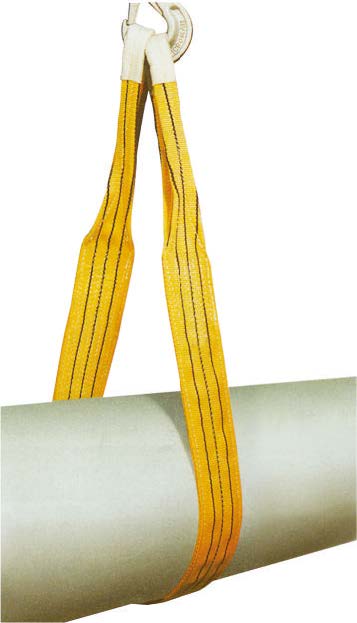 Wholesale WEB SLING-F7-W1/F7-W2 Suppliers, OEM/ODM Company - Hangzhou Giant LiftHangzhou Giant Lift Co., Ltd. is China wholesale WEB SLING-F7-W1/F7-W2 suppliers and OEM/ODM company, details: 1. F7-W1 each 25mm web wid...View Product →
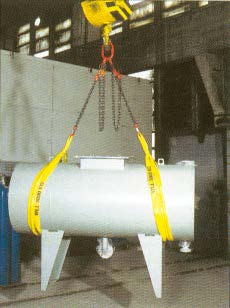 Wholesale Round Sling-R7-04 Suppliers, OEM/ODM Company - Hangzhou Giant Lift Co.Hangzhou Giant Lift Co., Ltd. is China wholesale Round Sling-R7-04 suppliers and OEM/ODM company, details: Type: 1. Polyester round sling...View Product →
Sling Family Comparison
Scores from 1 to 5 represent relative suitability across typical rigging tasks.
This radar chart compares four sling families across six selection factors. Synthetic web slings score highest in flexibility and ease of inspection, which makes them popular for general rigging. Round synthetic slings offer a balanced profile with good conformability around curved loads and strong abrasion resistance. Alloy steel chain leads in abrasion resistance, UV resistance, and load range, but scores lower in flexibility. Wire rope also provides a wide load range but requires careful handling to avoid kinks and broken wires. The chart explains why a working inventory often contains more than one sling type. Matching the sling to the application reduces the chance of damage in the first place.