English
 Español
Content
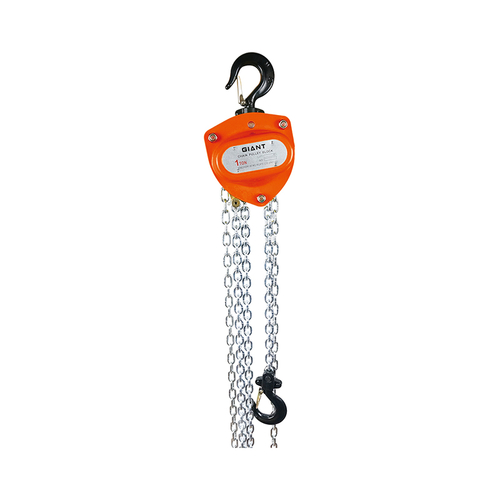
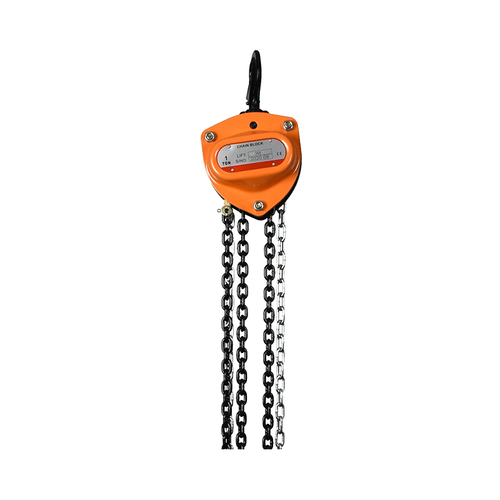
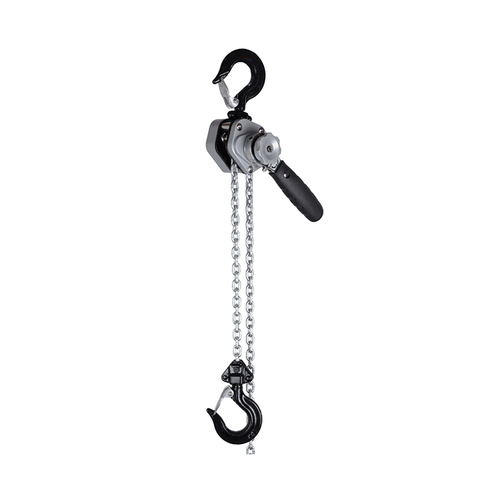
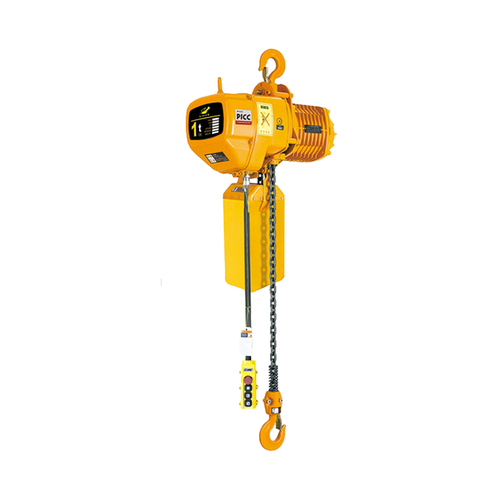
The fundamental difference between an electric chain hoist and a chain pulley block is how they generate lifting force. An electric chain hoist uses an electric motor to raise and lower loads, requiring only button or pendant control from the operator. A chain pulley block — also called a manual chain hoist or chain block — relies entirely on human effort applied through a hand chain to lift the load. This single distinction drives significant differences in capacity, speed, application suitability, and total operating cost.
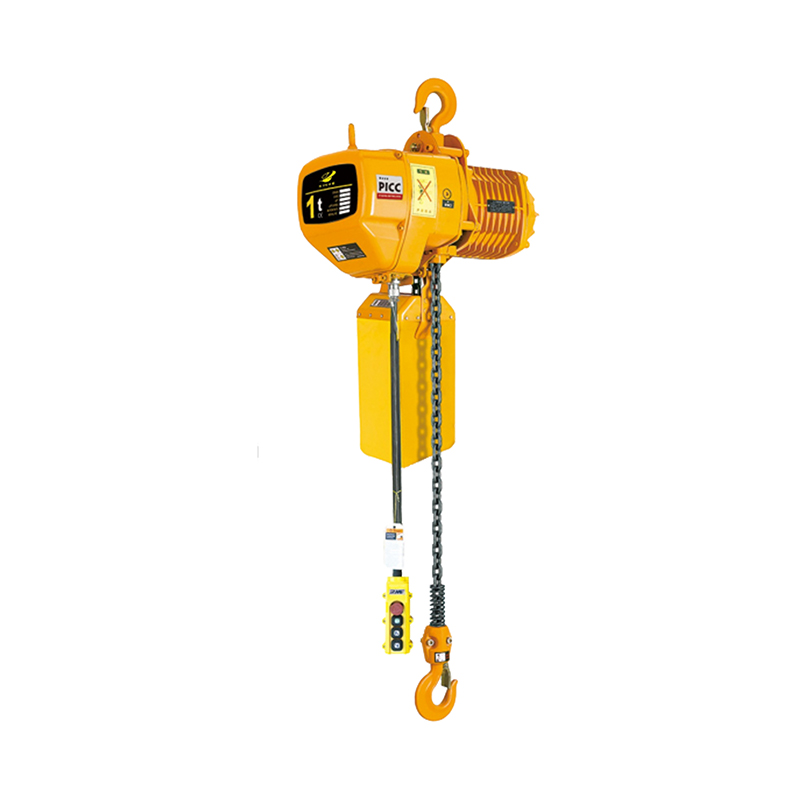
As a practical illustration: a worker using a manual chain pulley block to lift a 1-tonne load must pull the hand chain repeatedly, exerting sustained physical effort. The same lift performed by a 1-tonne electric chain hoist requires only pressing a button — the motor does all the work in a fraction of the time.
Side-by-Side Comparison
| Criteria | Electric Chain Hoist | Chain Pulley Block |
|---|---|---|
| Power source | Electric motor (single or 3-phase) | Manual hand chain pull |
| Typical capacity range | 0.5 – 50 tonnes | 0.5 – 20 tonnes |
| Lifting speed | 2 – 8 m/min (motor-driven) | 0.5 – 1.5 m/min (manual) |
| Operator effort | Minimal (push-button control) | Significant physical effort required |
| Power supply required | Yes (electrical connection) | No |
| Portability | Moderate (requires power source) | High (fully self-contained) |
| Unit cost | Higher | Lower |
| Duty cycle | Continuous / high-frequency | Intermittent / low-frequency |
How Each Device Works
Electric Chain Hoist: Motor-Driven Mechanical Advantage
An electric chain hoist consists of an electric motor, a gear reduction unit, a load chain, and a hook assembly — all housed in a compact metal body. When the operator activates the control pendant, the motor drives a gear train that rotates the load sheave, pulling the load chain and raising the hook. The gear reduction system multiplies the motor's torque to achieve the rated lifting capacity while maintaining manageable chain speed. Most electric hoists also incorporate a friction disc brake or electro-mechanical brake that engages automatically when power is cut, holding the load in position without drift.
Chain Pulley Block: Human-Powered Gear Train
A chain pulley block uses a hand chain connected to a driving sprocket. When the operator pulls the hand chain, the driving sprocket turns a gear reduction mechanism — typically a series of spur or planetary gears — that rotates the load wheel at a much slower rate with greatly multiplied force. A mechanical load brake (usually a Weston-type friction brake) automatically locks the load in place when the hand chain is released. This self-locking mechanism means the load cannot descend under gravity without the operator deliberately pulling the slack side of the hand chain to release it — an important safety characteristic.
When to Choose an Electric Chain Hoist
An electric chain hoist is the right choice when:
- Frequency of lifts is high — production lines, assembly operations, and warehouses requiring dozens or hundreds of lifts per shift benefit enormously from motorized operation.
- Loads are heavy and frequent — manually operating a chain block for loads above 2 tonnes repeatedly causes operator fatigue and increases injury risk.
- Speed matters — electric hoists lift at 3–5 times the speed of manual equivalents, directly impacting throughput in time-sensitive operations.
- Integration with crane systems — electric hoists mount easily on monorails, bridge cranes, and gantry cranes for full horizontal and vertical load movement.
When to Choose a Chain Pulley Block
- No power supply is available — remote sites, outdoor construction areas, underground locations, and confined spaces without electrical access.
- Lifts are infrequent — occasional maintenance tasks, equipment installation, or emergency rigging where the investment in an electric hoist is not justified.
- Hazardous or explosive atmospheres — environments where electric equipment poses ignition risks may require manually operated lifting devices.
- Budget constraints — chain pulley blocks cost a fraction of equivalent electric hoists and require no electrical installation.
- Precise load positioning at slow speed — manual control gives operators fine tactile feedback for exact positioning of delicate or critical components.
Maintenance and Safety Considerations
Both devices share common safety requirements: regular inspection of load chains for stretch, wear, and cracking; hook latch function checks; and verification of rated capacity markings. However, their maintenance profiles differ:
- Electric chain hoists require additional attention to motor insulation, brake wear, electrical connections, and control pendant condition. Most manufacturers specify motor brake inspection every 6 months under normal use.
- Chain pulley blocks have simpler maintenance needs — primarily lubrication of the load chain, gear mechanism, and brake pawl assembly. With proper care, a quality chain block can remain in service for 10–20 years.
Both types should be inspected before each use and removed from service immediately if any deformation, cracks, excessive wear, or brake slippage is detected.