English
 Español
Content
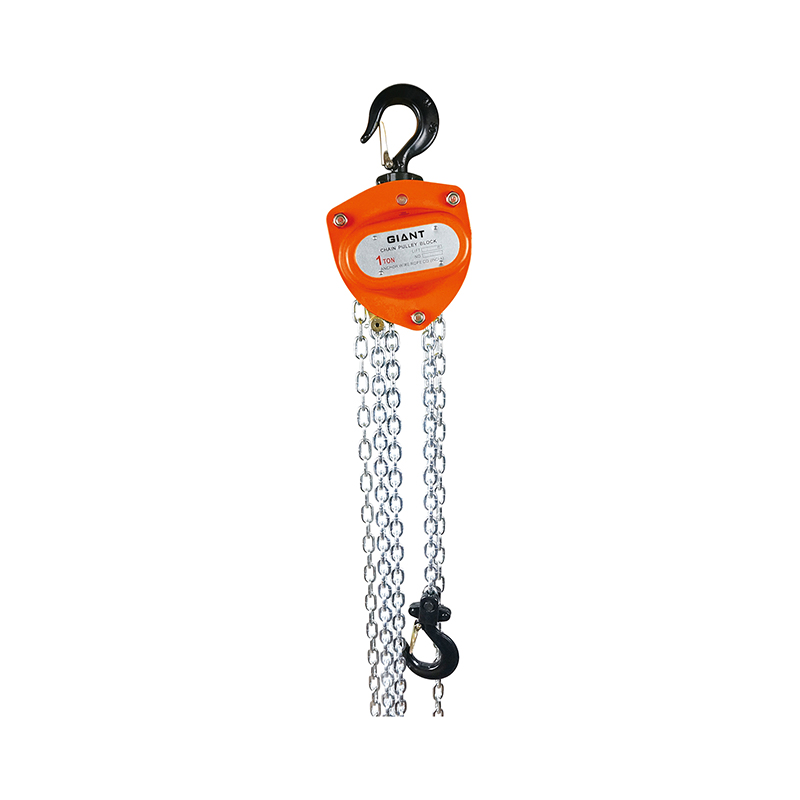
A chain hoist is a mechanical lifting device that uses a chain, a system of pulleys or gears, and a load hook to raise, lower, and suspend heavy loads. It converts a relatively small pulling force applied by an operator (or an electric motor) into a much larger lifting force through mechanical advantage, allowing loads far heavier than a person could lift unaided to be raised safely and precisely. Chain hoists are one of the most widely used load-handling tools in manufacturing, construction, maintenance, and logistics.
They are available in manual (hand chain) and electric-powered variants, with load capacities typically ranging from 250 kg to 50,000 kg depending on the model and configuration.
How a Chain Hoist Works
The operating principle of a chain hoist is based on a combination of a load chain, a hand chain (or electric motor), and an internal gear and sprocket mechanism:
- Input force: The operator pulls the hand chain (or the motor turns the drive shaft), rotating the hand wheel or drive sprocket.
- Gear reduction: An internal gear train multiplies the rotational force, dramatically reducing the effort needed to move the load. A gear ratio of 30:1 means the operator needs only 1/30 of the load's weight in pulling force to raise it.
- Load chain movement: The amplified force turns the load sprocket, which engages the load chain and raises the lower hook block — and with it, the attached load.
- Load brake: A built-in friction or mechanical brake automatically holds the load at any height when the operator stops pulling, preventing uncontrolled descent.
Types of Chain Hoists
Manual Chain Hoist (Hand Chain Block)
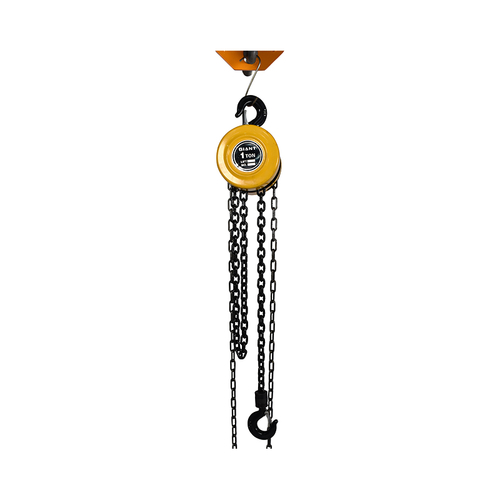
Operated entirely by hand using a circular hand chain that drives the internal gear mechanism. No power supply is required, making manual chain hoists ideal for remote locations, outdoor work, and sites without electrical infrastructure. Standard capacities range from 250 kg to 20,000 kg, with typical lift heights of 3–6 meters. They operate more slowly than electric hoists but are highly portable and require minimal maintenance.
Electric Chain Hoist
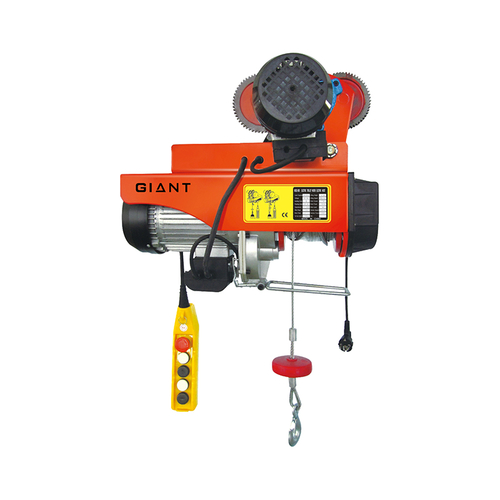
Uses an electric motor to drive the load chain, controlled by a pendant push-button or remote control. Electric hoists are significantly faster than manual models — typical lift speeds are 2–8 meters per minute — and reduce operator fatigue in high-cycle applications. Capacities range from 125 kg to 50,000 kg for standard models; heavy industrial versions exceed this. They are the standard choice for production facilities, warehouses, and assembly lines where lifting frequency is high.
Pneumatic Chain Hoist
Driven by compressed air rather than electricity, pneumatic chain hoists are used in explosive atmospheres (ATEX zones), paint shops, and chemical plants where electric sparks pose a hazard. They offer a high power-to-weight ratio and can operate continuously without overheating — a limitation of some electric hoist duty cycles.
Key Industries and Applications
| Industry | Typical Use | Preferred Type |
|---|---|---|
| Manufacturing | Lifting machinery, molds, and assemblies on production lines | Electric chain hoist |
| Construction | Positioning structural steel, lifting materials to elevated levels | Manual or electric |
| Automotive | Engine removal and installation, body panel handling | Electric chain hoist |
| Mining and Oil & Gas | Equipment maintenance in hazardous environments | Pneumatic chain hoist |
| Warehousing | Loading, unloading, and repositioning heavy goods | Electric chain hoist |
| Shipbuilding / Marine | Lifting components during vessel assembly and repair | Electric or manual |
Key Components of a Chain Hoist
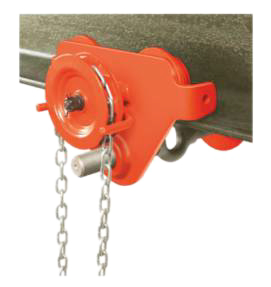
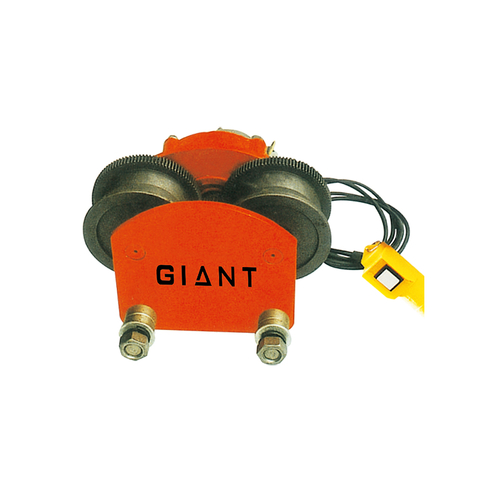
- Top hook / suspension lug: Connects the hoist to the overhead structure (beam, trolley, or crane runway)
- Load chain: A precision-manufactured alloy steel chain rated for the hoist's working load limit; the weakest point in any chain hoist system defines the safe working load
- Bottom hook and swivel: Connects to the load; the swivel allows the hook to rotate for load alignment without twisting the chain
- Gear mechanism: Achieves mechanical advantage through a planetary or spur gear train; higher gear ratios make heavy lifts easier but increase the number of hand chain pulls per meter of lift height
- Load brake: Automatically holds the load in position when the operator releases the hand chain; most manual hoists use a Weston-style friction brake integrated into the drive mechanism
- Chain container / bag: Collects the excess load chain as the hook is raised, preventing the chain from dragging on the floor
Safety Requirements and Load Rating
Chain hoists are safety-critical equipment subject to strict regulatory requirements. Key points:
- Every chain hoist carries a Working Load Limit (WLL) or Safe Working Load (SWL) rating that must never be exceeded. Standard safety factors in design are typically 4:1 or 5:1 (the hoist is tested to 4–5 times its rated WLL before delivery).
- In most jurisdictions, chain hoists must be inspected by a competent person at least every 12 months (or more frequently in high-cycle applications) and a thorough examination record maintained
- Load chains must be replaced when wear reduces the chain pitch by more than 2% or when any link shows visible cracking, deformation, or corrosion pitting
- Side-loading — applying force at an angle other than directly vertical — is strictly prohibited and can reduce effective capacity by 50% or more