English
 Español
Content
- 1 How a Pallet Jack Works: The Basic Mechanism
- 2 Types of Pallet Jacks and Their Key Differences
- 3 Pallet Jack vs. Forklift: Understanding the Difference
- 4 Key Specifications to Understand When Choosing a Pallet Jack
- 5 Where Pallet Jacks Are Used: Common Applications
- 6 Safe Operation: What Every Pallet Jack User Must Know
- 7 Maintenance Requirements to Keep a Pallet Jack Serviceable
- 8 Manual vs. Electric Pallet Jack: Choosing the Right Option
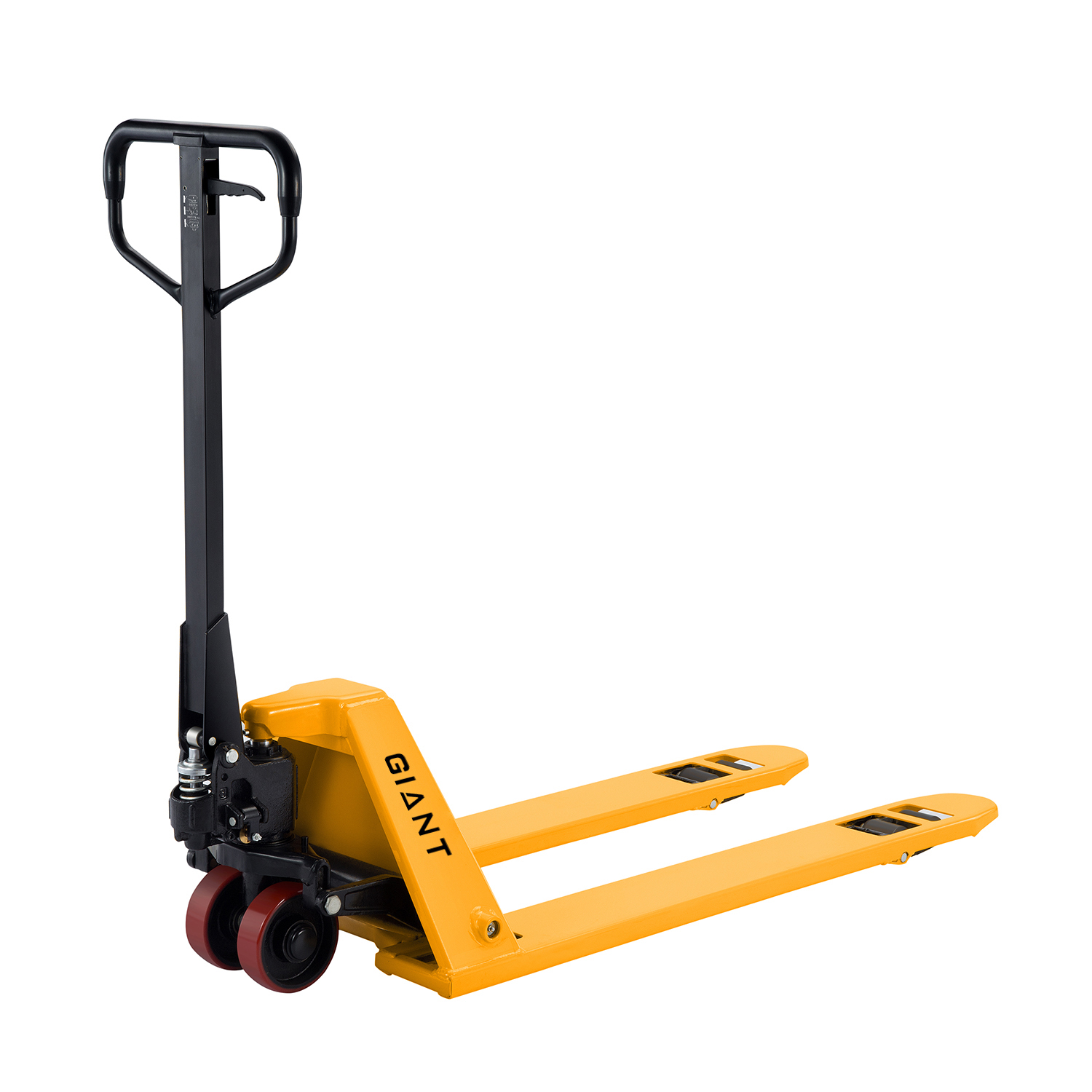
A pallet jack — also called a pallet truck, pump truck, or hand truck — is a wheeled material handling device used to lift, move, and position pallets loaded with goods within warehouses, distribution centres, retail stockrooms, and loading docks. It operates by sliding two steel forks beneath a standard pallet, raising the load clear of the floor using a hydraulic pump mechanism, and rolling it to its destination on wheels. Pallet jacks are the most widely used floor-level material handling tool in logistics and warehousing globally, valued for their simplicity, low cost, and ability to move loads of 1,500 to 5,500 kg without powered machinery.
How a Pallet Jack Works: The Basic Mechanism
A pallet jack operates on a straightforward hydraulic principle. The handle contains a built-in hydraulic pump. When the operator pumps the handle up and down, hydraulic fluid is forced into a cylinder beneath the fork assembly, extending a set of small linkage wheels that push the fork tips downward — which in turn raises the fork deck upward, lifting the pallet off the floor.
The key mechanical components are:
- Forks (tines): Two elongated steel arms, typically 1,150 mm long and 150–200 mm wide, that slide into the entry openings of a standard pallet. The forks bear the full weight of the load.
- Hydraulic pump and cylinder: The pump in the handle generates pressure that raises the forks. The cylinder holds the elevated position without requiring the operator to sustain any force.
- Load wheels: Small wheels or rollers at the tips of the forks that contact the floor when the forks are raised, supporting the front weight of the load.
- Drive wheel (rear): The single large wheel beneath the handle that steers and propels the pallet jack. The operator steers by swinging the handle laterally, which turns the drive wheel.
- Release valve / lowering lever: A control on the handle that opens the hydraulic circuit, allowing fluid to return to the reservoir and the forks to descend slowly and controllably.
The forks are raised only enough to clear the floor — typically 7–8 inches (175–200 mm) — which is all that is needed for transport. This low lift height keeps the centre of gravity close to the ground, maintaining stability under heavy loads.
Types of Pallet Jacks and Their Key Differences
Pallet jacks are available in several configurations, each suited to different operational environments, load weights, and levels of operator effort required.
Manual Pallet Jack
The most common type. The operator pumps the handle to raise the load and pushes or pulls the unit manually. Manual pallet jacks require no external power source, making them extremely low-cost to purchase and operate. Standard models handle loads of 2,500 kg (5,500 lbs), with heavy-duty versions rated to 5,000 kg. They are ideal for short-distance movement on smooth, level floors.
Electric Pallet Jack (Powered Pallet Truck)
An electric pallet jack uses a battery-powered motor to drive the wheels, eliminating the physical effort of pushing heavy loads. The operator still walks alongside the machine (walk-behind model) or rides on a platform at the rear (rider model). Electric pallet jacks are standard equipment in high-throughput operations where operators move many pallets per shift over longer distances. They typically handle 1,500–2,500 kg loads at travel speeds of 4–8 km/h.
High-Lift Pallet Jack
A high-lift pallet jack raises the forks significantly higher than a standard model — typically to 800 mm or more — to position pallets on low-level racking, dock levellers, or work tables. The scissor-lift mechanism allows work at ergonomic height, reducing operator bending and strain during picking or repacking tasks.
Low-Profile Pallet Jack
Designed with a lower fork height at the entry position, allowing forks to slide beneath low-clearance pallets, dollies, or slip-sheet loads that standard pallet jacks cannot access. Fork entry heights as low as 55–65 mm in the lowered position are achievable with low-profile designs.
Scale Pallet Jack (Weigh Pallet Truck)
A manual or electric pallet jack with an integrated weighing scale built into the fork assembly. The operator can lift and weigh a pallet in a single operation, eliminating the need to route loads through a separate floor scale. Accuracy of ±0.5 kg is typical for commercial-grade weigh pallet trucks, meeting the requirements for goods-in/goods-out weight verification in most logistics operations.
Pallet Jack vs. Forklift: Understanding the Difference
Pallet jacks and forklifts are both used to move palletised loads, but they serve fundamentally different functions in a warehouse. Understanding the distinction helps operations managers make the right equipment investment.
| Feature | Manual Pallet Jack | Electric Pallet Jack | Counterbalance Forklift |
|---|---|---|---|
| Maximum lift height | 200 mm (floor transport) | 200–300 mm (floor transport) | 3,000–7,000 mm (racking) |
| Typical load capacity | 2,500 kg | 1,500–2,500 kg | 1,500–10,000 kg |
| Operator licence required | Training recommended only | Training recommended | Formal certification required |
| Aisle width required | 1.2–1.5 m | 1.5–2.0 m | 3.0–4.5 m |
| Approximate unit cost | Low (£200–£600) | Medium (£2,000–£8,000) | High (£15,000–£40,000+) |
| Can stack to racking height | No | No | Yes |
Pallet jacks excel at floor-level horizontal movement of pallets — tasks that do not require lifting loads to height. Forklifts are required wherever pallets must be placed into or retrieved from raised racking systems. Most warehouse operations deploy both: forklifts for put-away and retrieval from racks, and pallet jacks for marshalling, order picking at ground level, and loading dock work.
Key Specifications to Understand When Choosing a Pallet Jack
Selecting the right pallet jack for a specific operation requires evaluating several technical specifications that directly affect safety and daily usability.
- Load capacity: The maximum rated load the pallet jack can safely lift and transport. Standard models are rated at 2,500 kg; heavy-duty models reach 5,000 kg. Always apply a safety margin — do not routinely load a pallet jack to its maximum rated capacity.
- Fork length: Standard fork length is 1,150 mm, which fits standard GMA-spec pallets (1,200 mm × 1,000 mm or 48" × 40"). Extended fork lengths of 1,220 mm or longer are available for Euro pallets or double-pallet handling configurations.
- Fork width (outside spread): The distance between the outer edges of the two forks, typically 540–685 mm. Must fit within the pallet's fork entry openings while providing sufficient support across the pallet width to prevent rocking.
- Minimum fork height (lowered): How close the fork deck sits to the floor when fully lowered. Standard models have a minimum height of 75–85 mm; low-profile models achieve 55–65 mm. This must be less than the pallet entry clearance height to allow forks to slide under the pallet.
- Maximum fork height (raised): The height the forks reach when fully pumped. Standard transport height is 190–200 mm, sufficient to clear most floor surfaces and dock plates.
- Wheel type: Nylon wheels offer low rolling resistance on smooth floors; polyurethane wheels provide better floor protection and are quieter; rubber-tyred wheels suit outdoor or rough-surface use. The drive wheel and load wheels should be matched to the floor surface to prevent premature wear and ensure safe traction.
Where Pallet Jacks Are Used: Common Applications
Pallet jacks are deployed across virtually every industry that receives, stores, or dispatches goods on pallets. Their compact size, low cost, and ease of use make them the go-to solution for short-distance horizontal pallet movement in environments where a forklift would be impractical or unnecessary.
- Warehouses and distribution centres: Moving pallets between goods-in areas, storage zones, and dispatch docks. Electric pallet jacks are preferred in large DCs where operators travel hundreds of metres per shift.
- Retail stockrooms and supermarkets: Manual pallet jacks are standard equipment in the stockrooms of supermarkets, DIY stores, and large retail outlets, used to move deliveries from the loading bay to the shop floor or storage shelving.
- Loading dock operations: Positioning pallets within truck trailers during loading and unloading, where the confined space of a trailer makes a forklift impractical and a pallet jack indispensable.
- Manufacturing plants: Moving raw material pallets from goods-in to production lines and finished goods pallets from production to dispatch staging areas.
- Food and beverage: Stainless steel or food-grade pallet jacks for use in hygiene-sensitive production and cold storage environments, where standard painted steel models are unsuitable due to corrosion and contamination risks.
- Healthcare and pharmaceuticals: Moving medication and supply pallets within hospital logistics areas, fulfilment centres, and controlled-environment storage facilities.
Safe Operation: What Every Pallet Jack User Must Know
Although a manual pallet jack requires no licence to operate in most jurisdictions, it carries genuine safety risks when used incorrectly. Pallet jack incidents — including operator foot injuries, load falls, and tip-overs — are among the most frequently reported warehouse accidents. The following practices are essential for safe operation:
- Insert forks fully under the pallet before pumping. Partial fork insertion is the most common cause of load tipping — forks that do not fully support the pallet base create an unstable pivot point.
- Pull the pallet jack rather than pushing it when travelling, to maintain visibility of the path ahead and improve steering control. Pushing is permitted only when entering tight spaces or positioning the pallet precisely.
- Keep the load as low as possible during transport — raise forks just enough to clear the floor. Higher fork positions raise the centre of gravity and increase tip-over risk.
- Never exceed the rated load capacity. Check the data plate on the pallet jack frame and ensure the loaded pallet weight is within the rated limit before lifting.
- Wear steel-toed safety footwear when operating a pallet jack. Foot crush injuries from forks rolling over toes are one of the most common pallet jack injury types — accounting for a significant proportion of lost-time incidents in warehousing.
- Lower the forks fully and leave the pallet jack in a safe position when not in use. A loaded pallet jack left on a slight incline can drift and cause injury — always lower the load before leaving the equipment unattended.
- Inspect the pallet jack before each shift. Check for hydraulic fluid leaks, damaged or flat wheels, bent forks, and proper handle movement. Remove defective equipment from service immediately.
Maintenance Requirements to Keep a Pallet Jack Serviceable
A well-maintained manual pallet jack can provide 10 or more years of reliable service. The maintenance tasks required are straightforward and low-cost when performed regularly.
- Hydraulic fluid level: Check every 3–6 months. Low fluid causes the forks to fail to hold their raised position or to rise more slowly than normal. Use only the hydraulic jack oil grade specified by the manufacturer — typically a 32 or 46 grade hydraulic oil.
- Wheel inspection and lubrication: Inspect wheels monthly for flat spots, embedded debris, and bearing wear. Lubricate wheel axles every 1–3 months with a suitable grease to prevent premature bearing failure and reduce rolling resistance.
- Fork and frame inspection: Inspect forks annually for visible cracks, permanent bends, and surface corrosion. Any fork deflection exceeding 3% of the rated load capacity during testing is typically sufficient reason to remove the unit from service.
- Hydraulic seal replacement: If the jack fails to hold pressure (forks slowly sink when loaded) or leaks hydraulic fluid, the internal hydraulic seals require replacement. This is a technician-level repair that restores the jack to full operating capability at a fraction of replacement cost.
- Handle and linkage check: Confirm that the handle pivot moves freely through its full range and that all linkage pins and retaining clips are present and secure. Loose or missing pins cause unpredictable steering behaviour that increases accident risk.
Manual vs. Electric Pallet Jack: Choosing the Right Option
The choice between a manual and electric pallet jack depends primarily on the volume of moves per shift, the distance travelled per move, and the floor surface conditions.
- Choose a manual pallet jack when: The operation involves relatively few pallet moves per shift (typically fewer than 20–30 moves per day), distances are short (under 30–40 metres per move), the floor is smooth and level, and cost minimisation is a priority. Manual pallet jacks are also preferred in confined spaces, trailers, and areas without charging infrastructure.
- Choose an electric pallet jack when: Operators make frequent moves throughout a shift (more than 30–40 moves per day), travel distances are significant (over 40 metres per move), loads are consistently heavy (above 1,000 kg), or musculoskeletal injury risk from manual pushing and pulling must be reduced. Electric models dramatically reduce operator fatigue and increase productivity in high-throughput environments.
The total cost of ownership over 5 years — including purchase price, maintenance, and battery replacement for electric models — often makes electric pallet jacks economically competitive with manual models in operations where high daily usage would otherwise result in frequent manual model repairs and operator injury costs.
.jpg?imageView2/2/w/500/h/500/format/jpg/q/100)