English
 Español
Content
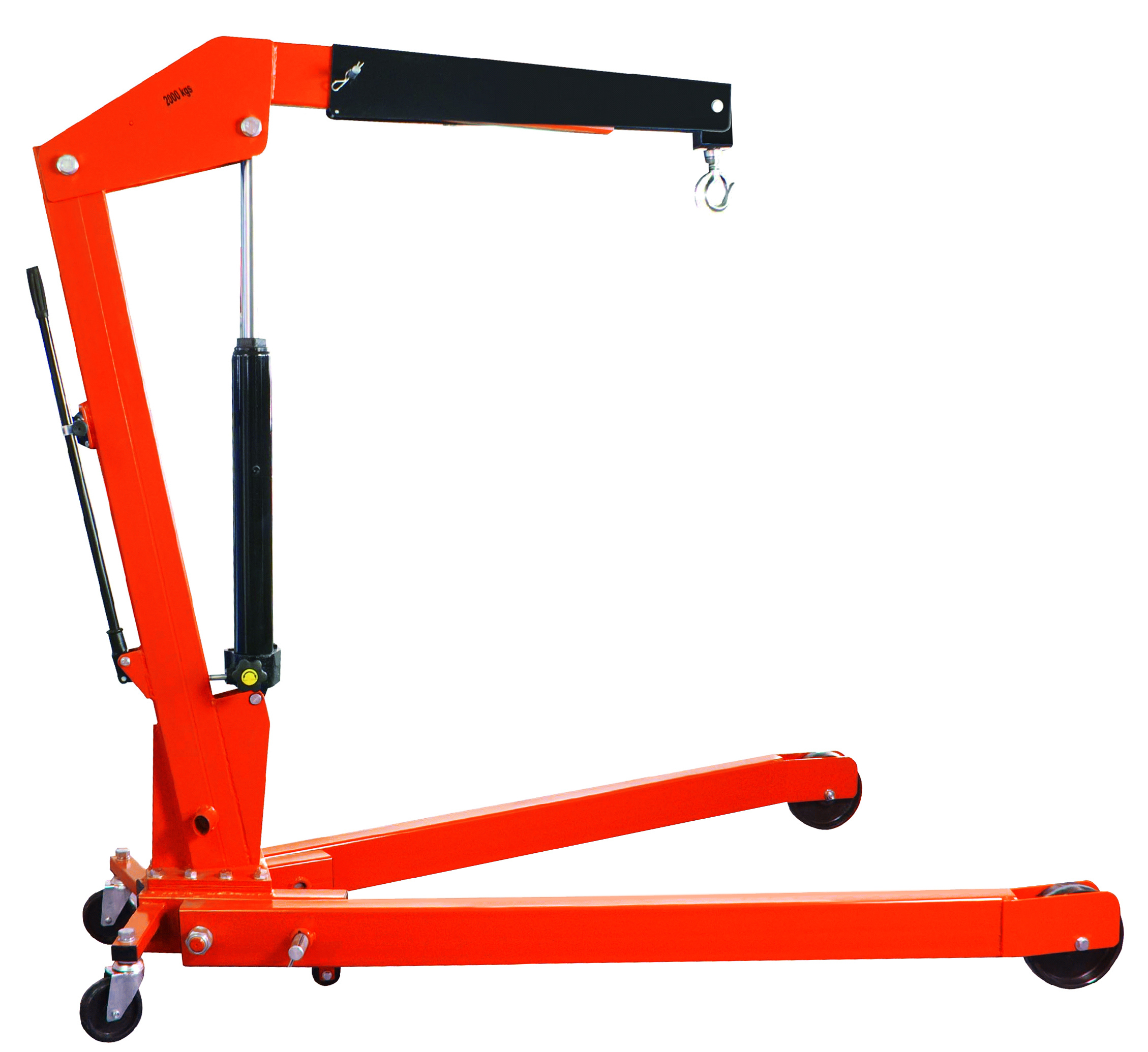
A shop crane — also called an engine hoist, cherry picker, or shop hoist — is used to lift, remove, install, and reposition heavy components in a workshop or garage that cannot be safely lifted by hand. Its primary use is engine removal and installation in automotive repair, but its hydraulic arm and adjustable reach make it equally valuable for lifting gearboxes, cylinder heads, compressors, industrial machinery, and any other heavy component that needs to be raised, moved, and lowered with precision in a confined indoor space.
Most shop cranes have rated lifting capacities between 1 tonne (2,200 lbs) and 3 tonnes (6,600 lbs), and their folding legs and wheeled base allow a single person to position the crane over a vehicle engine bay, perform the lift, and wheel the suspended load to a workbench or engine stand without assistance.
Primary Use: Engine Removal and Installation
The defining application of a shop crane is lifting an engine out of a vehicle's engine bay for rebuild, replacement, or major repair. The procedure illustrates exactly why a shop crane is indispensable:
- The vehicle is raised on a lift or jack stands. The crane's folding legs are extended and the unit is wheeled over or beside the engine bay.
- A load leveler bar or lifting bracket is bolted to the engine's lifting points. The crane hook is attached to this bracket.
- The hydraulic ram is pumped to take the weight of the engine — which ranges from 120 kg for a small four-cylinder to over 450 kg for a large V8 or diesel block — before the engine mounts and final connections are removed.
- The engine is lifted clear of the bay, and the crane is wheeled to transport the engine to an engine stand or workbench for service.
Without a shop crane, this task requires multiple people, improvised rigging, and significantly higher risk of injury or component damage — making the crane effectively indispensable for any garage performing engine work.
Secondary Uses Beyond Engine Removal
Gearbox and Transmission Removal
Manual and automatic transmissions can weigh 50 to 150 kg depending on type and vehicle. Removing a transmission requires lowering it while disconnecting multiple mounting points, driveshaft connections, and wiring harnesses — a task that requires controlled support that a shop crane provides when used with a transmission jack adapter.
Moving Machinery and Workshop Equipment
A shop crane's wheeled, maneuverable design makes it useful for moving heavy workshop equipment — lathes, milling machines, compressors, generators, and welding units — that are too heavy to lift by hand but lack dedicated lifting points compatible with pallet trucks. The crane's hook and chain can be rigged to almost any heavy object with appropriate slings.
Agricultural and Small Industrial Applications
On farms and in small industrial workshops, shop cranes are used to lift tractor components, remove pump assemblies, install compressor units, and handle any heavy component where a permanent overhead crane is not installed. Their portability means they can be moved to where the work is, rather than requiring the work to come to a fixed lifting point.
Loading and Unloading Heavy Items from Vehicles
Shop cranes can unload heavy items from truck beds, vans, and trailers when no loading dock or forklift is available — particularly useful for small workshops that periodically receive heavy equipment deliveries without dedicated unloading infrastructure.
How a Shop Crane Works
A shop crane uses a single-acting hydraulic ram to extend the lifting arm. The operator pumps a handle to force hydraulic fluid into the ram cylinder, extending the ram and raising the boom arm. The load is lowered by releasing a bleed valve on the ram that slowly allows fluid back into the reservoir — providing controlled, smooth lowering rather than sudden drops. The boom arm is typically adjustable in reach (the horizontal distance from the upright to the hook), with rated capacity decreasing as reach increases — a critical relationship that users must understand to operate safely.
For example, a typical 2-tonne shop crane may have a rated capacity of 2,000 kg at minimum reach but only 500 kg at maximum reach. Always consult the capacity chart on the crane before rigging to a load.
Choosing the Right Shop Crane: Key Specifications
| Specification | Typical Range | What It Affects |
|---|---|---|
| Maximum lift capacity | 1 – 3 tonnes | Maximum safe working load |
| Boom reach (min–max) | 80–155 cm typical | Ability to reach over vehicle bodywork |
| Maximum lift height | 1.8 – 2.5 m | Clearance for engine lift out of tall vehicles |
| Leg span (open) | 130 – 160 cm | Stability footprint; must straddle vehicle |
| Folded dimensions | Varies by model | Storage space required when not in use |