English
 Español
Content
- 1 How a Hand Winch Works: The Mechanics Behind Manual Pulling Power
- 2 Main Types of Hand Winches and Pullers
- 3 Hand Winch vs. Electric Winch: Key Differences
- 4 Common Applications of Hand Winches and Pullers
- 5 Key Specifications Explained: What the Numbers Mean
- 6 Materials and Construction: What to Look for in a Quality Hand Winch
- 7 How to Choose the Right Hand Winch or Puller for Your Application
- 8 Safety Rules for Operating Hand Winches and Pullers
- 9 Hand Winch Capacity Ranges and Typical Applications at a Glance
- 10 Maintenance Practices That Extend the Life of Your Hand Winch
A hand winch and puller is a manually operated mechanical device used to move, lift, pull, or position heavy loads by winding a cable, rope, or strap around a drum or through a gear system using human force. The operator turns a handle or crank — sometimes equipped with a ratchet mechanism — which drives the drum and generates substantial pulling force through mechanical advantage. Depending on the gear ratio and design, a hand winch can allow a single person to exert hundreds to several thousand kilograms of pulling force using only their own muscle power, making these tools indispensable across construction, marine, agricultural, automotive recovery, and industrial applications.
"Winch" and "puller" are closely related but not always identical in meaning. A winch refers specifically to a device with a rotating drum that winds cable as force is applied, while a puller (or come-along) typically uses a ratchet-and-lever system to pull a load in a straight line. In practice, many products combine both functions, and the terms are often used interchangeably in the market. This article explains how they work, the main types available, what they are used for, and how to choose the right one for your needs.
How a Hand Winch Works: The Mechanics Behind Manual Pulling Power
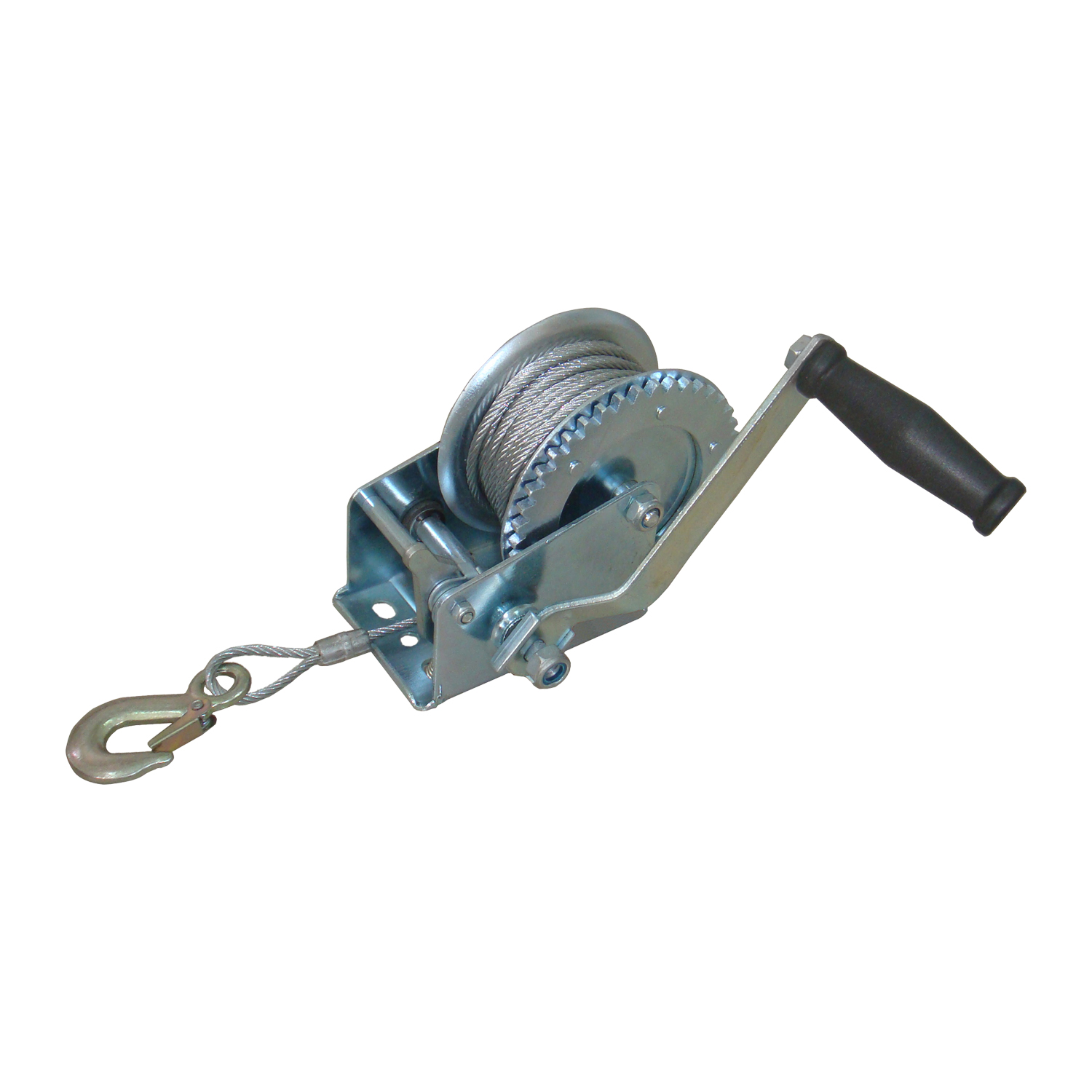
The fundamental operating principle of a hand winch is the conversion of rotational hand movement into linear pulling force through mechanical advantage. The key components and how they interact are:
- Drum: The central rotating cylinder around which the cable, wire rope, or strap is wound. As the drum rotates, it retracts the cable and pulls the load toward the winch mounting point.
- Crank handle: The operator turns this handle to rotate the drum. The length of the handle arm acts as a lever — a longer handle requires less force per rotation but moves more slowly, while a shorter handle requires more force but operates faster.
- Gear train: Most hand winches incorporate a gear reduction system — typically a worm gear, spur gear, or planetary gear — that multiplies the input torque from the operator. A gear ratio of 4:1 means that for every four rotations of the handle, the drum completes one rotation, but the pulling force at the cable is four times greater than the operator's input force.
- Ratchet and pawl: A ratchet mechanism allows the drum to rotate in the winding direction but locks it against reverse rotation when the operator releases the handle. This prevents the load from slipping back and allows incremental pulling — essential for safety when moving heavy loads on inclines or vertically.
- Brake system: Higher-quality hand winches include a load-holding brake — often a worm gear self-locking mechanism or a disc brake — that automatically holds the load when cranking stops, without depending solely on the ratchet pawl.
- Cable, wire rope, or strap: The pulling medium wound onto the drum. Wire rope (steel cable) is used where abrasion resistance and strength are critical; polyester straps are used where weight, cost, or gentleness on the load matters.
The mechanical advantage formula for a hand winch is: Pulling Force = Operator Input Force × Gear Ratio × (Handle Length ÷ Drum Radius). In practical terms, a well-designed hand winch with a 5:1 gear ratio and a 350 mm handle can produce pulling forces of 500–2,000 kg from a single adult applying moderate effort.
Main Types of Hand Winches and Pullers
Hand winches and pullers are manufactured in several distinct configurations, each optimized for specific applications and load requirements:
Ratchet Hand Winch (Standard Drum Winch)
The most common type, featuring a steel drum, a crank handle, a gear reduction system, and a ratchet-and-pawl load-holding mechanism. These are typically mounted to a fixed surface — a trailer frame, boat transom, wall bracket, or vehicle chassis — and pull the load toward the mounting point by winding cable onto the drum. Rated pulling capacities range from 250 kg to 2,500 kg for common hand-operated models. Many include a freewheeling (release) mode that disengages the ratchet to allow the cable to be pulled out quickly for rigging.
Come-Along (Lever Puller / Ratchet Puller)
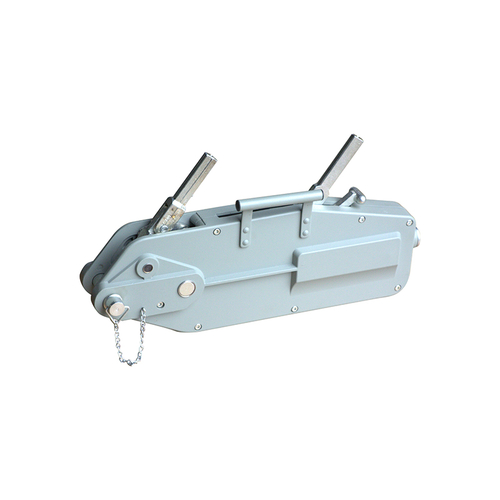
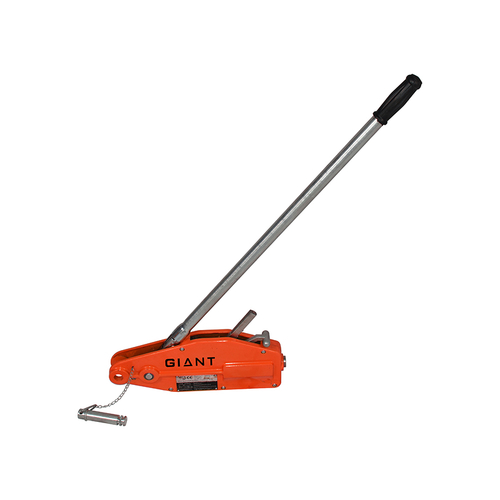
A come-along is a portable, hand-held pulling tool that uses a lever handle and ratchet mechanism to pull a load in a straight line, with the cable feeding through rather than winding onto a drum in the same way. They are connected at both ends — one end to an anchor point, one to the load — and the operator pumps the lever back and forth to advance the ratchet and shorten the distance between the two connection points. Come-alongs are prized for their portability and versatility: they can be hung, angled, or repositioned easily, making them ideal for rescue operations, fencing, tree work, and recovery situations where a mounted winch is impractical. Common capacities range from 750 kg to 3,000 kg.
Strap Winch (Tie-Down Winch)
Strap winches use a flat polyester webbing strap instead of wire rope. They are primarily used for securing cargo on flatbed trailers, trucks, and transport vehicles. The operator inserts the strap into the drum slot, cranks it tight, and the ratchet holds tension. These are not typically designed for heavy pulling operations; instead, they excel at tensioning and holding loads for transport. Working load limits are commonly 500 kg to 5,000 kg depending on strap width and construction grade.
Worm Gear Winch
Worm gear winches use a worm-and-wheel gear set that provides a very high gear reduction ratio — often 20:1 to 40:1 — and has the critical property of being self-locking: the worm gear geometry prevents back-driving, meaning the load cannot cause the drum to unwind even without a separate ratchet. This makes them particularly safe for vertical lifting and holding applications. They are slower to operate than spur gear winches but provide exceptional load security and are widely used on boat trailers, dock lifts, and manufacturing positioning tasks.
Hand Chain Hoist (Chain Block)
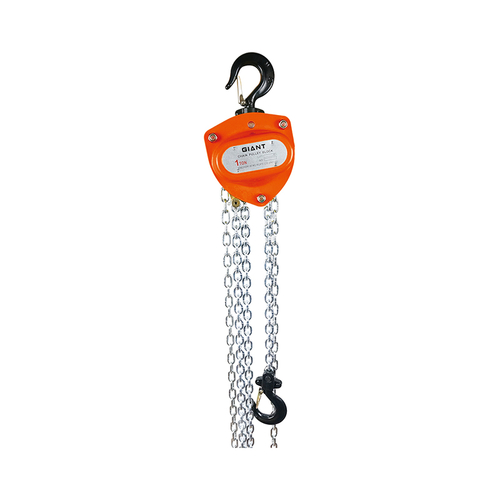
While technically a hoist rather than a winch, hand chain hoists are frequently used alongside or instead of hand winches for vertical lifting applications. They use a hand-operated link chain driving through a geared system to lift loads attached to a lower hook. Unlike horizontal-pulling winches, chain hoists are specifically rated for vertical lifting and meet stricter safety standards (such as EN 13157) for overhead load suspension. Capacities range from 250 kg to 20,000 kg for manual chain hoist models.
Hand Winch vs. Electric Winch: Key Differences
Hand winches and electric winches serve overlapping purposes but have fundamentally different operational profiles. Understanding their differences helps users choose the right tool for each situation:
| Factor | Hand Winch | Electric Winch |
|---|---|---|
| Power source | Human muscle only | Battery / mains electricity |
| Typical max pulling capacity | 250 kg – 2,500 kg | 500 kg – 18,000+ kg |
| Operational speed | Slow (operator-dependent) | Fast (continuous powered pull) |
| Portability | High (no power supply needed) | Moderate (requires power source) |
| Reliability in remote locations | Excellent (no electrical failure risk) | Dependent on battery charge / power access |
| Cost | Low to moderate | Moderate to high |
| Maintenance complexity | Low (no motor or electronics) | Higher (motor, solenoid, wiring) |
| Duty cycle (continuous use) | Limited by operator fatigue | Limited by motor heat rating |
| Best use case | Infrequent pulls, remote sites, light-to-medium loads | Frequent heavy pulls, vehicle recovery, industrial use |
The conclusion is clear: hand winches excel where independence from power infrastructure, low cost, and simplicity are priorities. Electric winches are the better choice for frequent, heavy-duty pulls where speed matters and a reliable power source is available.
Common Applications of Hand Winches and Pullers
Hand winches and pullers are found across an extraordinary range of industries and everyday tasks. Their core utility — moving heavy loads with modest human effort — applies wherever electricity is unavailable, loads are irregular, or cost and simplicity are priorities.
Trailer and Boat Loading
Boat trailer winches are among the most widely sold hand winch products globally. A hand winch mounted at the front of a boat trailer allows a single person to haul a boat weighing hundreds to several thousand kilograms from water onto the trailer. Trailer winches rated at 500 kg to 1,500 kg cover the majority of recreational boats and personal watercraft. Similarly, car hauler trailers use hand winches to pull disabled or non-running vehicles onto the trailer deck.
Vehicle Recovery and Off-Road Use
Come-alongs and heavy hand winches are standard equipment in off-road recovery kits. When a vehicle is stuck in mud, sand, or rough terrain and no powered winch is available, a come-along anchored to a tree or ground anchor can provide enough pulling force — typically 1,500–3,000 kg — to extract a standard 4WD vehicle. They are particularly valued by expedition travelers who visit remote areas where electric winch failure would leave them stranded.
Construction and Civil Engineering
On construction sites, hand winches pull steel pipes, timber beams, formwork panels, and heavy equipment into position in tight spaces where cranes cannot reach. They are used to tension cables in post-tensioned concrete structures, pull conduit through underground ducts, and position prefabricated elements during assembly. A worm gear hand winch rated at 1,000–2,000 kg is a standard site tool for these tasks.
Agricultural and Forestry Work
Farmers and foresters use hand winches to pull fence posts, tension wire fencing, drag felled timber, move machinery in muddy conditions, and reposition equipment in field locations without electricity. Come-alongs are especially popular in forestry for directional felling — pre-tensioning a rope attached to a tree to guide the direction of fall when it is cut. A 2,000 kg come-along attached to an anchor tree can reliably redirect a felling cut away from obstacles.
Marine and Dockside Applications
Beyond boat trailers, hand winches are used extensively on docks, jetties, and aboard vessels. They haul mooring lines, adjust rigging on sailing vessels, pull nets, and tension dock lines. Marine-grade hand winches are typically manufactured from 316 stainless steel or hot-dip galvanized steel to resist the corrosive effects of saltwater, with sealed gear housings to exclude moisture and debris.
Cargo Securing and Transport
Strap-type hand winches are universal on flatbed trucks, lowboys, and heavy transport vehicles. Freight regulations in most countries require cargo to be secured with straps tensioned to a minimum working load — strap winches enable drivers to achieve and verify this tension efficiently. A standard flatbed truck may carry 8–20 strap winch units along its side rails for use with various load configurations.
Home, Garage, and Workshop Use
At the consumer level, hand winches are used to pull lawn tractors and ATVs onto storage ramps, haul storage items into overhead garage storage platforms, tension car-cover straps, and assist with general moving and positioning tasks. Compact hand winches rated at 250–800 kg cover the majority of residential and light-workshop applications and are widely available at accessible price points.
Key Specifications Explained: What the Numbers Mean
When evaluating hand winch and puller specifications, several figures appear consistently on product data sheets. Understanding what they measure prevents costly mismatches between the device and its intended use:
| Specification | Definition | Practical Implication |
|---|---|---|
| Working Load Limit (WLL) | Maximum load the winch is rated to pull in normal operation | Never exceed this figure. Always apply a safety factor; select a winch rated at least 1.5× your expected load |
| Breaking Strength | Load at which the device or cable will fail catastrophically | Typically 4–6× the WLL; confirms safety factor built into the design |
| Gear Ratio | Ratio of handle rotations to drum rotations | Higher ratio = more pulling force but slower retrieval speed per handle turn |
| Cable / Strap Length | Total usable length of cable or strap on the drum | Determines maximum distance from anchor to load; longer cables add weight and cost |
| Cable Diameter | Thickness of the wire rope on the drum | Larger diameter = higher breaking strength but less length on drum; must match rated WLL |
| Hand Force Required | Force the operator must apply to handle at rated WLL | Usually stated as 25–40 kg; values above this suggest excessive physical demand at rated load |
| Drum Capacity (layers) | Number of cable layers the drum can hold | WLL applies only to the first (outermost) layer; force decreases as cable layers increase due to larger effective drum radius |
A critical safety point: the WLL of a hand winch applies specifically to the first layer of cable on the drum. When multiple layers of cable are wound, the effective drum radius increases, which reduces the mechanical advantage and can cause the winch to be overloaded even with a load nominally below its WLL. Always try to operate with the minimum number of cable layers needed for the job.
Materials and Construction: What to Look for in a Quality Hand Winch
The durability, safety, and longevity of a hand winch depend heavily on the materials used in its construction. Key material considerations include:
Housing and Frame
Heavy-duty hand winches use steel plate housings — either stamped, welded, or cast — for the frame, mounting flanges, and drum supports. High-grade models use drop-forged or investment-cast steel for load-bearing components, providing greater density and impact resistance than cast iron. Stainless steel (grade 304 or 316) is specified for marine applications. Consumer-grade winches may use aluminum alloy or engineered polymer housings, which are acceptable for light loads but not for regular heavy-duty use.
Gear and Pawl Materials
Gear trains in quality hand winches are machined from case-hardened steel, providing a hard, wear-resistant tooth surface over a tough, impact-resistant core. The ratchet pawl — the small component that locks the drum against reverse rotation — is a critical safety part and should be made from hardened steel with a strong return spring to ensure positive engagement under load.
Wire Rope and Strap Quality
Wire rope for winches is specified by construction type (commonly 6×19 or 6×37 strand), diameter, and breaking strength. 6×19 rope is stiffer and more abrasion-resistant; 6×37 rope is more flexible and easier to handle. Winch wire rope should meet EN 12385 or equivalent standards and be inspected regularly for broken wires, kinking, or corrosion. Polyester straps should meet EN 12195-2 or equivalent cargo securing standards and be rated for the application's temperature range and UV exposure conditions.
Surface Protection and Coatings
For outdoor and marine use, surface protection is essential. Quality options include hot-dip galvanizing (80–120 micron zinc coating, excellent corrosion resistance), powder coating over a zinc primer (good appearance and moderate corrosion resistance), and electroless nickel plating for precision components. Bare painted steel without additional protection degrades quickly in outdoor environments and should be avoided for long-term applications.
How to Choose the Right Hand Winch or Puller for Your Application
Selecting the correct hand winch requires matching the device's specifications to the demands of the specific application. Follow this decision process:
- Calculate the maximum load: Determine the heaviest load the winch will ever need to move. For moving a load on a flat surface, the pulling force needed is roughly 10–15% of the load's weight (due to rolling or sliding friction). On a 30° slope, this rises to approximately 50% of load weight. For direct vertical lifting, the full load weight must be used.
- Apply a safety factor: Select a winch with a WLL of at least 1.5× the calculated maximum pulling force, and ideally 2× for critical applications or where sudden shock loads are possible (e.g., vehicle recovery).
- Choose the winch type: Use a mounted drum winch for fixed applications (trailer, dock, wall). Choose a come-along for portable, flexible-position pulling. Use a strap winch for cargo securing. Use a worm gear winch where self-locking load hold is essential.
- Check cable length requirements: Ensure the drum capacity provides enough cable to span the distance between the anchor point and the load's starting position, with at least 3–5 wraps of cable remaining on the drum at full extension for safety.
- Consider the operating environment: For marine, wet, or outdoor environments, specify stainless steel or hot-dip galvanized construction. For indoor industrial use, standard painted or zinc-plated steel is acceptable.
- Verify standards compliance: For lifting applications, confirm the winch meets the relevant lifting equipment standard (EN 13157 for manual hoists, EN 14492 for winches). For cargo securing, verify strap compliance with EN 12195-2. Standards compliance provides assurance that the stated WLL is based on tested and verified performance.
- Assess frequency of use: For occasional use, a standard ratchet hand winch is cost-effective. For daily professional use, invest in a higher-specification model with sealed bearings, better surface protection, and replaceable wear parts.
Safety Rules for Operating Hand Winches and Pullers
Hand winches and pullers are capable of generating enormous forces — forces that, if misapplied, can cause serious injury, equipment damage, or structural failure. The following safety rules are non-negotiable:
- Never exceed the Working Load Limit. The WLL is not a guideline — it is the maximum safe operating load. Overloading can cause sudden failure of the cable, hook, pawl, or housing without warning.
- Inspect the cable before every use. Wire rope with broken wires, kinks, corrosion, or bird-caging must be replaced immediately. A wire rope with more than 3 broken wires in any 30-diameter length should be taken out of service per standard rope inspection criteria.
- Never stand in line with a tensioned cable. If a cable, hook, or fitting fails under load, the stored elastic energy releases explosively. Always position yourself to the side of the pull direction, and keep bystanders clear of the load line.
- Verify the anchor point before applying load. The anchor point (tree, vehicle, wall bracket, ground anchor) must be capable of withstanding the full winch load. A weak anchor that fails under load can send the winch and cable back toward the operator at dangerous speed.
- Keep a minimum of 3–5 cable wraps on the drum. Fewer wraps reduce the cable's grip on the drum and increase the risk of the cable end slipping off under load.
- Do not use a standard winch for overhead lifting unless it is specifically rated for lifting. Pulling winches are not designed to the same safety standards as lifting hoists. Only use devices with a certified lifting rating for any suspended load application.
- Lubricate the gear train and ratchet regularly. Dry gears wear faster and generate heat under repeated loading. Apply the manufacturer's recommended lubricant — typically grease for gear trains and light oil for ratchet mechanisms — at regular intervals.
- Wear gloves when handling wire rope. Wire rope can shed fine metal slivers (called "fishhooks") from broken wires that penetrate unprotected skin easily. Heavy leather or cut-resistant gloves are recommended whenever handling wire rope under any tension.
Hand Winch Capacity Ranges and Typical Applications at a Glance
The following table maps common hand winch capacity ranges to their most typical real-world applications, giving a practical overview for buyers and users:
| WLL Capacity | Typical Use Cases | Typical Winch Type |
|---|---|---|
| 250–500 kg | Kayaks, jet skis, ATVs, garage storage lifts, light equipment | Ratchet strap winch, small drum winch |
| 500–1,000 kg | Small boats (up to ~8 m), motorcycles, car trailers, light farm equipment | Boat trailer winch, medium come-along |
| 1,000–2,000 kg | Medium boats, vehicle recovery (cars/SUVs), construction positioning, fencing | Heavy drum winch, 1.5-tonne come-along |
| 2,000–3,500 kg | Large boats, 4WD/truck recovery, timber extraction, heavy equipment positioning | Heavy-duty worm gear winch, 3-tonne come-along |
| 3,500–6,000 kg | Industrial rigging, cable tensioning, large vessel mooring, heavy transport securing | Industrial hand winch, heavy lever hoist |
Maintenance Practices That Extend the Life of Your Hand Winch
A well-maintained hand winch can provide reliable service for 10–20 years or more under regular use. Neglected winches, by contrast, can fail prematurely and unpredictably. The following maintenance practices are recommended:
- Lubricate the gear train every 3–6 months or after any particularly heavy or wet usage. Apply grease to the gear teeth and shafts through any provided grease nipples. This reduces wear and prevents corrosion between metal-on-metal contact surfaces.
- Inspect the ratchet pawl and spring after every significant use. The pawl spring must provide firm, positive engagement; a weak or bent spring is a safety hazard. Replace immediately if the pawl does not click firmly into engagement at rest.
- Rinse marine winches with fresh water after every saltwater exposure. Salt crystallization in gear housings accelerates corrosion dramatically. A freshwater rinse followed by a light application of corrosion-inhibiting spray is the minimum maintenance requirement for saltwater environments.
- Inspect wire rope at the hook end and drum end regularly. These two points experience the highest stress concentration and fatigue fastest. Run the full length of cable through gloved hands to feel for broken wires not visible on the outer surface.
- Store winches in a dry location when not in use. Outdoor storage without cover accelerates corrosion on unprotected steel surfaces. A simple canvas cover or indoor storage significantly extends service life.
- Replace worn or damaged components with manufacturer-specified parts only. Substituting non-specified components — particularly hooks, shackles, and ratchet pawls — can compromise the rated WLL and void any safety certifications.