English
 Español
Content
- 1 Hand Winch Capacity by Type and Application
- 2 What the Rated Capacity Actually Means
- 3 Factors That Reduce Effective Pulling Capacity
- 4 How Gear Ratio Affects Pulling Power
- 5 Choosing the Right Capacity for Your Load
- 6 Cable vs. Strap: Which Handles More Weight?
- 7 Safe Operating Practices for Maximum Load Pulls
- 8 Summary: Matching Your Load to the Right Hand Winch
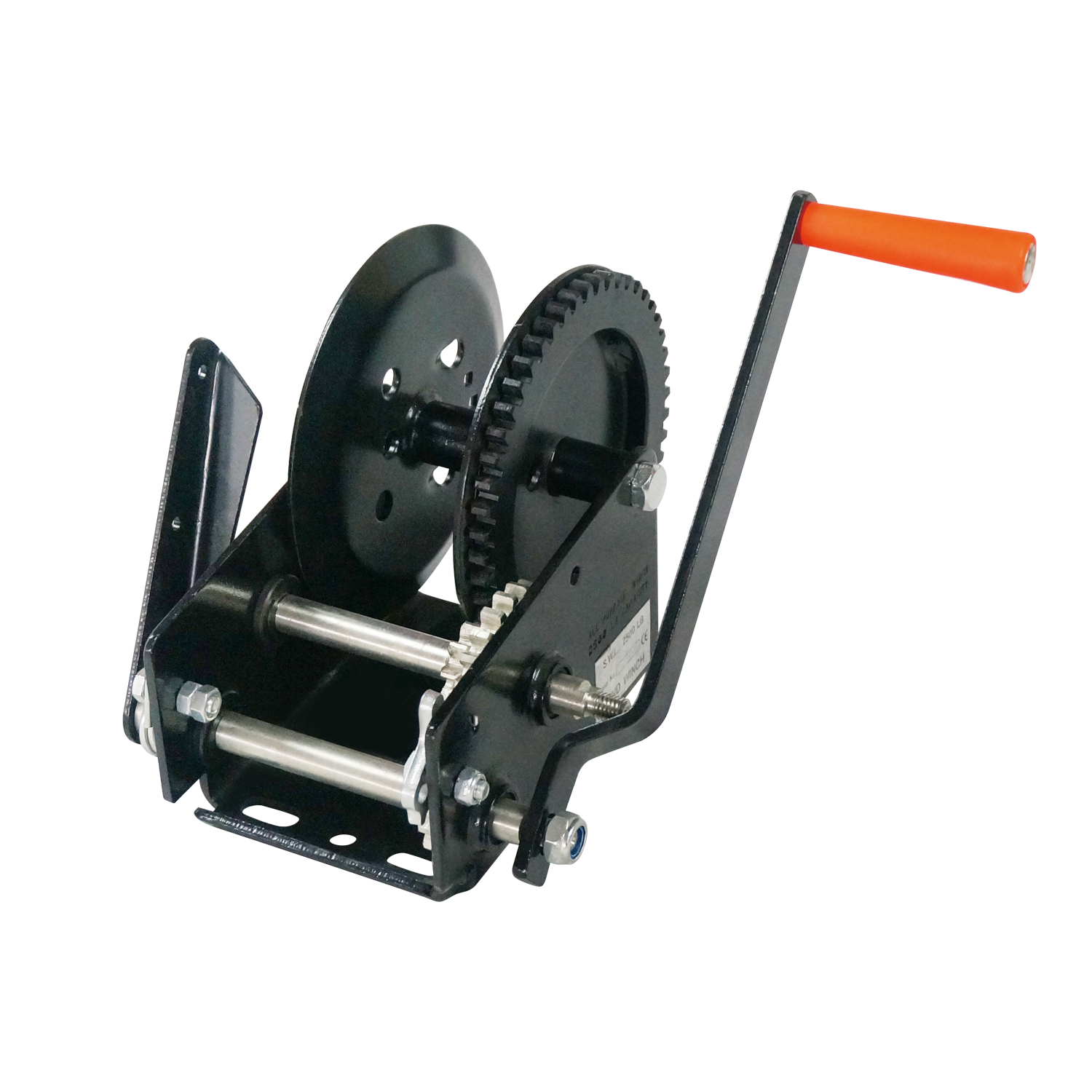
A hand winch and puller can pull objects ranging from 400 lbs (180 kg) to over 4,000 lbs (1,800 kg), depending on the model and its rated capacity. Compact light-duty hand winches typically handle 400–1,000 lbs, mid-range models cover 1,000–2,000 lbs, and heavy-duty hand winch pullers are rated for 2,000–4,000 lbs or more. The rated capacity is the maximum safe working load — always choose a winch rated higher than the actual weight of the object you intend to move, and factor in additional forces like friction, incline, and load inertia.
Hand Winch Capacity by Type and Application
Hand winches are manufactured in several categories, each designed for a specific range of loads and use cases. Selecting the right class ensures safe operation and prevents equipment failure.
| Winch Class | Rated Capacity | Typical Applications |
|---|---|---|
| Light-duty | 400–1,000 lbs (180–450 kg) | Trailer loading, small ATVs, garden equipment, kayak hoisting |
| Medium-duty | 1,000–2,000 lbs (450–900 kg) | Vehicle recovery, motorcycles, utility trailers, industrial equipment |
| Heavy-duty | 2,000–4,000 lbs (900–1,800 kg) | Construction loads, large boats, heavy machinery positioning |
| Industrial/commercial | 4,000+ lbs (1,800+ kg) | Dock operations, warehousing, heavy vehicle extraction |
What the Rated Capacity Actually Means
The rated capacity printed on a hand winch refers to its maximum safe working load (SWL) under ideal conditions — meaning a straight horizontal pull on a flat, hard surface with a clean, properly loaded cable or strap. In real-world conditions, the effective capacity is almost always lower than the stated rating due to several compounding forces.
For example, a winch rated at 2,000 lbs may only effectively move a 1,400 lb load up a 15-degree incline because the incline adds approximately 26% extra resistance to the pull force required. Understanding this distinction is essential for safe use.
Factors That Reduce Effective Pulling Capacity
Several real-world conditions significantly reduce the weight a hand winch can safely pull. Always account for these when selecting a winch for your application:
Incline and Grade
Moving a load uphill dramatically increases the required pull force. As a general rule:
- A 10-degree incline adds approximately 17% to the effective pull requirement
- A 15-degree incline adds approximately 26%
- A 30-degree incline adds approximately 50%
- A 45-degree incline adds approximately 71%
This means that to pull a 1,000 lb object up a 30-degree ramp, your winch needs to be rated for at least 1,500 lbs.
Surface Friction
Dragging a load across rough terrain, gravel, mud, or carpet multiplies resistance significantly. Friction coefficients vary widely: a wheeled load on smooth concrete may add only 5–10% resistance, while a flat-bottomed object dragged across grass or dirt may require 20–40% more pull force than the object's actual weight.
Cable Layers on the Drum
Hand winches using steel cable lose pulling power as more cable wraps accumulate on the drum. Each additional layer of cable on the drum reduces effective pull force by approximately 10–15% because the increased drum diameter effectively lowers the mechanical advantage of the gear system. For maximum rated capacity, use the winch with as little cable out as necessary to keep the drum as empty as possible.
Rope or Cable Condition
A frayed steel cable or damaged synthetic strap can fail well below the winch's rated capacity. Cables should be inspected before each use and replaced if any strands are broken, kinked, or show signs of corrosion. A cable with even 10% of its strands broken may retain only 60–70% of its original rated breaking strength.
Anchor Point Strength
The winch's pull capacity is only as useful as the anchor point it is attached to. The mounting surface — whether a trailer frame, wall bracket, or tree strap — must be rated to withstand the full force of the winch load. An anchor that fails under load can result in sudden and dangerous load release.
How Gear Ratio Affects Pulling Power
Hand winches use a gear reduction system to multiply the force applied by the operator. The gear ratio determines both pulling power and how fast the cable is retrieved per crank revolution.
- Low gear ratio (e.g., 4:1): Faster cable retrieval but less mechanical advantage — suitable for lighter loads where speed matters.
- High gear ratio (e.g., 16:1 or 32:1): Slower retrieval but significantly more pulling force per crank — necessary for heavy loads where operator effort must be minimized.
Many heavy-duty hand winches feature a two-speed or dual-gear design: a fast gear for positioning and a slow, high-power gear for pulling under load. This is the most practical configuration for general-purpose use where both speed and power are needed at different stages of a job.
Choosing the Right Capacity for Your Load
A widely recommended rule in rigging and pulling applications is to select a winch with a rated capacity of at least 1.5 times the weight of the load you intend to move. For inclined pulls or high-friction surfaces, a safety factor of 2x the load weight is more appropriate. Here are practical examples:
| Object to Move | Approximate Weight | Recommended Winch Capacity |
|---|---|---|
| Kayak or canoe | 50–100 lbs (23–45 kg) | 400–600 lbs |
| ATV or small UTV | 600–900 lbs (270–410 kg) | 1,500–2,000 lbs |
| Motorcycle | 400–600 lbs (180–270 kg) | 1,000–1,500 lbs |
| Small boat (on trailer) | 1,000–2,000 lbs (450–900 kg) | 2,000–3,000 lbs |
| Compact car (flat tow) | 2,500–3,500 lbs (1,100–1,600 kg) | 4,000+ lbs |
| Heavy machinery / pallet | 1,500–3,000 lbs (680–1,360 kg) | 3,000–4,000+ lbs |
Cable vs. Strap: Which Handles More Weight?
Hand winches are available with either steel cable or synthetic webbing straps. Both are designed to match the winch's rated capacity, but they behave differently under load:
- Steel cable: Higher resistance to abrasion and cutting. Better for applications involving sharp edges, rough terrain, or sustained heavy loads. A 5/32-inch (4 mm) galvanized steel cable typically has a breaking strength of 1,500–2,000 lbs, while 3/16-inch cable breaks at 3,000–4,200 lbs.
- Synthetic strap: Lighter, safer upon failure (does not snap back with lethal force like steel cable), and gentler on vehicle finishes. A standard 2-inch polyester winch strap typically has a working load limit of 3,333 lbs with a breaking strength of 10,000 lbs, offering a 3:1 safety factor.
For most trailer and vehicle loading applications, synthetic straps are preferred. For industrial dragging, logging, or abrasive environments, steel cable is the more durable choice.
Safe Operating Practices for Maximum Load Pulls
Pulling near the rated capacity of a hand winch requires strict attention to safety. Follow these practices every time you work at or near maximum load:
- Never exceed the rated working load. The rated capacity is the maximum, not a target. Operating consistently at 100% of rated load significantly accelerates wear and increases failure risk.
- Inspect cable or strap before each use. Replace any cable showing broken strands, kinks, or rust, and any strap with cuts, fraying, or UV degradation.
- Verify anchor point strength. The anchor must be rated to handle the full winch load plus a safety margin. Never anchor to an unknown or unrated point.
- Keep bystanders clear of the cable line. If a cable or strap fails under tension, it can release with tremendous force. Maintain a clearance zone equal to at least the length of the cable being used.
- Use a snatch block to reduce load on the winch. Running the cable through a snatch block and doubling back to the load effectively doubles pulling power while halving the strain on the winch — a useful technique when working near maximum capacity.
- Engage the brake or ratchet before releasing the handle. Always confirm the load is fully secured before letting go of the crank to prevent uncontrolled load movement.
Summary: Matching Your Load to the Right Hand Winch
Hand winches and pullers can handle loads from around 400 lbs up to 4,000 lbs or more, depending on the model selected. The key is not just matching the winch rating to the object's weight — it is accounting for all real-world variables including incline, friction, cable layers, and anchor strength that reduce effective capacity in the field. Always apply a minimum 1.5x safety factor, inspect your equipment before each use, and select the appropriate cable or strap for your working environment to ensure safe, reliable performance every time.
.jpg?imageView2/2/w/500/h/500/format/jpg/q/100)