English
 Español
Content
- 1 Construction and Civil Engineering Applications
- 2 Industrial Manufacturing and Warehousing Applications
- 3 Marine and Offshore Applications
- 4 Mining and Quarrying Applications
- 5 Forestry, Agriculture, and Land Management Applications
- 6 Stage, Entertainment, and Architectural Applications
- 7 Vehicle Recovery and Off-Road Applications
- 8 Selecting the Right Electric Winch for Your Application
- 9 Applications Where Electric Winches Are Preferred Over Alternatives
- 10 Frequently Asked Questions About Electric Winch Applications
- 10.1 Can an electric winch be used for continuous lifting duty without rest periods?
- 10.2 What is the maximum travel distance an electric winch can handle?
- 10.3 Can electric winches be used in ATEX-classified hazardous areas?
- 10.4 Is an electric winch suitable for suspended personnel platforms (manned lifts)?
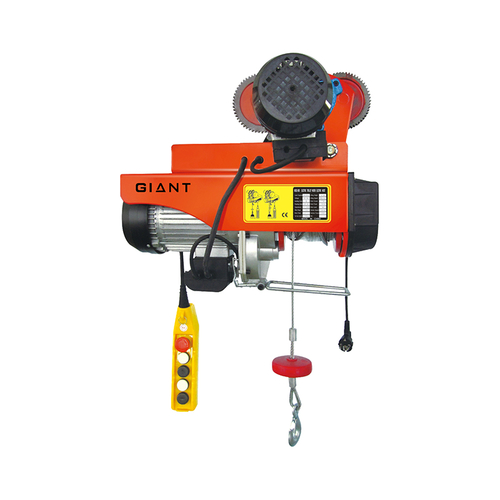
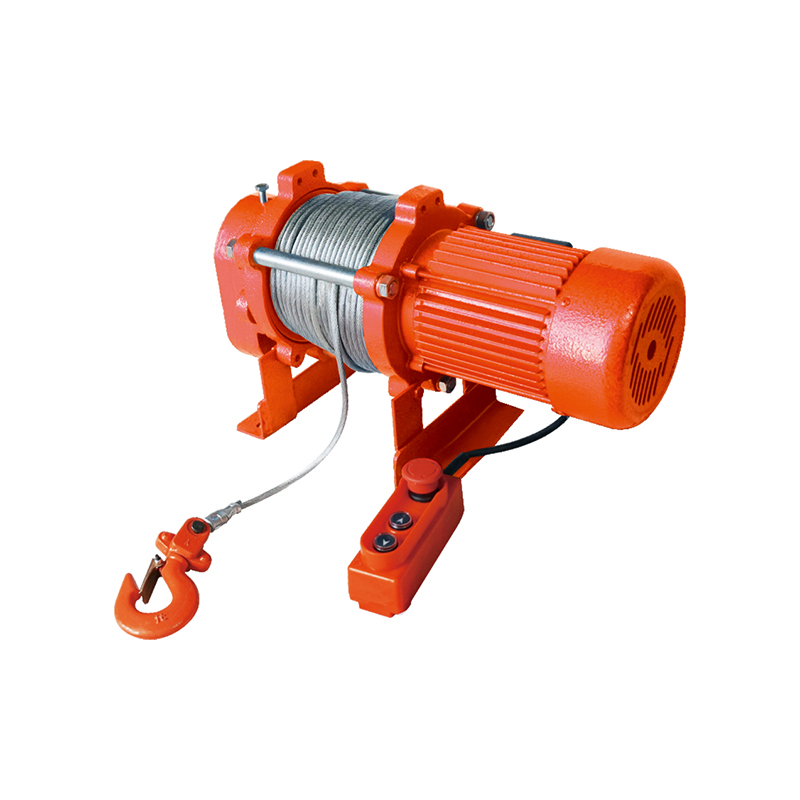
Electric Winch units are suitable for any application that requires controlled, repeatable mechanical pulling or lifting of loads where manual effort is impractical, unsafe, or insufficient. The broadest categories are construction and civil engineering, industrial manufacturing and warehousing, marine and offshore operations, mining and quarrying, forestry and agriculture, stage and entertainment rigging, and vehicle recovery and off-road operations. Within each category, the specific load capacity, duty cycle, environmental rating, and rope or chain configuration of the winch must be matched to the task -- which is why electric winches are manufactured across a capacity range spanning from under 1 tonne for light-duty applications to more than 100 tonnes for heavy industrial and offshore use.
Electric winches are chosen over hydraulic or pneumatic alternatives when a reliable electrical supply is available, when precise speed control and positioning are required, when low noise and low emissions matter, or when the installation environment suits electric motor technology. The following sections explore each major application category in depth, with specific examples, capacity data, and the technical requirements that determine which winch specification is appropriate.
Construction and Civil Engineering Applications
Construction is one of the largest application sectors for electric winches globally. The diversity of lifting and pulling tasks on a construction site -- from foundation work to facade installation to infrastructure maintenance -- creates demand for winches across a wide capacity and configuration range.
Material Hoisting on Building Sites
Electric winches are used extensively to hoist construction materials -- masonry units, steel sections, formwork panels, concrete bags, and finishing materials -- to upper floor levels on mid-rise and high-rise building projects. Temporary electric hoists and winch-powered material platforms typically operate in the 500 kg to 5,000 kg capacity range, with duty cycles of 25 to 40% to accommodate the continuous cycle of loading at ground level and unloading at the working floor. According to the European Construction Industry Federation (FIEC) Infrastructure Report 2022, material handling accounts for approximately 20 to 25% of total on-site labor time on typical building projects, making efficient mechanical hoisting one of the highest-return productivity investments in construction.
Formwork and Shuttering Systems
Climbing formwork and jump-form systems used for tall concrete core structures rely on electric winches to raise the formwork assembly vertically as each concrete pour is completed and cured. These systems require precise synchronization of multiple winch units to maintain the formwork level within tight tolerance during the climbing cycle. Modern climbing formwork electric winch systems are controlled by programmable logic controllers (PLCs) that coordinate multi-winch lifting with position feedback to within 5 mm across the full formwork width -- a positioning precision that manual or hydraulic systems cannot match economically.
Infrastructure and Civil Works: Tunneling and Bridge Construction
Tunneling operations use electric winches to haul muck cars loaded with excavated material from the tunnel face to the shaft bottom, to pull tunnel boring machine (TBM) backup equipment, and to lower precast tunnel lining segments. Capacities for main haul winches in road and rail tunnel projects typically range from 5 tonnes to 30 tonnes, with travel distances of several kilometers in long-drive projects requiring drum storage for large rope lengths or the use of multi-sheave pulley systems to multiply the effective pulling force of the winch. Bridge construction uses electric winches for stay-cable tensioning, deck panel positioning, and temporary works during incremental launch or balanced cantilever construction sequences.
Facade Installation and Building Maintenance
Building facade installation -- curtain wall glazing systems, stone cladding panels, and prefabricated facade units -- uses electric winches mounted on roof davits or building maintenance units (BMUs) to position heavy panels at height with the precision required for accurate alignment. Typical facade panel lifting capacities range from 500 kg to 3,000 kg. The same BMU winch systems are used for ongoing facade cleaning, inspection, and maintenance throughout the building's operational life, making the winch a long-term building infrastructure component rather than a temporary construction tool.
Industrial Manufacturing and Warehousing Applications
Electric winches in industrial settings serve a range of lifting, positioning, and process functions. Unlike construction applications where the winch is moved between sites, industrial winches are typically fixed installations that operate continuously for years, making reliability, duty cycle compliance, and maintenance access critical selection criteria.
Overhead Crane and Hoist Systems
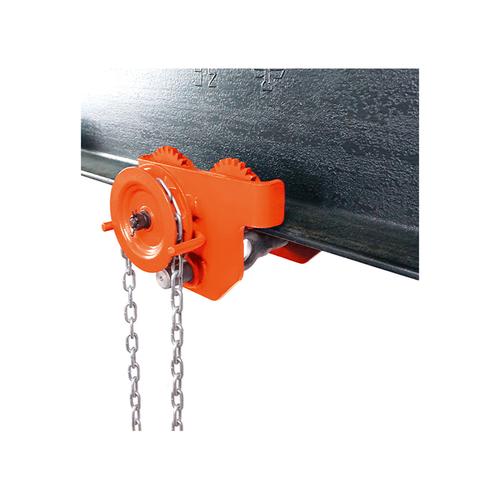
The electric wire rope hoist -- essentially a rope-drum winch integrated with a trolley for horizontal travel on an overhead bridge or gantry crane -- is the most common industrial lifting configuration worldwide. These systems handle loads from under 1 tonne in light assembly applications to 100 tonnes or more in heavy fabrication, steel mill, and shipbuilding applications. According to the FEM (Federation Europeenne de la Manutention) classification system for crane mechanisms, industrial hoists are designed and classified by duty group (M1 through M8) based on annual lift cycles and load spectrum -- with M8 (the heaviest duty group) applicable to operations exceeding 3.15 million lift cycles at full rated load over the design life of the equipment.
Mold and Die Handling in Injection Molding and Press Operations
Injection molding machines and metal stamping presses require frequent mold or die changes, during which heavy tooling -- commonly ranging from 500 kg to 20,000 kg per mold half -- must be precisely extracted from the machine, transported, and reinserted. Electric winches integrated into mold-change trolleys, overhead cranes, and mold turntables provide the controlled, low-speed positioning that protects precision tooling surfaces during these moves. Mold change efficiency directly affects press utilization rate; automotive press shops typically target mold change times of under 10 minutes (Single Minute Exchange of Die -- SMED -- methodology, as documented in the Toyota Production System), and electric winch positioning speed and controllability directly influence this metric.
Warehouse and Distribution Center Operations
Electric winches in warehouse environments lift and lower loads to and from high-bay storage racking, loading dock levelers, goods lifts, and mezzanine floors. Capacities for these applications typically range from 250 kg to 5,000 kg, with low-noise operation an important consideration for populated warehouse environments. Stacker cranes in automated storage and retrieval systems (ASRS) use electric hoisting mechanisms as the vertical travel drive for the storage and retrieval unit, operating at high cycle rates with precise positioning requirements that electric motor technology with encoder feedback is well suited to meet.
Process Industry: Maintenance and Equipment Handling
Chemical plants, refineries, power stations, and food processing facilities use permanently installed electric winches for maintenance lifting tasks -- removing pump impellers, heat exchanger bundles, reactor vessel internals, and motor-generator sets for service. These winches are often specified to ATEX (Directive 2014/34/EU) standards for use in potentially explosive atmospheres in chemical and petrochemical facilities, with flameproof or increased-safety motor enclosures and non-sparking rope drum designs to prevent ignition sources in Zone 1 or Zone 2 classified areas.
Marine and Offshore Applications
Marine and offshore environments place the most demanding requirements on electric winch equipment: continuous exposure to salt spray, wave-induced shock loading, high duty cycles, and the critical safety implications of equipment failure at sea. Winches for these applications require marine-grade construction, corrosion protection systems, and safety features beyond those typically required in land-based applications.
Anchor Handling and Mooring Winches
Mooring winches on commercial vessels, offshore platforms, and floating production units (FPSOs) use electric drives to tension and hold mooring lines under the variable loads imposed by wind, current, and wave action. Offshore mooring winch capacities range from 50 kN to over 3,000 kN line pull for the largest FPSO mooring systems. The International Maritime Organization (IMO) MSC.1/Circ.1175 guidelines for mooring equipment specify minimum holding capacity and rendering characteristics that mooring winch designs must satisfy. Electric drive is increasingly preferred over hydraulic for new mooring winch installations due to higher energy efficiency and lower maintenance requirements of electric motors compared to hydraulic power units.
Deck Crane and Lifting Operations
Offshore supply vessels (OSVs), platform supply vessels (PSVs), and crane vessels use electric-driven deck cranes and overboard winches to transfer cargo between vessel and platform, handle anchor handling and towing gear, and support diving and ROV (remotely operated vehicle) operations. Offshore crane winches are designed and certified to DNV GL (now DNV) or Bureau Veritas lifting appliance standards, with dynamic load factors applied to account for vessel motion effects on lifted load. A 3-tonne static lift on a vessel experiencing 2-meter significant wave height may generate dynamic loads of 5 to 7 tonnes on the crane winch drum and rope (source: DNV-ST-0378, Standard for Offshore and Platform Lifting Appliances, 2021).
Fishing and Aquaculture Operations
Commercial fishing vessels use electric winches for net handling, trawl gear, and pot hauling. Aquaculture farms use winches to raise and lower fish pen net structures for inspection and harvesting. These applications require winches that operate in continuous wet conditions with fish meal and seawater exposure, driving a need for highly corrosion-resistant materials and sealed motor and gearbox enclosures. Net hauling winch capacities on mid-size commercial trawlers typically range from 3 to 20 tonnes line pull, with high cycle rates during active fishing operations placing significant demands on duty cycle rating and motor thermal management.
Tugboat and Port Operations
Tugboats use electric capstans and winches for line handling during vessel berthing and unberthing assistance. Port container terminals use electric winches in ship-to-shore (STS) cranes, rubber-tired gantry (RTG) cranes, and rail-mounted gantry (RMG) cranes for container handling. STS cranes at major container terminals operate at cycle rates of 25 to 35 container moves per hour per crane (source: IAPH -- International Association of Ports and Harbors, Port Performance Indicator Standards, 2020), making the electric hoist mechanism in these cranes among the highest-cycle industrial lifting applications in operation.
Mining and Quarrying Applications
Mining operations require electric winches that can handle the heaviest loads, the longest travel distances, and the harshest environmental conditions of any land-based application. The consequences of winch failure in underground mining in particular are severe, making equipment reliability and safety system design paramount selection criteria.
Underground Mine Haulage
Underground mines use electrically driven drum hoist winches and friction hoists (Koepe hoists) to raise ore and waste rock in skips, transport personnel and materials in cages, and haul service vehicles on inclined drifts. Mine hoist capacities for major metalliferous mines range from 10 tonnes to over 100 tonnes payload per conveyance, with hoisting depths exceeding 3,000 meters in some deep South African gold and platinum mines. Mine hoisting regulations in most jurisdictions (for example, the South African Mines Health and Safety Act Regulation 16.5, and Australian State mining regulations) require mine hoists to be specifically designed and certified as winding engines with independent safety systems including overwinding protection, conveyance speed monitoring, and automatic brake application systems.
Open-Cut Mining and Quarry Operations
Open-cut mines and quarries use electric winches for rope shovels and dragline excavators -- some of the largest electrically powered machines in existence. Dragline bucket and rigging systems may have a combined rigging weight exceeding 100 tonnes, with the hoist and drag winch drums driven by multi-megawatt DC or AC variable speed drive systems. Smaller quarry applications use electric winches for material handling on processing plant conveyors, stone splitting machines, and aggregate handling systems at capacities typically in the 2 to 20 tonne range.
Mineral Processing Plant Applications
Within mine processing plants, electric winches are used for maintenance lifting of grinding mill liners, flotation cell components, filter press equipment, and large pump assemblies. These are typically fixed-installation maintenance hoists in the 5 to 50 tonne range, operating at low duty cycles but critical when in use -- equipment downtime during a mill reline or pump change-out directly impacts mine production throughput, where each hour of downtime may represent production losses of tens of thousands of dollars in high-value ore processing applications.
Forestry, Agriculture, and Land Management Applications
Electric winches in forestry and agricultural settings address load-handling challenges in environments where conventional lifting equipment cannot operate due to terrain, access constraints, or the need for mobile, versatile pulling capability.
Timber Extraction and Forwarding
Cable logging systems use electric or electro-hydraulic winches mounted on yarder machines to extract felled timber from steep slopes where wheeled or tracked forwarding machines cannot access safely. The main line of a cable logging yarder may pull logs weighing 5 to 15 tonnes across distances of 200 to 600 meters, with pull forces requiring winches in the 10 to 50 tonne capacity range. According to the Food and Agriculture Organization of the United Nations (FAO, Harvesting of Forests, 2019), cable logging systems are used for approximately 15 to 20% of global harvested timber volume, predominantly in mountain and steep-terrain forestry operations where slope angles exceed 35 degrees.
Agricultural Equipment and Irrigation Systems
Agricultural applications include electric winches for raising and lowering irrigation booms, repositioning heavy cultivation equipment in and out of storage, handling greenhouse ventilation shutters and shade screens, and operating grain and silage handling equipment. Greenhouse and controlled environment agriculture operations use electric winches for raising and lowering retractable roof and wall panels in capacities from 100 kg to 2,000 kg per winch unit, with multiple synchronized units typically used for large greenhouse structures.
Land Drainage and Environmental Management
Flood barrier systems, lock gate operations, and sluice gate control in water management infrastructure use electric winches to raise and lower heavy gate structures against water pressure. Tidal flood barrier gates may weigh several hundred tonnes, with the lifting load against water head requiring high-capacity, highly reliable electric winch drives with redundant safety systems. The Thames Barrier in London, for example, uses hydraulic drives for its main gate operations, but many smaller sluice gate and lock gate installations use electric winch drives in the 1 to 50 tonne range for routine operational control.
Stage, Entertainment, and Architectural Applications
The entertainment industry and architectural feature applications represent a demanding and rapidly growing market for precision electric winches, where load capacity may be modest but positional accuracy, speed controllability, noise level, and the consequences of failure in a public environment place uniquely stringent requirements on the equipment.
Stage Rigging and Fly Systems
Theatre fly towers use electric counterweight assist winches and motorized flying systems to raise and lower scenery, lighting rigs, speaker arrays, and performance equipment. Individual flying winch capacity typically ranges from 250 kg to 2,000 kg, with speed control from very slow (less than 0.1 m/s for precise scene positioning) to fast (up to 2 m/s for rapid scene changes) required within the same unit. Theatrical rigging winches must comply with EN 17206 (Entertainment Technology -- Machinery, Equipment and Installations for Stages and Other Production Areas in Entertainment) in European markets, which specifies safety factor requirements of at least 8:1 on structural components and 4:1 on rope systems for personnel-rated flying applications.
Concert Touring and Live Events
Concert touring productions use electric chain hoists and wire rope winches to fly production elements including speaker line arrays, video screens, lighting trusses, and performance set pieces at venues ranging from indoor arenas to outdoor festival stages. A large-scale arena concert production may use 200 to 500 individual electric hoists to construct a single stage configuration (source: PLASA -- Professional Lighting and Audio Show Association, Rigging Industry Standards Report, 2021), with individual hoist loads typically in the range of 250 kg to 1,000 kg. Automation controllers coordinate entire rigging systems with millimeter-level position feedback for precision show effects that cannot be achieved with manual rigging.
Architectural Kinetic Features and Installations
Modern architectural projects increasingly incorporate kinetic facade elements, retractable roof systems, and moving sculptural features driven by electric winches operating under precision motion control. Retractable stadium roof systems -- such as those at major sports venues in Europe, North America, and Asia -- use large electric winch systems to move roof panels weighing hundreds of tonnes along guided tracks, with synchronization control systems that maintain millimeter-level alignment between panels throughout the opening and closing cycle.
Vehicle Recovery and Off-Road Applications
Vehicle-mounted electric winches for recovery and off-road use represent the highest-volume consumer and light commercial application segment for the technology. These winches are typically rated in the 2,000 kg to 12,000 kg (4,400 lb to 26,500 lb) line pull range and are mounted on the front or rear of 4WD vehicles, trucks, and utility vehicles for self-recovery and assisting other vehicles in difficult terrain.
4WD Off-Road and Recreational Vehicle Recovery
Electric winches for off-road vehicles are powered from the vehicle's 12V or 24V electrical system and provide pulling force to extract vehicles from mud, sand, snow, or other terrain traps where wheelspin cannot provide traction. The winch capacity should be specified at a minimum of 1.5 times the gross vehicle weight (GVW) of the vehicle it is recovering, to account for additional resistance from mud or soft ground adhesion (source: Society of Automotive Engineers, SAE J706 Standard for Winches for Off-Road Applications). For a 3,500 kg 4WD vehicle, this guideline indicates a minimum 5,250 kg rated winch -- typically met by a nominally rated 6,000 kg to 8,000 kg unit, recognizing that the first layer of rope on the drum (where capacity is highest) delivers the rated line pull while outer layers deliver proportionally less.
Emergency Services and Military Recovery
Fire and rescue services, military vehicle recovery units, and disaster response organizations use heavy-duty electric winches rated from 5 tonnes to 25 tonnes on recovery vehicles and specialist trucks to extract trapped vehicles, move debris, and reposition heavy equipment during emergency operations. Military applications additionally require winches that can operate reliably under electromagnetic interference (EMI) conditions, in nuclear-biological-chemical (NBC) decontamination environments, and at temperature extremes from -40 degrees C to +55 degrees C -- all of which impose specification requirements beyond standard commercial winch designs.
Selecting the Right Electric Winch for Your Application
With such a diverse range of suitable applications, selecting the correct Electric Winch requires matching several key parameters to the specific requirements of the task. The table below summarizes the primary selection parameters and their relevance to the application categories discussed above.
| Selection Parameter | Key Considerations | Most Relevant Application Categories |
|---|---|---|
| Rated load capacity (SWL) | Must exceed maximum expected load including dynamic factors; specify at the first rope layer on drum for pulling winches | All applications |
| Duty cycle rating | Match to actual operating pattern; exceed by 20 to 30% margin for safety; high-cycle apps require heavy-duty classification | Industrial manufacturing; port and marine; mining; construction hoisting |
| Rope capacity and type | Wire rope vs. synthetic rope; drum storage for full travel distance; fleet angle compliance | Mining haulage; marine; forestry; vehicle recovery |
| Speed and speed control | Single speed for simple hoisting; variable speed drive (VSD) for precision positioning; multi-speed for versatility | Stage rigging; mold handling; facade installation; architectural features |
| Environmental protection (IP rating) | IP65 minimum for outdoor use; IP66/67 for washdown or marine; ATEX certification for explosive atmospheres | Marine; mining; chemical plant; outdoor construction |
| Power supply compatibility | Single-phase 230V for light-duty; three-phase 400V or 480V for industrial; 12V or 24V DC for vehicle-mounted | Vehicle recovery; light industrial; heavy industrial |
| Safety and certification standard | EN 14492-2 (Europe); ASME B30.16 (North America); DNV/BV (marine); EN 17206 (entertainment); national mining regulations | Application-specific; confirm with local regulatory authority |
Applications Where Electric Winches Are Preferred Over Alternatives
Electric winches are not universally the best choice for every pulling and lifting task -- hydraulic, pneumatic, and manual alternatives each have application domains where they offer advantages. Understanding where electric drive is specifically preferred helps confirm whether an electric winch is appropriate for a given application.
- Where precise speed and position control are needed: Electric motors combined with variable speed drives and encoder feedback provide significantly finer speed and position control than hydraulic drives, making them the standard choice for stage rigging, mold positioning, facade installation, and any application where accurate load placement matters.
- Where low noise is required: Electric winches are substantially quieter than hydraulic power unit-driven alternatives, making them preferred for indoor warehouse operations, populated construction sites, hospital and institutional buildings, and entertainment venues where operational noise affects the surrounding environment.
- Where zero local emissions are required: Electric winches produce no exhaust emissions at the point of use, making them the only viable option for enclosed underground mine environments, indoor manufacturing, food processing, and clean-room applications where combustion or hydraulic fluid mist would be unacceptable.
- Where long-term energy efficiency matters: Electric motors at IE3 and IE4 efficiency class (per IEC 60034-30-1) offer full-load efficiencies of 93 to 96% for motors in the 15 to 100 kW range -- significantly higher than typical hydraulic system efficiencies of 60 to 75% -- making electric drive the preferred choice for high-cycle applications where energy cost over the equipment life is a significant factor.
- Where a reliable electrical infrastructure exists: On sites and in facilities with an established electrical distribution network, electric winches eliminate the need for hydraulic power unit installation, fluid management, and the fire risk associated with pressurized hydraulic oil, simplifying installation and ongoing maintenance.
- Where digital integration is required: Modern electric winch drives with integrated PLCs, fieldbus communication (Profibus, Profinet, EtherCAT), and remote monitoring capability integrate directly into Industry 4.0 production management systems, condition monitoring platforms, and building management systems -- an integration capability that hydraulic and pneumatic systems cannot easily replicate.
Frequently Asked Questions About Electric Winch Applications
Can an electric winch be used for continuous lifting duty without rest periods?
Only if the winch is specifically rated for continuous duty (S1 duty cycle per IEC 60034-1, meaning 100% on-time without thermal overload). Most standard electric winches are rated for intermittent duty -- commonly 25%, 40%, or 60% duty cycle -- which means they require rest periods between operating cycles for motor heat dissipation. Using an intermittent-duty winch in a continuous duty application will overheat and damage the motor winding insulation, dramatically shortening service life. Specify a winch with the S1 continuous duty rating for applications such as slow-moving conveyors, elevator drives, or process industry pulling applications where the motor must run without interruption.
What is the maximum travel distance an electric winch can handle?
Travel distance is limited by the rope storage capacity of the drum. A standard industrial electric hoist may have 6 to 30 meters of wire rope on a single-layer drum. For longer distances, multi-layer drum configurations are used (common in mining and marine applications with travel distances of hundreds of meters), or the winch is used with a multi-sheave block-and-tackle system that multiplies the effective travel distance while reducing line pull speed. Mining main shaft hoists operate over distances of several thousand meters using large-diameter drums with multiple rope layers, or friction (Koepe) hoist technology where rope storage is not the limiting factor.
Can electric winches be used in ATEX-classified hazardous areas?
Yes, but the winch must be specifically designed and certified for the ATEX zone classification of the area in which it will operate, per EU Directive 2014/34/EU (ATEX) or IECEx standards for international applications. Zone 1 (gas and vapor present occasionally) typically requires Ex d (flameproof) motor enclosures; Zone 2 (gas and vapor present only in abnormal conditions) may accept Ex e (increased safety) enclosures. All electrical components including controls, contactors, and limit switches must carry appropriate ATEX certification -- a standard commercial winch cannot be used in a classified hazardous area regardless of the nature of the load or the duty.
Is an electric winch suitable for suspended personnel platforms (manned lifts)?
Electric winches can be used for personnel hoisting applications, but must be specifically designed, rated, and certified for manned use. The safety requirements for personnel hoisting are substantially more demanding than for goods hoisting: higher structural safety factors (typically 10:1 on structural components), redundant brake systems, overspeed protection, emergency lowering capability, and compliance with personnel hoisting standards such as EN 1808 (Safety Requirements for Suspended Access Equipment) or ASME A17.1 (Safety Code for Elevators and Escalators). A winch rated only for goods lifting must not be used for personnel hoisting regardless of its load capacity.