English
 Español

Content
- 1 Where a floor mounted jib crane earns its space
- 2 Match capacity, span, and height to the real load
- 3 Foundation and installation decide safety
- 4 Hoist and trolley choices that change the feel of the crane
- 5 Standards, documentation, and procurement risks
- 6 Maintenance and daily use
- 7 What to send with a request for quotation
A maintenance team is changing a 1.2 ton pump housing in a service bay. The overhead crane is two bays away, the forklift cannot reach behind the guardrail, and four people are waiting with pry bars. A floor mounted jib crane is often bought after a moment like this. The purchase looks simple, but the result depends on three numbers and one foundation: rated capacity at the working radius, span from the column to the hook, lifting height, and the concrete that holds the column down. Get those right and the crane becomes a fast, local lifting tool. Get them wrong and the lowest price quote becomes the most expensive option in the building.
Where a floor mounted jib crane earns its space
A floor mounted jib crane is a local lifting cell. It puts a hoist over one machine, one assembly bench, one welding station, or one maintenance bay without tying up an overhead crane or a forklift. The column takes floor space, but the boom can rotate 180, 270, or 360 degrees, so the hook reaches into corners and behind equipment that a fixed hoist cannot cover.
This layout suits repetitive short lifts: loading a CNC machine, turning a fixture, moving a motor, handling a die, or lifting parts from a pallet into a test stand. It is less suitable when the load must travel across several bays or when the same hook must serve many unrelated work areas. In those cases, a bridge crane or a movable gantry crane usually gives a better travel path. The jib crane wins when the work stays inside a small circle and the operator needs the hook close to the task.
Match capacity, span, and height to the real load
Start with the load at the hook, not the load on the drawing. Add the spreader beam, slings, shackles, and any lifting fixture. A 1.5 ton part with 0.08 ton of spreader and 0.02 ton of slings is a 1.6 ton lift. A 2 ton crane is then the minimum sensible rating, not a 1.5 ton unit with a short duty cycle. Also check how the manufacturer rates capacity at the maximum radius. Some jib designs have a lower capacity at the far end of the boom, so the catalog headline number is only useful if it applies where the hook will actually work.
Span is measured from the column center to the hook at the farthest point, not just the beam length. Lifting height is measured from the floor to the hook saddle in the raised position, with the hoist and trolley fitted. Leave room for the hook block, rigging, and a few centimeters of clearance. Rotation is a separate decision. A 270 degree boom often covers a machine bay without a long power feed, while a 360 degree unit needs a clear sweep and a reliable collector or cable management system. If the boom can hit a wall, a rack, or a walkway, add rotation stops or a restricted sector before the crane arrives.
Foundation and installation decide safety
The foundation is not a detail. It is the crane's real base. A floor mounted jib crane transfers overturning moment into the slab, anchor bolts, and reinforcement. A 3 m boom with 1 ton at the end can produce a serious moment at the column base, and a thin slab with unknown mesh is not a design. Ask for a foundation drawing that shows concrete strength, slab thickness, rebar layout, anchor bolt grade, edge distance, grout, and torque values. If the existing slab is unknown, take cores or use a local structural engineer. Do not approve installation because the anchor bolts feel tight.
| Arrangement | Best use | Main constraint | Procurement note |
|---|---|---|---|
| Floor mounted jib crane | One machine bay, maintenance cell, or repetitive local lift | Needs a designed foundation and clear boom sweep | Confirm capacity at maximum radius and anchor bolt specification |
| Wall mounted jib crane | Lift beside a strong column or wall | Building structure must accept the moment | Check wall condition and bracket design before ordering |
| Movable gantry crane | Flexible lifting across a yard or workshop | Floor surface and travel path limit use | Plan rail or wheel path and storage space |
Installation quality matters as much as the steel. The column must be plumb, the anchor bolts must be set to the drawing, and the boom must rotate without binding. After installation, a load test and a check of the limit switches, brakes, and rotation stops should be part of the handover. If the crane is moved later, treat it as a new installation, not a simple relocation.
Hoist and trolley choices that change the feel of the crane
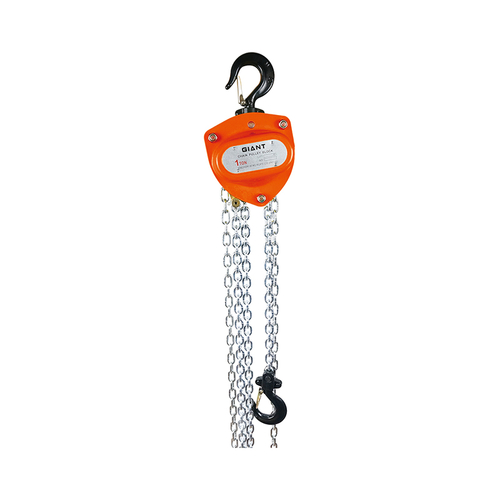
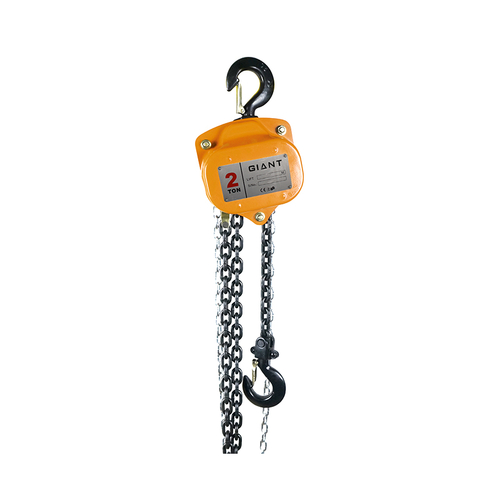
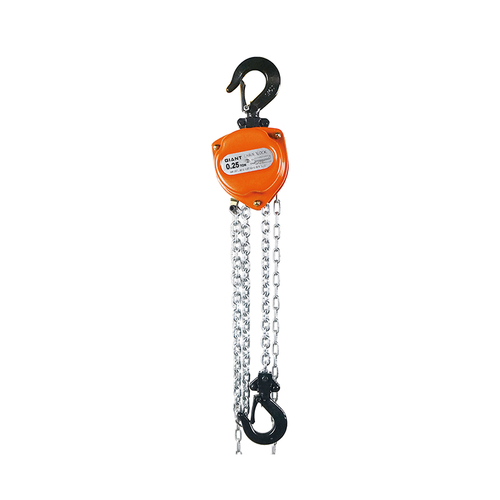
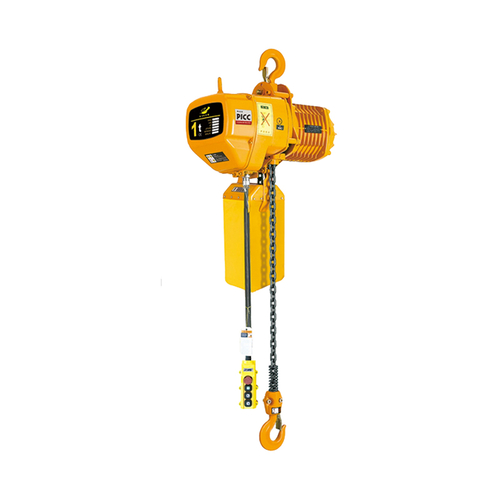
The hoist is not an accessory. It sets the speed, headroom, and control feel of the whole floor mounted jib crane. For light to medium duty, an electric chain hoist is often the practical choice because it is compact, has good hook height, and gives precise low-speed control for assembly and machine loading. Check the duty classification, pendant length, power supply, overload protection, upper and lower limits, and trolley fit. The trolley must match the boom beam flange and allow smooth movement without side binding.
 PSJ Jib Crane and End CarriageExplore the PSJ jib crane series for 0.25–1 t loads, 270° rotation, and 2–6 m reach, with end carriage options for jib packages.View Product →
If the jib package is assembled from separate components, the end carriage and trolley deserve close attention. A poor fit shows up as hard rotation, uneven trolley travel, and premature wear on the beam. For higher duty cycles or tight headroom, a wire rope hoist may be better because it can offer a different hook height and speed profile. The trade-off is usually more maintenance attention and a larger body. A standard shop crane is a different tool with a different base and travel pattern, so compare the work envelope before mixing the two designs.
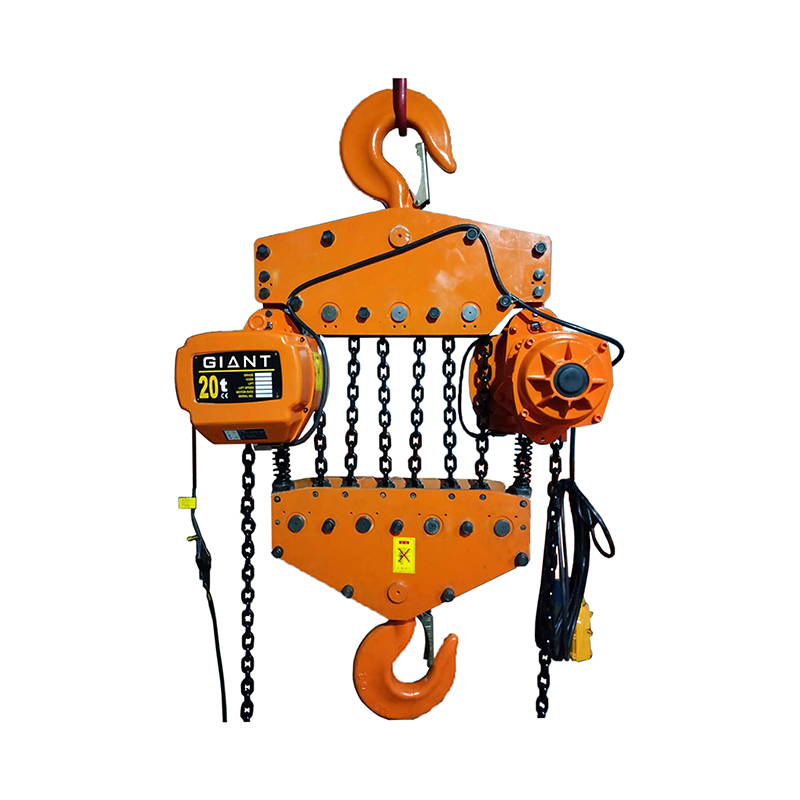 Classic Electric Chain Hoist HHBDReview HHBD chain hoist capacities from 0.5 to 10 t and features such as limit switch and phase-sequence protection when specifying a jib crane hoist.View Product →
Power supply is a common procurement gap. A 360 degree crane needs a reliable way to bring power to a rotating boom without cable strain. A 270 degree crane may use a simpler cable loop, but the loop still needs support and clearance. Confirm voltage, phase, frequency, control voltage, and pendant language before shipment. Spare chains, hooks, contactors, and brake parts should be available for the expected service life.
 Multispeed Electric Wire Rope Hoist CD1/MD1Review the CD1/MD1 wire rope hoist for 0.5–20 t industrial lifting, offering compact mounting and optional dual-speed control for finer positioning.View Product →
Standards, documentation, and procurement risks
Ask for the design standard used for the jib and the hoist separately. A supplier should be able to provide the load test certificate, weld inspection records, anchor bolt data, and a declaration of conformity where CE marking applies. ISO 9001 certification supports a quality system, but it does not replace the crane-specific documents. For export projects, check the destination market requirements before the order is placed, because the required documents and guarding details can differ.
- Confirm rated capacity at the maximum radius, not only at the column.
- Check foundation drawing, anchor bolt grade, and concrete strength.
- Verify hoist duty class, hook height, and trolley beam fit.
- Confirm voltage, phase, control voltage, and pendant length.
- Ask for load test, brake test, limit switch test, and rotation stop settings.
- Review spare parts availability and manual language before shipment.
The common buying mistakes are predictable. A buyer sizes the crane to the average load, not the heaviest lift. The slab is assumed to be strong enough. The boom is ordered for 360 degree rotation but the building has a low roof or a nearby rack. The hoist is selected on price and then runs at a duty cycle it was not built for. These problems rarely appear on the quotation, but they appear quickly on the floor.
Maintenance and daily use
A floor mounted jib crane needs a simple but regular routine. At the start of each shift, check the hook, latch, chain or rope, pendant, and rotation path. Listen for unusual noise during trolley travel and boom rotation. Monthly checks should include anchor bolt torque, structural cracks, worn trolley wheels, brake performance, and limit switch function. The annual inspection should be more detailed and should follow the local workplace rules. After any relocation, impact, or overload event, stop use and inspect the crane before it returns to service.
Train operators on the specific crane, not just on general lifting. They should know the rated capacity at the working radius, the rotation limits, the load chart, and the exclusion zone around the boom. A floor mounted jib crane is a simple machine, but it still relies on the foundation, the hoist, and the operator doing the same job the same way every time.
What to send with a request for quotation
A clear inquiry gets a usable quotation. Send the maximum load including rigging, the required span from column center to hook, the lifting height, the rotation angle, the floor condition, the power supply, and the duty cycle. Add a sketch of the work area and note any walls, racks, pits, or traffic lanes near the boom sweep. If the crane will be exported, state the destination country and the required documents. With those details, the supplier can propose a floor mounted jib crane that fits the task, the building, and the way the team actually works.