English
 Español

Content
A 2 t electric chain hoist and a 2 t toe jack may share the same capacity number, but they do not solve the same handling problem. One pulls a load along a defined vertical or angled line. The other lifts a machine from a low point so rollers, skates, or cribbing can be placed. That difference is the first test when comparing equipment lifting devices. Capacity tells you what a device can hold, but the load path, duty cycle, floor condition, headroom, and operator position decide whether the device is suitable.
For procurement, define the job before the catalog. Write down the load mass, center of gravity, pick point, maximum lift height, travel distance, and the worst case load position. Then check whether the device can control the load at that point, not only at its rated center. A device that is strong enough but awkward to position will slow the job and increase risk.
The main equipment lifting device families
Hoists and winches
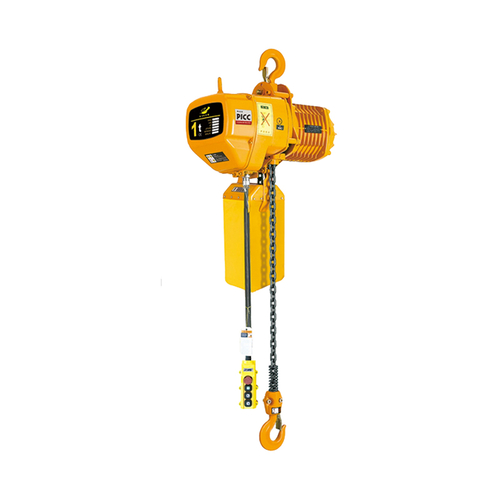
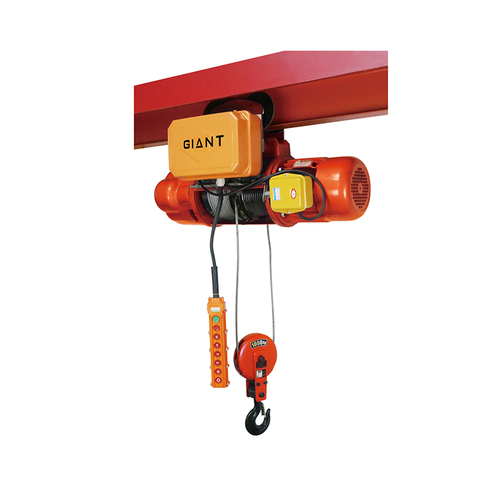
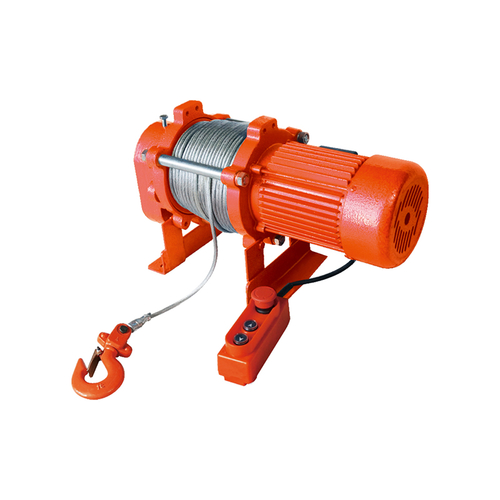
Hoists are the default choice when a load must move vertically and sometimes horizontally. A manual chain hoist suits maintenance and low frequency lifts. A lever hoist is better for pulling, tensioning, and short lifts where the operator can work close to the load. An electric chain hoist fits repeated lifting on production lines, workshops, and warehouses. A wire rope electric hoist is often selected for higher lift heights and faster travel, but it needs a clean rope path and regular rope inspection. Winches pull rather than lift and should not be treated as overhead hoists unless the system is designed for that duty.
Buyer checks include rated capacity, lift height, duty class, brake type, hook latch, chain or rope grade, voltage, control pendant, limit switches, and local compliance documents. For export orders, confirm the plug, voltage, language, and inspection certificate before production. A chain hoist used 20 times a day in a repair bay is not the same purchase as one used once a week for maintenance.
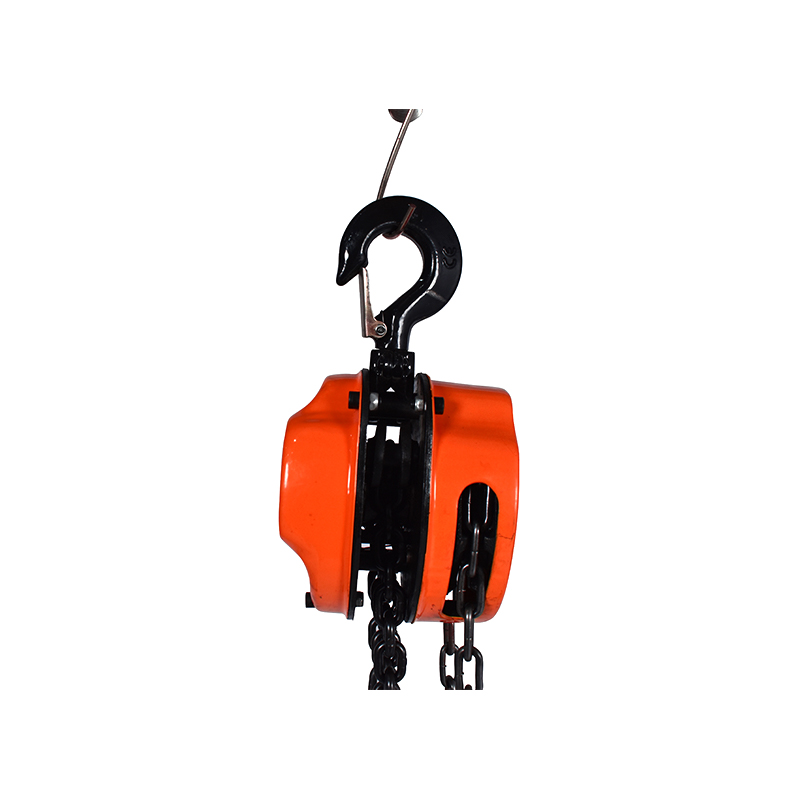 HSZ Standard Manual Chain Hoist for Industrial LiftingView this manually operated chain hoist with alloy load chain, forged hooks and enclosed load brake for workshop lifting checks.View Product →
Jacks and hydraulic cylinders
Jacks and hydraulic cylinders solve a different problem: low clearance lifting, controlled force, and precise positioning. A bottle jack is common for general workshop lifting. A floor jack suits vehicle service. A toe jack is designed for machinery moving where the lifting point is only a few centimeters above the floor. Hydraulic cylinders are for pushing, spreading, pressing, and sustained force when paired with the right pump and gauge.
Capacity is not the full story. A 5 t toe jack may not deliver 5 t at every toe position, and a hydraulic cylinder may lose capacity as the stroke extends. Check the load chart, toe depth, oil volume, seal quality, and the stability of the load. Use cribbing and controlled lowering. Never rely on a hydraulic device as a permanent support.
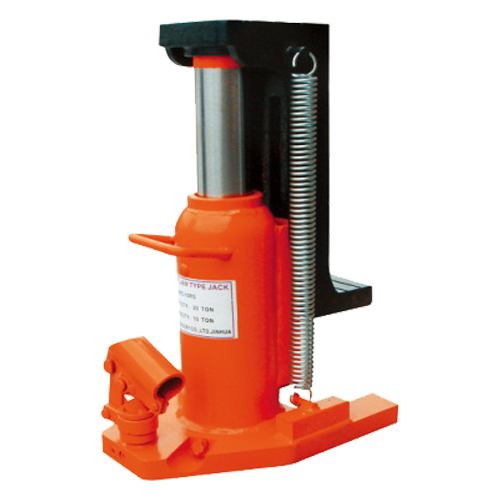 MHC Hydraulic Toe Jack for Heavy Machinery LiftingCompact toe jack with 360-degree rotating housing and extra-low toe suits machinery moving; check load charts and model ratings before use.View Product →
Platforms and lift tables
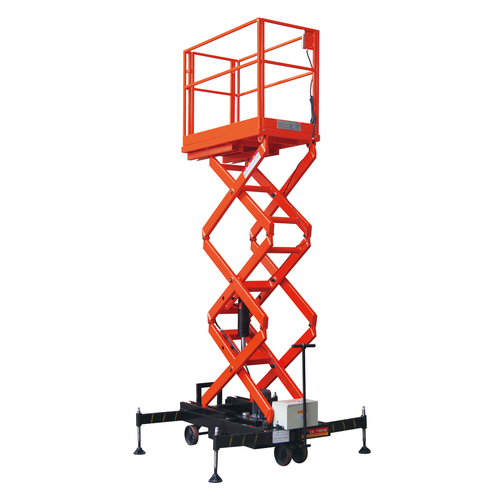
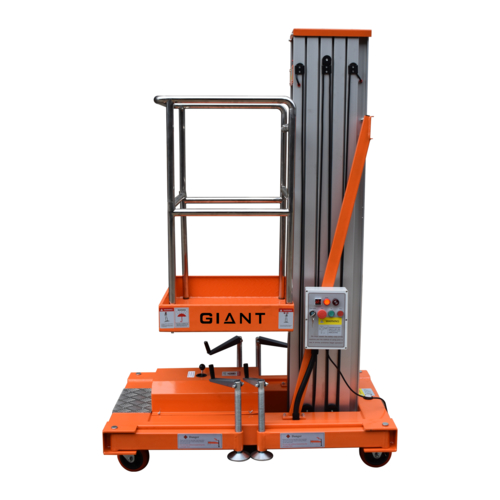
Platforms and lift tables move people or goods vertically in a fixed or mobile workspace. A lift table raises goods to an ergonomic height for packing, assembly, or feeding a machine. A scissor lift or mast platform gives access for maintenance and installation. Aerial work platforms add guardrails, gates, and emergency lowering systems, so they are not interchangeable with simple lift tables.
Buyer checks include platform capacity, load distribution, floor loading, wheel brakes, guardrail height, entry gate, emergency lowering, wind limits for outdoor use, slope limits, and battery or power requirements. A unit sized for a smooth warehouse aisle may be unsuitable for an outdoor yard or a site with uneven concrete.
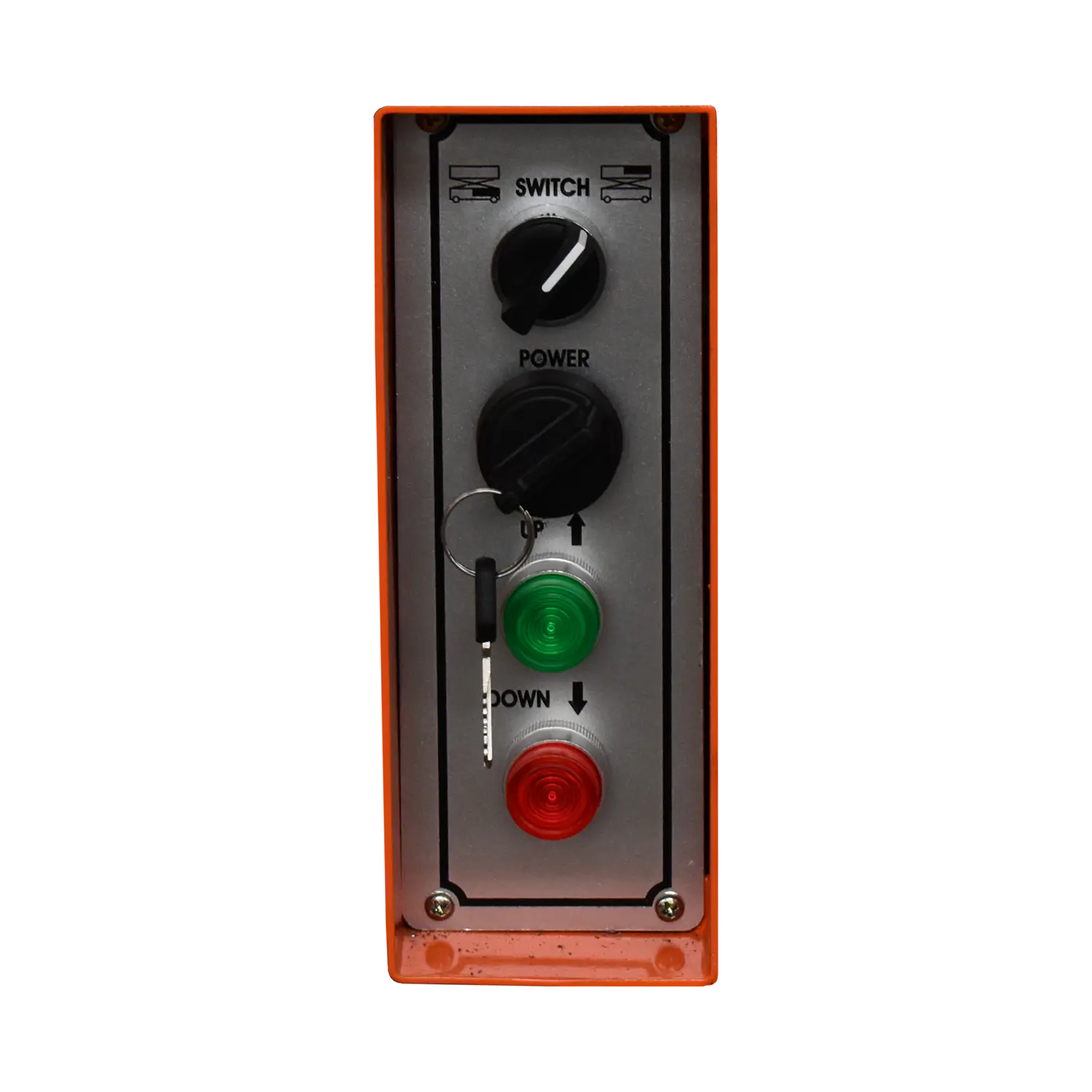 FSJY Self-Propelled Electric Scissor Work PlatformZero-emission electric scissor platform with narrow body and foldable fence for indoor aloft work; review height, capacity and floor limits.View Product →
Shop cranes, gantry cranes, trolleys, and rigging
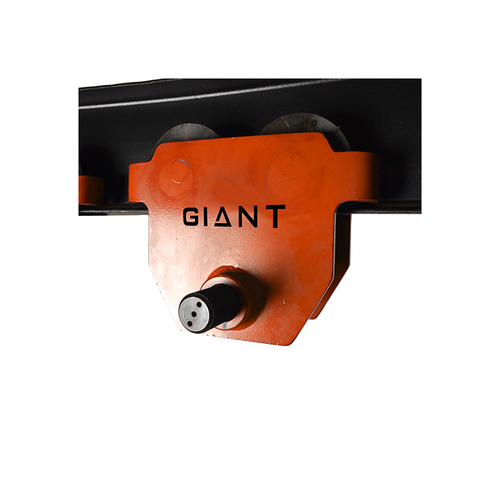
Shop cranes, gantry cranes, trolleys, and rigging form a system. A shop crane may have enough capacity at the hook, but the beam, trolley, sling, shackle, and hook must also be rated for the load and the angle. A mobile gantry crane needs a level floor and enough span and height for the load path. Beam trolleys must match the beam profile and flange. Lifting clamps and magnetic lifters need the correct surface, thickness, and material.
Sling angle is a frequent gap. A sling rated at 2 t in a vertical lift does not carry 2 t when used at a wide angle. Hooks need latches, shackles need the correct pin type and WLL marking, and all rigging should be inspected before use. Mixing components from different systems without checking compatibility is a procurement risk, even when each item looks adequate on its own.
Compare the device by task, not by capacity alone
Use the table below to narrow the family before you compare models. The same load can require different equipment when the path changes from a vertical lift to a low clearance push, or from a fixed workstation to an outdoor yard.
| Device family | Typical use | Load path | Buyer checks |
|---|---|---|---|
| Manual chain hoist | Maintenance, low frequency lifting, no power supply | Hook to beam, trolley, or gantry | Lift height, chain grade, brake, hook latch, rated capacity |
| Electric chain or wire rope hoist | Repeated lifting, production lines, workshops | Fixed beam, trolley, or gantry | Voltage, control, limit switch, duty class, brake, inspection access |
| Lever hoist | Pulling, tensioning, rigging, short lifts | Portable hook to anchor or load | Lever travel, free chain mode, overload risk, hook condition |
| Hydraulic jack or toe jack | Low clearance machine lifting and positioning | Floor and load point | Toe capacity, oil seals, floor strength, load stability |
| Lift table or platform | Ergonomic positioning or work access | Floor mounted or mobile | Guardrail, capacity, floor loading, emergency lowering, slope |
| Shop crane or gantry | Localized lifting in a bay, workshop, or yard | Wheels, beam, and support legs | Span, height, beam rating, wheel brake, floor condition |
| Rigging hardware | Connecting the load to the lifting device | Sling, hook, shackle, and clamp | WLL, proof load, inspection record, component compatibility |
Procurement checks that prevent expensive mistakes
Low purchase price is not low lifetime cost. For equipment lifting devices, the expensive failures usually come from a mismatch in duty, documentation, or service support, not from a missing feature on the brochure.
- Define the worst case load, including attachments, offset centers, and dynamic effects during starting or stopping.
- Confirm the duty cycle. Starts per hour, hours per shift, and ambient conditions affect motor, brake, seal, and chain life.
- Ask for test certificates, declarations, WLL markings, and material or proof load records that match the destination market.
- Check spare parts availability for hooks, chains, seals, pumps, controllers, and wheels. A device without service support becomes a bottleneck.
- Plan pre-use checks and periodic inspection. Records should cover the device, rigging, and attachments as a system.
- Check interfaces with beams, trolleys, slings, power supply, floor surface, and operator position before ordering.
A broader selection guide for material handling equipment can help you compare these trade offs across a full site plan, but the final choice should still be checked against the actual load path and operating environment.
A simple specification sequence
- Write the load data: mass, dimensions, center of gravity, attachment points, maximum lift height, and travel distance.
- Draw the load path and mark obstructions, headroom, floor strength, slope, and operator access.
- Set the duty and environment: indoor or outdoor, wet or dry, dust, temperature, and lifting frequency.
- Choose the device family, then verify capacity at the worst case position and angle, not only at the rated center.
- Confirm compliance documents, test records, spare parts, and training requirements before purchase.
- Plan inspection and maintenance from day one, including chains, ropes, hooks, brakes, seals, and electrical controls.
The right equipment lifting device is the one that makes the load path predictable, keeps the operator out of the crush zone, and fits the maintenance plan. Giant Lift's lifting product range covers hoists, jacks, platforms, cranes, and rigging for teams that need to match several device families in one order.