English
 Español
Content
- 1 How a Lever Hoist Works: The Mechanics Explained
- 2 Key Components of a Lever Hoist
- 3 Lever Hoist vs. Chain Block: Understanding the Difference
- 4 Common Capacity Ratings and What They Mean
- 5 Typical Applications: Where Lever Hoists Are Used
- 6 Types and Variants of Lever Hoists Available
- 7 International Standards and Certifications for Lever Hoists
- 8 How to Select the Right Lever Hoist for Your Application
- 9 Safe Operating Practices Every User Must Know
- 10 Inspection, Maintenance, and Service Life of Lever Hoists
- 11 Lever Hoists in the Global Industrial Lifting Market
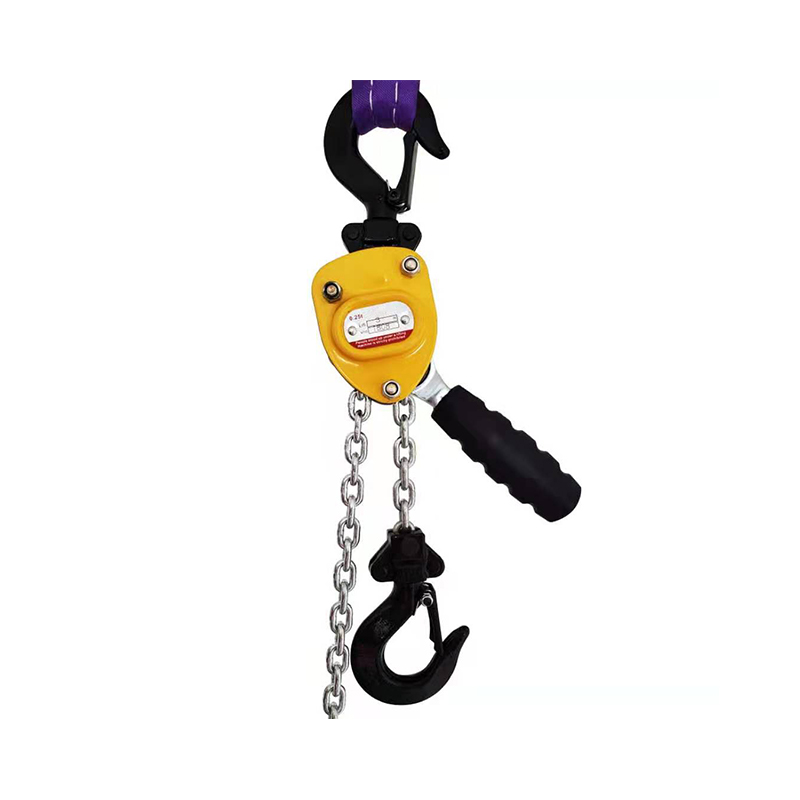
A lever hoist — also called a lever block, ratchet lever hoist, or come-along — is a manually operated mechanical lifting and pulling device that uses a ratcheting lever mechanism to raise, lower, or tension a load suspended from a chain or wire rope. The operator pumps a short handle back and forth to incrementally move the load, with a ratchet and pawl system holding each increment of travel securely so the load cannot slip backward between strokes.
Lever hoists are compact, lightweight, and require no external power source — making them one of the most versatile and widely used tools in industrial lifting, construction, rigging, and maintenance work worldwide. Capacities typically range from 0.25 tonnes to 9 tonnes, and a single trained worker can safely lift, pull, or position loads that would otherwise require heavy machinery or multiple personnel.
Unlike a chain block (chain hoist), which is designed primarily for vertical lifting from a fixed overhead point, a lever hoist can be used equally effectively in vertical, horizontal, and angled orientations. This multi-directional capability is one of its defining advantages and the main reason it appears on construction sites, in shipyards, in power plants, and in any environment where loads need to be moved in tight spaces or at awkward angles.
How a Lever Hoist Works: The Mechanics Explained
Understanding the operating principle of a lever hoist helps users select the right model, use it safely, and troubleshoot problems in the field.
The Ratchet and Pawl System
At the heart of every lever hoist is a ratchet wheel and a spring-loaded pawl. When the operator pushes the lever in the lifting direction, the pawl rides over the ratchet teeth. When the lever reaches the end of its stroke, the pawl engages a tooth and locks the wheel — and therefore the load — in place. The operator then returns the lever for the next stroke without the load moving. This increment-by-increment advance continues until the load reaches its target position.
The lever direction selector (typically a three-position switch on the side of the hoist body) allows the operator to set the hoist to lift, lower, or neutral (free-chain) mode. In free-chain mode, the load chain can be pulled through by hand without engaging the drive mechanism, which is useful for repositioning the hook or setting initial chain length.
Mechanical Advantage and Gear Reduction
Inside the hoist body, a gear train converts the relatively large arc swept by the lever handle into a precisely controlled rotation of the load sheave (the toothed wheel that drives the load chain). This gear reduction provides mechanical advantage — meaning the force the operator applies to the end of the lever is multiplied many times over at the load chain.
For example, a lever hoist rated at 1.5 tonnes capacity typically requires the operator to apply only about 30–35 kg of handle force to lift the full rated load. The longer the lever and the greater the gear reduction ratio, the less handle force is required — but each lever stroke moves the load a smaller distance. Most lever hoists are engineered for a handle effort of around 30–40 kgf at rated load, which is within the comfortable working range of a single adult operator.
The Load Chain
The load chain is a precision-manufactured, heat-treated alloy steel chain that transmits the lifting force between the hoist body and the lower hook assembly. Load chains used in lever hoists conform to international standards (such as ISO 3076 or equivalent national standards) and are rated for a specific working load limit. Grade 80 and Grade 100 alloy steel chains are the most commonly used in modern lever hoists, offering high strength-to-weight ratios and good fatigue resistance. Chains are typically surface-treated (nickel-plated, galvanized, or phosphated) to resist corrosion.
The Overload Protection Mechanism
Quality lever hoists incorporate a friction-disc load limiter (slip clutch) that disengages the drive mechanism if the applied load exceeds a set threshold — typically around 1.1 to 1.5 times the rated working load limit. When the overload limiter activates, the lever simply slips and the load does not move, alerting the operator that the load is too heavy rather than allowing the chain or structure to be overstressed. This feature is a critical safety device that distinguishes well-engineered hoists from low-quality alternatives.
Key Components of a Lever Hoist
A lever hoist is a compact assembly of precisely engineered components. Familiarity with each part helps users inspect the tool correctly, identify wear, and communicate accurately with suppliers when ordering replacement parts.
| Component | Material | Function |
|---|---|---|
| Top (suspension) hook | Forged alloy steel | Connects the hoist to the anchor point or structure |
| Hoist body / housing | Cast aluminum alloy or stamped steel | Encloses and protects the gear train and ratchet mechanism |
| Lever handle | Steel with rubber or polymer grip | Transmits operator force into the ratchet mechanism |
| Direction selector switch | Steel | Sets the pawl engagement direction: lift, lower, or neutral |
| Gear train | Hardened alloy steel | Provides mechanical advantage between lever input and load chain |
| Load sheave / pocket wheel | Hardened alloy steel | Drives the load chain by engaging the chain links in its pockets |
| Load chain | Grade 80 or Grade 100 alloy steel | Transmits lifting force from hoist body to lower hook |
| Lower (load) hook | Forged alloy steel with safety latch | Connects the load chain to the lifted or tensioned load |
| Overload limiter (slip clutch) | Friction disc assembly | Prevents operation beyond rated capacity by slipping under overload |
| Chain bag / collector | Nylon or canvas (optional) | Collects excess chain during use to keep the work area tidy |
Lever Hoist vs. Chain Block: Understanding the Difference
Lever hoists and chain blocks (chain hoists) are both manual chain-driven lifting devices, and they are often confused by buyers unfamiliar with the difference. Choosing the wrong type for a job leads to inefficiency, unsafe practices, or equipment damage. The table below clarifies the key distinctions:
| Characteristic | Lever Hoist | Chain Block (Chain Hoist) |
|---|---|---|
| Operating mechanism | Ratcheting lever pumped back and forth | Hand chain pulled continuously in a loop |
| Operating direction | Vertical, horizontal, and angled — all work equally well | Designed primarily for vertical lifting |
| Speed of operation | Slower — each stroke advances load a small increment | Faster for long vertical lifts |
| Typical lift range | 1.5 m standard; up to 6 m or custom | 3 m standard; up to 12 m or longer |
| Compact portability | Excellent — very compact and lightweight | Good, but hand chain loop adds bulk |
| Tensioning / pulling use | Yes — widely used for lashing and tensioning | Not recommended for horizontal pulling |
| Typical capacity range | 0.25 t – 9 t | 0.5 t – 20 t |
As a general rule: choose a lever hoist when the lift direction is not vertical, when the work space is confined, or when the device will also be used for pulling and tensioning. Choose a chain block when the application is purely vertical lifting over a significant height and speed of operation matters more than multi-directional flexibility.
Common Capacity Ratings and What They Mean
Lever hoists are manufactured and tested to specific Working Load Limits (WLL) — the maximum load they are rated to lift or pull under normal operating conditions. The WLL is always marked on the hoist body and should be the first specification checked when selecting a hoist for a job. The most commonly available capacity ratings are:
- 0.25 tonne (250 kg): The lightest class, used for light tensioning, positioning of components, and maintenance tasks where loads are small and portability is the priority.
- 0.5 tonne (500 kg): A popular entry-level capacity for general workshop and site use. Compact and light enough for a single worker to carry and deploy rapidly.
- 0.75 tonne (750 kg): Bridges the gap between the 0.5 t and 1 t classes; used in automotive and light manufacturing applications.
- 1 tonne (1,000 kg): One of the most widely sold capacities globally. Suitable for a very wide range of construction, rigging, and maintenance tasks.
- 1.5 tonnes (1,500 kg): The standard heavy-duty lever hoist capacity for industrial users. Balances lifting power with manageable hoist weight and handle effort.
- 3 tonnes (3,000 kg): Used in heavy construction, steel erection, shipbuilding, and heavy equipment maintenance. Requires more lever effort per stroke but remains single-operator operable.
- 6 tonnes and 9 tonnes: The heavy end of the lever hoist range, used in major infrastructure projects, offshore operations, and large-scale industrial plants. These models are substantially heavier but still provide the multi-directional flexibility that is the lever hoist's key advantage over other lifting equipment at this capacity level.
It is important to note that the WLL is not the breaking load — it is the safe working load with a built-in safety factor. International standards such as EN 13157 require a minimum safety factor of 4:1 (i.e., the hoist must be capable of sustaining a test load of four times its rated WLL before failure). This means a 1.5-tonne lever hoist is tested to withstand at least 6 tonnes during proof load testing.
Typical Applications: Where Lever Hoists Are Used
The lever hoist's combination of portability, multi-directional operation, and mechanical advantage makes it indispensable across a remarkably wide range of industries and job types.
Construction and Civil Engineering
On construction sites, lever hoists are used to tension guy wires and bracing cables on temporary structures, align steel beams during erection before bolting, position formwork panels, and drag or skid heavy equipment across confined areas where a crane cannot reach. Their ability to work horizontally is particularly valuable in these applications.
Shipbuilding and Marine Industry
Shipyards use lever hoists extensively for pulling hull plates into alignment, tensioning mooring lines, positioning machinery components during installation in the confined spaces of engine rooms, and securing deck loads. The corrosion-resistant (stainless steel or hot-dip galvanized) variants of lever hoists are specifically designed for this environment.
Power and Energy Sector
Electrical power construction is one of the largest markets for lever hoists globally. Transmission line and distribution line construction relies heavily on lever hoists for tensioning conductors and ground wires during stringing operations. Substations use them for positioning transformers and switchgear. Wind turbine installation uses lever hoists inside nacelles for final component positioning. Power plant maintenance crews keep lever hoists on hand for valve removal, pipe work, and heat exchanger tube bundle extraction.
Mining and Tunneling
Underground environments are perhaps the most demanding setting for any lifting device. Lever hoists used in mining are exposed to extreme dust, moisture, and mechanical abuse. Their compact size allows them to be deployed in tunnels where overhead clearance is minimal and powered lifting equipment cannot fit. They are used for installing roof support systems, positioning ventilation equipment, and recovering disabled vehicles.
Industrial Maintenance and Manufacturing
In manufacturing plants and process facilities, lever hoists assist maintenance teams in removing and reinstalling heavy components such as motors, gearboxes, pumps, and press dies. Their ability to hold a load indefinitely — without any power input — while the maintenance team works makes them safer than temporary manual support arrangements.
Transportation and Load Securing
Lever hoists are widely used in the transport and logistics sector to secure and tension loads on flatbed trailers, railway wagons, and ship cargo decks. In this application they function as tensioning devices rather than lifting tools, tightening lashing chains to prevent load movement during transit. Their ability to be tensioned to a precise, repeatable force makes them superior to ratchet straps for securing very heavy loads.
Forestry and Arboriculture
Lever hoists are used in forestry operations to extract felled timber in areas inaccessible to wheeled machinery, to tension safety lines, and to position large logs for processing. The lightweight 0.5 t and 0.75 t models are particularly popular in this application.
Types and Variants of Lever Hoists Available
Not all lever hoists are the same. Manufacturers produce a range of variants optimized for different operating environments, load types, and regulatory requirements.
Standard Lever Hoists
The most widely purchased type. Standard lever hoists have an aluminum alloy or stamped steel body, a Grade 80 load chain, and forged steel hooks with safety latches. They are suitable for general industrial use in dry to moderately humid indoor and outdoor environments.
Heavy-Duty Lever Hoists
Heavy-duty models use thicker housings, wider gear profiles, Grade 100 chains, and higher-specification bearings to handle demanding applications with higher duty cycles. They are specified for mining, shipyard, offshore, and heavy construction applications where standard models would wear prematurely.
Stainless Steel and Corrosion-Resistant Lever Hoists
Designed for marine, food processing, pharmaceutical, and chemical plant environments where standard carbon steel components would corrode rapidly. Stainless steel lever hoists use austenitic stainless steel (typically Grade 316) for the chain, hooks, and body hardware, and may feature sealed bearings and food-grade lubricants for compliance with hygiene regulations.
Spark-Resistant (ATEX / Explosion-Proof) Lever Hoists
Used in environments with flammable gases, vapors, or dusts — such as oil refineries, chemical plants, and grain storage facilities. These hoists are manufactured from non-sparking materials (such as bronze, copper-beryllium alloy, or aluminum alloy) for all components that could generate an ignition spark on impact. They are certified to relevant explosion protection standards (ATEX in Europe, IECEx internationally) for use in defined hazardous area zones.
Low-Headroom Lever Hoists
Designed for applications where the vertical distance between the attachment point and the load is minimal. Low-headroom models feature a redesigned hook and housing geometry that minimizes the overall height of the hoist assembly, allowing loads to be lifted higher in spaces with limited overhead clearance than a standard hoist would permit.
Wire Rope Lever Hoists (Come-Alongs)
A variant that uses a steel wire rope instead of a link chain as the load-bearing element. Wire rope lever hoists are used where the load needs to be rigged over a longer travel distance without a chain bag, and in applications where the rope's flexibility around curves is an advantage. They are popular in vehicle recovery, forestry, and utility line work.
International Standards and Certifications for Lever Hoists
Because lever hoists are safety-critical devices whose failure can result in fatalities, they are subject to rigorous international standards. Buyers should always verify that any lever hoist they purchase is certified to the applicable standard for their region and industry. Key standards include:
- EN 13157 (Europe): The primary European standard for manually operated hoists, covering design requirements, safety factors, testing methods, and marking. Compliance is required for CE marking and sale in the European Economic Area.
- ASME B30.21 (North America): The American Society of Mechanical Engineers standard governing the design, inspection, testing, and safe use of lever hoists in the United States and Canada.
- JIS B 8809 (Japan): Japanese Industrial Standard for lever blocks, widely referenced across East and Southeast Asia.
- AS 3775 (Australia/New Zealand): The Australian and New Zealand standard for chain hoists and lever blocks, specifying design, materials, testing, and marking requirements.
- ISO 3056: The international standard for lever hoists providing a common framework referenced by manufacturers exporting globally.
- GS Mark (Germany): The German "Geprüfte Sicherheit" (tested safety) mark, a voluntary third-party certification that is highly respected across European markets as evidence of independent safety testing beyond minimum CE requirements.
Reputable manufacturers that export to more than 50 countries across five continents — as is the case for established Chinese lifting equipment producers with decades of experience — typically certify their products to multiple international standards simultaneously to serve different regional markets from a single product range.
How to Select the Right Lever Hoist for Your Application
Selecting the wrong lever hoist — whether it is undersized for the load, wrong for the environment, or lacking the right travel distance — creates safety risks and operational inefficiency. Work through the following selection criteria systematically:
- Determine the maximum load weight. Identify the heaviest load the hoist will ever be required to lift or pull. Add a margin for dynamic loading (shock loads from sudden starts and stops) — typically 20–25% above the static load weight — to arrive at the minimum required WLL.
- Identify the operating direction. If the hoist will be used in any orientation other than purely vertical, a lever hoist is the correct choice over a chain block. Confirm that the specific model you select is rated for horizontal or angled use by the manufacturer.
- Measure the required lift or pull distance. Standard lever hoists come with 1.5 m of load chain. If the application requires greater travel, specify the correct chain length at the time of ordering — it is not practical to add chain in the field.
- Assess the operating environment. Exposure to moisture, salt air, chemicals, extreme temperatures, or flammable atmospheres determines whether a standard, stainless steel, galvanized, or ATEX-rated hoist is required.
- Check the available headroom. Measure the distance between the attachment point and the top of the load. If this distance is very small, a low-headroom model is needed.
- Confirm the applicable regulatory standard. Verify which standard applies in your country or industry sector, and ensure the hoist you select is certified accordingly.
- Consider duty cycle. For infrequent occasional use, a standard model is appropriate. For daily heavy-duty use, invest in a heavy-duty model with a higher-grade chain and more robust housing to avoid premature wear and unplanned downtime.
Safe Operating Practices Every User Must Know
A lever hoist is only as safe as the person operating it. Even the highest-quality hoist can cause a serious accident if used incorrectly. The following safe operating practices are consistent with international standards and should be treated as non-negotiable requirements:
Before Each Use
- Inspect the load chain for twisted links, elongation, cracks, corrosion, and worn pockets. Replace the chain if any link shows more than 5% elongation from its original pitch length, as specified by most international standards.
- Inspect both hooks for cracks, deformation, or opening of the hook throat. A hook whose throat has opened more than 10% of its original dimension must be removed from service.
- Check that all safety latches on both hooks are present, undamaged, and spring-loaded correctly.
- Confirm the hoist WLL is equal to or greater than the load to be lifted. Never exceed the rated WLL under any circumstances.
- Verify the anchor point or structure from which the hoist will be hung is rated for the combined weight of the hoist and the maximum load.
During Operation
- Never stand directly under a suspended load. Position yourself to the side, outside the potential fall zone.
- Apply force to the lever in smooth, controlled strokes. Do not jerk or shock-load the hoist — dynamic loads can briefly exceed the rated WLL and trigger the overload limiter or damage the chain.
- If the lever becomes unusually hard to pump — and the load is within the rated capacity — stop immediately. Investigate the cause before continuing. Never extend the lever handle with a pipe or additional tool to gain more leverage; doing so overloads the mechanism.
- Ensure the load chain hangs freely and is not twisted or kinked. A twisted chain can jump off the load sheave.
- Never leave a load suspended unattended for an extended period. If the load must be held in position, place it on a support structure rather than relying solely on the hoist.
After Use and Storage
- Clean the load chain and lightly lubricate it with a chain-grade mineral oil or manufacturer-recommended lubricant before storage. This prevents corrosion and maintains flexibility.
- Store the hoist in a dry location, hung vertically if possible, away from chemicals and direct sunlight.
- Record the date of the last inspection in the hoist's maintenance log, and schedule the next periodic inspection according to the applicable standard (typically every 12 months for regular use, every 6 months in arduous conditions).
Inspection, Maintenance, and Service Life of Lever Hoists
Lever hoists are designed for long service lives when maintained correctly. Most reputable manufacturers design their products for a minimum of 10 years or 5,000 operating hours under normal use, provided the equipment is inspected, lubricated, and worn parts are replaced on schedule.
Periodic Inspection Requirements
International standards for lifting equipment universally require periodic formal inspection by a competent person — someone with the technical knowledge and experience to identify defects and assess their significance. Inspection intervals required by major standards:
- Normal use (occasional lifting, good conditions): Annual inspection.
- Regular use (frequent lifting, moderate conditions): Every 6 months.
- Arduous use (daily heavy lifting, harsh environments — mining, offshore, marine): Every 3 months or after any significant shock loading event.
After inspection, the competent person should issue a written report confirming the hoist is fit for continued service, recommending repairs, or condemning the equipment if defects beyond economical repair are identified.
Commonly Replaced Wear Parts
- Load chain: The highest-wear component. Requires replacement when elongation exceeds the 5% threshold or when individual links show visible wear, cracking, or corrosion pitting.
- Hooks: Replace when deformed, cracked, or when the safety latch is damaged or missing.
- Pawl and pawl spring: The pawl spring weakens with use; a weak spring reduces the reliability of load holding. Replace at the first sign of reduced engagement.
- Bearings: Replace when rough or noisy rotation is detected or when lateral play in the shaft becomes noticeable.
- Overload limiter friction discs: Inspect and replace if the limiter activates below the rated load or if the mechanism shows signs of oil contamination or heat damage.
Lever Hoists in the Global Industrial Lifting Market
The global manual hoist market — which includes lever hoists and chain blocks — has grown steadily alongside infrastructure investment, industrial maintenance activity, and energy sector expansion in developing economies. The Asia-Pacific region, and China in particular, has emerged as the dominant manufacturing hub for lever hoists, with Chinese manufacturers now supplying products to more than 100 countries across every continent.
The most competitive Chinese manufacturers of industrial lifting equipment — including those headquartered in manufacturing centers such as Hangzhou, Zhejiang Province — have invested heavily in quality management systems, international certifications, and product engineering capabilities since the early 2000s. The best of these producers export products that fully comply with EN 13157, ASME B30.21, and other international standards, and supply customers ranging from small contractors to multinational energy companies and shipyards.
When sourcing lever hoists for professional use, buyers are advised to prioritize certified products from manufacturers with verifiable export track records, third-party test documentation, and established after-sales support networks. A lever hoist is a safety-critical tool — the risk of selecting an uncertified low-quality product to save cost is never justified given the potential consequences of equipment failure during lifting operations.