English
 Español
Content
- 1 Overview: Most Common Electric Winch Malfunctions at a Glance
- 2 Motor Failure: The Most Consequential Electric Winch Malfunction
- 3 Solenoid and Contactor Faults: When the Winch is Dead or Sluggish
- 4 Wire Rope and Synthetic Rope Damage: Visible Failures With Serious Safety Implications
- 5 Brake System Failure: Loads That Slip or Cannot Be Held
- 6 Gear Train and Drum Problems: Grinding, Stuttering, and Seizure
- 7 Overheating: Thermal Limits That Most Operators Underestimate
- 8 Wiring, Switch, and Electrical Connection Faults
- 9 Freespool and Clutch Mechanism Failures
- 10 Preventive Maintenance Schedule to Avoid Common Malfunctions
- 11 Choosing a Reliable Electric Winch to Minimize Malfunction Risk
The most common malfunctions of electric winches include motor failure, solenoid or contactor faults, rope or cable damage, brake system failure, gear and drum problems, overheating, and control switch or wiring issues. Most of these failures share predictable causes — overloading, poor maintenance, environmental exposure, and wear from extended use — and the majority can be prevented or resolved with systematic inspection and timely intervention.
Understanding each malfunction in detail — its symptoms, root causes, and corrective actions — is essential for any operator, maintenance technician, or fleet manager responsible for keeping electric winches in reliable working order. This guide covers all major failure categories with practical, actionable information for each.
Overview: Most Common Electric Winch Malfunctions at a Glance
The table below summarizes the key failure categories, their primary symptoms, and the most frequent root causes:
| Malfunction | Key Symptoms | Common Causes |
|---|---|---|
| Motor failure | No response, burning smell, low torque | Overload, overheating, worn brushes |
| Solenoid / contactor fault | Winch dead, clicking with no movement | Burned contacts, voltage drop, moisture |
| Wire rope / synthetic rope damage | Fraying, kinks, uneven spooling | Overloading, improper spooling, abrasion |
| Brake system failure | Load slips, no holding under load | Worn brake pads, contaminated surfaces |
| Gear / drum problems | Grinding noise, stuttering operation | Lubrication loss, gear wear, misalignment |
| Overheating | Thermal cutout trips, hot housing | Continuous duty exceeded, blocked ventilation |
| Wiring and switch faults | Intermittent operation, no response | Corrosion, loose terminals, damaged cables |
| Freespool / clutch failure | Rope won't pull out freely or re-engage | Dirt ingress, worn clutch mechanism |
Motor Failure: The Most Consequential Electric Winch Malfunction
The electric motor is the heart of any electric winch, and motor failure is one of the most serious malfunctions an operator can encounter. When the motor fails, the winch loses all pulling or lifting capacity. Motor-related failures account for a significant proportion of all electric winch breakdowns, and most arise from a combination of electrical stress and thermal damage.
Symptoms of Motor Failure
- The winch does not respond when the control switch is activated
- A burning smell or visible smoke from the motor housing
- The motor runs but produces insufficient torque to move the load
- Excessive current draw measured at the power supply
- Unusual vibration or humming sound during operation
Root Causes
Overloading is the single most common cause of motor failure in electric winches. Most DC electric winch motors are rated for intermittent duty cycles — typically pulling at rated capacity for no more than 60–90 seconds at a stretch, followed by a cooling period. Operating at or above rated load continuously causes thermal buildup that degrades winding insulation and eventually burns out the motor windings. A motor operating at 150% of its rated load generates heat at approximately 2.25 times the normal rate, rapidly accelerating failure.
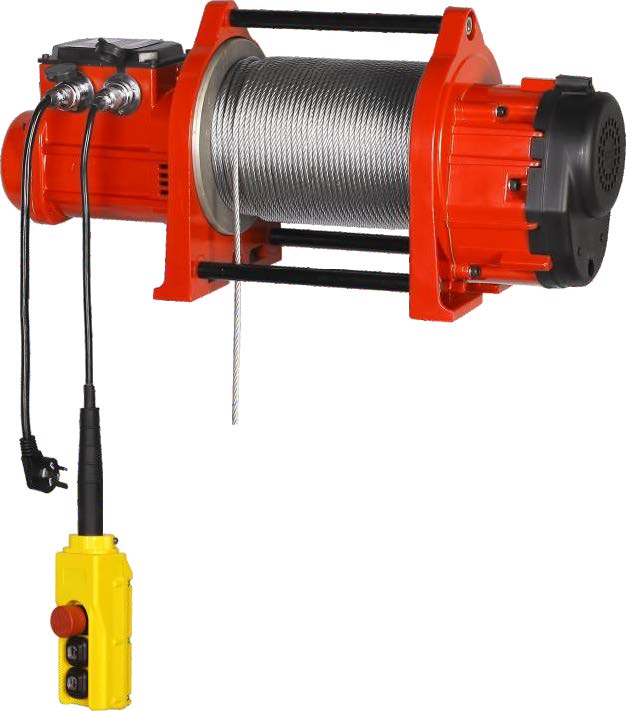
Other common motor failure causes include:
- Worn carbon brushes in brushed DC motors — brushes typically need replacement every 200–400 hours of use depending on application
- Moisture ingress into the motor housing, causing short circuits or corrosion of internal components
- Inadequate voltage supply — a motor rated for 12V DC running on a supply that drops to 10V under load will draw higher current and heat excessively
- Bearing failure causing the armature to drag or seize
Corrective Actions
Inspect brushes and replace them before they wear below the minimum specified length. Ensure the winch is never operated beyond its rated load for more than the duty cycle specified in the manufacturer's manual. Always allow adequate cooling time between pulls. Check supply voltage under load and ensure cable sizing is appropriate for the current draw at the winch's rated capacity. Seal the motor housing against moisture if operating in wet or marine environments.
Solenoid and Contactor Faults: When the Winch is Dead or Sluggish
The solenoid (or contactor pack in larger winches) is the electromechanical switch that routes high current from the battery or power supply to the motor based on low-current signals from the control switch. Solenoid faults are among the most frequently diagnosed issues in electric winch systems, particularly in winches that see regular heavy-duty use.
Symptoms
- The winch is completely unresponsive even when the battery is fully charged
- An audible click when the control switch is pressed, but no motor movement
- The winch operates in one direction only (one solenoid has failed in a dual-solenoid system)
- Intermittent operation — the winch works sometimes but not consistently
- Visible arcing or burn marks on solenoid contacts
Root Causes and Diagnosis
Solenoid contacts erode over time from the repeated arcing that occurs each time the high-current circuit is switched. In a heavily used winch, a solenoid pack may need replacement after 500–1,000 operating cycles. Moisture and corrosion accelerate contact degradation significantly, particularly in outdoor or off-road applications. A voltage drop test across the solenoid contacts can identify high resistance caused by pitting or oxidation — a reading above 0.1V under load indicates contact wear requiring attention.
A solenoid that clicks but does not engage the motor may have a failed main contact while its coil circuit is still functional — the click comes from the coil engaging, but the pitted contact surface cannot pass sufficient current to start the motor. In this case, the solenoid must be replaced rather than serviced.
Wire Rope and Synthetic Rope Damage: Visible Failures With Serious Safety Implications
The rope or cable on an electric winch is a critical load-bearing component, and its condition directly determines the safety of every lift or pull. Rope failure under load can be catastrophic — a suddenly released line carries lethal stored energy. Regular inspection is non-negotiable.
Steel Wire Rope Failures
Steel wire rope degrades through several mechanisms:
- Wire breakage — individual wires snap due to fatigue from repeated bending over the drum. Industry standards typically require rope retirement when broken wires exceed 6 per lay length in any one strand or 3 in any one strand over one rope diameter
- Kinking — permanent deformation caused by the rope looping back on itself under tension; a kinked rope must be replaced as its tensile strength is permanently compromised at the kink point
- Corrosion — surface rusting and internal corrosion that is often invisible until the rope breaks; particularly common in coastal and marine environments
- Flattening or crushing — caused by improper multi-layer spooling where upper layers bite into lower ones under load
- Bird-caging — the outer strands spring outward away from the core, usually caused by sudden shock loading or torsion
Synthetic Rope Failures
Synthetic fiber ropes (UHMWPE / Dyneema-type) have become common on modern electric winches due to their lighter weight and safer failure mode. Their failure patterns differ from steel:
- UV degradation — prolonged sunlight exposure weakens fiber tensile strength; synthetic ropes should be inspected for fading, powdering, or surface fiber breakdown
- Abrasion cuts — sharp rocks, metal edges, or rough surfaces can cut through fibers, especially at ground contact points during recovery operations
- Melting from heat — high-speed spooling or friction against the drum under heavy loads can generate sufficient heat to melt synthetic fibers locally
- Chemical contamination — exposure to fuels, solvents, or acids can degrade fiber strength without obvious visual indication
Regardless of rope type, always spool the rope under tension, never allow fewer than five wraps to remain on the drum as a minimum anchor, and inspect the full rope length at regular intervals — not just the first few meters that come off the drum during normal use.
Brake System Failure: Loads That Slip or Cannot Be Held
Electric winches use an automatic load-holding brake — typically a cone brake, disc brake, or mechanical ratchet — to hold the load stationary when the motor is not powered. Brake failure is a critical safety issue that can result in an uncontrolled load descent or sudden rope payout, with severe consequences for personnel and equipment below the load path.
Symptoms of Brake Failure
- The load slowly slides or drops after the control switch is released
- The winch cannot hold the rated load at a standstill
- Slipping sounds from the brake mechanism under load
- Excessive free movement in the drum when manually released into freespool
Root Causes
Brake failure most commonly results from worn brake pad or friction surface material that has reduced below the minimum thickness required to generate adequate holding force. Contamination of brake surfaces with oil, grease, or hydraulic fluid dramatically reduces friction coefficient — even a thin film of lubricant can reduce brake holding capacity by 50% or more. Moisture ingress followed by corrosion can cause brake components to seize in the disengaged position, preventing the brake from applying at all.
In automatic brake systems, the brake is designed to apply whenever the motor is de-energized. If the motor windings develop a residual magnetic field due to a wiring fault, the brake may remain partially released even when the motor is stopped — a condition that manifests as gradual load creep.
Corrective Actions
Never apply lubricants to brake friction surfaces. Inspect brake pad thickness during every scheduled maintenance interval. If brake slippage is observed during operation, remove the load immediately and do not resume until the brake system has been inspected and serviced. Replace worn friction materials before they reach the wear limit — brake failure under load is far more costly than a scheduled pad replacement.
Gear Train and Drum Problems: Grinding, Stuttering, and Seizure
The gear train in an electric winch — typically a planetary gear reduction system — multiplies the motor's torque to produce the high pulling force required for heavy loads. The drum is the spool on which the rope is wound. Both components are subject to wear and failure, and problems in either will manifest as abnormal noise, reduced pulling force, or complete seizure.
Planetary Gear Failures
- Lubrication loss — the single most common cause of premature gear wear; gear grease degrades over time and must be replaced at the intervals specified by the manufacturer, typically every 12 months or after extended heavy use
- Gear tooth wear — progressive wear on tooth surfaces that increases backlash and reduces efficiency; manifests as increased noise and vibration during operation
- Gear seizure — caused by contamination of gear lubricant with water or abrasive particles, leading to accelerated wear and eventual locking; the winch will suddenly stop pulling and may produce a grinding or cracking sound
- Shock load damage — sudden jerking loads (such as dynamic shock loading during vehicle recovery) can fracture gear teeth, particularly in lighter-duty winch designs
Drum Problems
- Drum flange cracking — caused by repeated shock loading or operation with insufficient rope wraps remaining; the drum flanges bear significant lateral stress from multi-layer rope spooling
- Rope anchor failure — the point where the rope attaches inside the drum can fail if the drum is operated with fewer than the minimum required wraps, transferring full load tension to the anchor rather than distributing it across the rope layers
- Drum bearing wear — worn drum bearings cause the drum to run off-center, leading to uneven rope layering and increased friction
Grease the gear train with the correct specification lubricant at regular intervals. Avoid shock loading by applying winch tension gradually. Never operate the winch with fewer than five turns of rope on the drum.
Overheating: Thermal Limits That Most Operators Underestimate
Overheating is one of the most misunderstood failure modes in electric winches because it is fundamentally a system-level issue, not a component defect. Most electric winches are rated for intermittent duty only — a fact that is frequently overlooked in demanding applications.
A typical intermittent duty cycle for a 12V DC electric winch at rated load might be:
- 60–90 seconds of pulling at rated capacity, followed by a minimum 15–20 minute cooling period
- Longer cooling periods required after multiple successive pulls
- Significantly longer duty cycles permitted at partial loads (e.g., 50% of rated load allows approximately 3–4 times longer continuous operation)
When the thermal limit is exceeded, the motor's internal thermal cutout (if fitted) will trip, interrupting power to the motor and preventing it from restarting until it cools. If no thermal protection is present, the motor windings may overheat to the point of insulation breakdown and permanent failure.
Additional Overheating Causes
- Blocked motor ventilation ports — dirt, mud, or debris accumulation preventing airflow through the motor housing
- High ambient temperatures — operating in hot climates or direct sun reduces the motor's ability to shed heat, effectively shortening the permissible duty cycle
- Solenoid overheating — caused by repeated rapid switching cycles or sustained current flow due to a stuck contact
- Cable resistance heating — undersized power cables generate heat proportional to the square of the current, adding thermal stress to the whole system
Always observe the duty cycle ratings in the operator's manual. In applications requiring sustained heavy duty, specify a winch designed for continuous or high duty cycle operation rather than adapting a standard intermittent-duty unit.
Wiring, Switch, and Electrical Connection Faults
Electrical faults in the wiring, connections, and control switches are among the most frustrating electric winch problems because their symptoms — intermittent operation, total failure, or erratic behavior — are often difficult to diagnose without systematic testing. Poor electrical connections are a root cause of winch failure that is frequently overlooked in favor of more obvious mechanical suspects.
Battery Cable and Power Supply Issues
Electric winches draw very high current — a 4,500 kg capacity 12V winch may draw 400–500 amperes at stall load. Any resistance in the power supply path causes a significant voltage drop. A connection resistance of just 0.01 ohm in a 400A circuit generates a 4V drop, reducing the motor's available voltage from 12V to 8V and cutting available power by more than 55%. Common resistance sources include:
- Undersized power cables — cables sized for lower current applications generate excess resistance and heat
- Corroded battery terminals or cable lugs — even visible surface oxidation significantly increases contact resistance
- Loose connections at the solenoid, motor terminals, or ground points
- An inadequate ground path — a common and overlooked source of voltage drop in vehicle-mounted winch installations
Control Switch and Remote Control Failures
The control switch or remote handset operates at low voltage and current, but its circuits can fail through moisture ingress, physical damage, or contact wear. A failed switch typically manifests as no response in one or both directions. Wireless remote controls introduce additional failure points including battery depletion, receiver antenna damage, and radio frequency interference. Always carry a wired backup control lead for critical applications.
Diagnosis Approach
Use a multimeter to perform a voltage drop test across each connection point in the circuit under load. Any reading above 0.1–0.2V across a single connection indicates excessive resistance requiring cleaning or replacement. Work systematically from the battery through the solenoid to the motor, testing each segment separately.
Freespool and Clutch Mechanism Failures
The freespool (or clutch) mechanism on an electric winch allows the drum to rotate freely without motor resistance, enabling the rope to be pulled out by hand when rigging or repositioning. Freespool failures prevent this function and can make rope handling in the field significantly more difficult.
Common Freespool Problems
- Clutch won't disengage — the drum cannot be pulled freely even when the freespool lever is released; caused by dirt, corrosion, or a deformed clutch collar binding on its shaft
- Clutch won't re-engage — after freespooling, the mechanism fails to lock the drum back to the drive shaft; the motor runs but the drum does not rotate; caused by worn engagement splines or a damaged clutch fork
- Partial engagement — the clutch slips under load rather than locking fully; generates heat and wear that accelerates further damage
- Freespool handle breakage — external lever or handle damage from physical impact, particularly in off-road or industrial environments
Keep the freespool mechanism clean and lightly lubricated with a dry lubricant (avoid heavy grease that attracts dirt). Operate the freespool lever smoothly rather than forcing it — damage to the clutch collar splines often results from operating under load rather than ensuring the drum is unloaded before attempting to disengage.
Preventive Maintenance Schedule to Avoid Common Malfunctions
Most electric winch malfunctions are preventable through a disciplined maintenance program. The following schedule addresses all major failure areas and reflects best practice for winches in regular working use:
| Interval | Maintenance Task | Failure Mode Prevented |
|---|---|---|
| Before each use | Visual inspection of rope for breaks, kinks, abrasion; check power connections | Rope failure, voltage drop |
| Monthly | Clean and inspect solenoid connections; test freespool function; check brake hold | Solenoid fault, clutch failure, brake slip |
| Every 3 months | Fully unspool and inspect entire rope length; check drum flange condition | Hidden rope damage, drum failure |
| Annually | Regrease planetary gear train; inspect motor brushes; check all cable terminations | Gear seizure, motor brush failure, connection faults |
| As needed | Replace rope showing retirement criteria; replace worn brake pads; clean motor vents | Rope failure, brake failure, overheating |
Always use the lubricants, replacement components, and service procedures specified in the winch manufacturer's documentation. Using incorrect grease specifications in a planetary gear system, or fitting non-standard replacement brushes, can create new failure modes while attempting to prevent existing ones.
Choosing a Reliable Electric Winch to Minimize Malfunction Risk
Many electric winch malfunctions originate not from incorrect use but from inadequate product quality at the point of selection. Winches built with marginal components, insufficient sealing, or poor quality control introduce failure modes that no maintenance program can fully compensate for. Selecting a winch from a reputable, experienced manufacturer is the first and most effective step in minimizing malfunction risk.
Hangzhou Giant Lift Co., Ltd. is a well-established name among China Electric Winch Manufacturers, headquartered near the renowned West Lake in Hangzhou — a city recognized for its culture of innovation, vitality, collaboration, and tolerance. With roots going back to 1999 and formal independent operation established in 2019 as Giant Lift Co., Ltd., the company has developed its product range across industrial lifting, material handling, hydraulic tools, building construction tools, and power construction tools into a business that now reaches more than 50 countries across five continents.
When evaluating any electric winch for purchase, the following specification and design criteria correlate strongly with lower malfunction frequency in service:
- Sealed motor and solenoid housings — IP-rated ingress protection prevents the moisture contamination that accelerates brush wear, contact erosion, and winding failure
- Thermal protection on the motor — an automatic thermal cutout prevents overheating-induced winding failure during heavy-duty cycles
- Full-length steel cable guides — fairleads and rope guides that distribute load evenly across the drum width, preventing rope crushing and uneven layering
- Hardened gear train components — heat-treated planetary gears with appropriate hardness ratings resist both wear and shock load fracture better than soft-metal equivalents
- Adequate safety factor rating — a winch rated at 1.5× to 2× the maximum anticipated working load provides much better resistance to stress-induced failures than one operating consistently near its rated limit
- Availability of genuine spare parts — a manufacturer with an established global service network ensures that brushes, solenoids, rope, and brake components can be sourced quickly when replacement is needed
No electric winch is immune to malfunction, but understanding the failure modes, observing the operating limits, following a consistent maintenance schedule, and selecting quality equipment from the outset will dramatically reduce the frequency and severity of the problems described in this guide. In demanding applications where winch reliability is safety-critical, the investment in quality equipment and disciplined maintenance is always justified.