English
 Español
Content
- 1 The Evolution of Modern Lifting: Small Size, Big Power
- 2 Maximizing Your Vertical Workspace
- 3 Engineering for Smooth Performance
- 4 Eliminating the "Chain Jam" Headache
- 5 Why Low Maintenance is the New Priority
- 6 Safety First: Quality Without the Premium Price Tag
- 7 Summary: Is This the Right Tool for You?
In the fast-paced world of industrial maintenance and construction, project managers and DIY enthusiasts alike are constantly asking the same question: How can I get reliable lifting power without breaking the bank or taking up too much space?
While heavy-duty motorized cranes have their place, the real challenge often lies in smaller workshops, tight garage spaces, or temporary job sites where portability and cost-effectiveness are the top priorities. The market has recently seen a surge in interest toward manual lifting tools that bridge the gap between "affordable" and "industrial-grade."
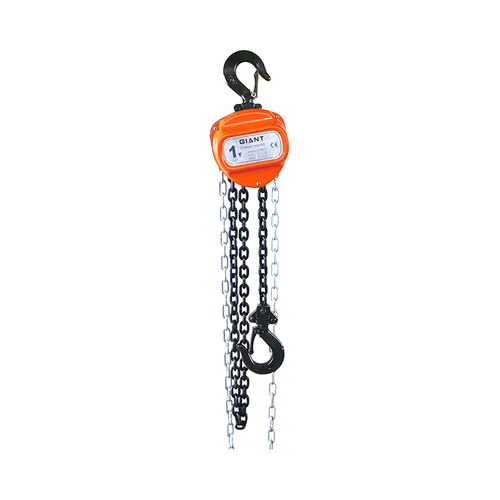
One such solution gaining traction is the Compact Chain hoist , a tool designed specifically to address the modern need for efficiency in restricted environments.
The Evolution of Modern Lifting: Small Size, Big Power
For years, the heavy-duty lifting industry operated under the assumption that "bigger is better." However, as urban workspaces become more cramped and mobile service teams require tools they can carry in a standard van, the trend has shifted toward miniaturization.
The secret behind the effectiveness of this new generation of hoists lies in their internal mechanics. By utilizing a sophisticated arrangement of spur gear drives, manufacturers have managed to shrink the overall footprint of the unit. This means that even a unit small enough to be held in one hand can safely lift weights that would otherwise require several people.
Maximizing Your Vertical Workspace
One of the most common complaints in warehouses and workshops is the "low ceiling" problem. When you use a traditional, bulky hoist, the "headroom"—the distance between the top hook and the bottom hook—is often so large that you lose several feet of usable lifting height.
The latest compact designs solve this by featuring a low-headroom profile. This allows operators to lift loads much higher than standard models, making it the ideal choice for:
-
Low-ceilinged home garages.
-
Engine bays where precision is required in tight quarters.
-
Underground utility maintenance.
Engineering for Smooth Performance
A frequent frustration with manual hoists is the "jerky" movement of the chain, which can cause the load to swing dangerously. To combat this, precision engineering has been applied to the chain path itself.
The Compact Chain hoist incorporates two guide pulleys and a specialized heat-treated load pulley. What sets this apart is the use of four precision-machined chain pockets. These pockets act like a gear for the chain, ensuring that every link fits perfectly as it passes through the mechanism. This significantly reduces vibration and provides the operator with a "smooth-as-silk" feeling during both the lifting and lowering phases.
Eliminating the "Chain Jam" Headache
If you have ever used a low-quality chain block, you know the frustration of the hand chain slipping or, worse, getting jammed inside the casing. This isn't just an annoyance; it’s a safety hazard that often occurs at the worst possible moment.
New construction standards have introduced internal structures specifically designed to prevent the hand chain from blocking or sliding. By guiding the chain into the wheel at a precise angle, the design ensures that even if you are pulling the chain from a slight side angle, the hoist continues to function without interruption.
Why Low Maintenance is the New Priority
In today's economy, the initial purchase price is only one part of the equation. Business owners are looking at the "total cost of ownership." Heavy machinery often requires expensive monthly inspections and specialized lubricants.
Because the compact manual hoist relies on high-quality spur gears and heat-treated components, the wear and tear are remarkably low. The simplicity of the design means there are fewer electrical components to fail, making it a "buy once, use for years" type of tool. For those looking for a high ROI (Return on Investment), the combination of a low entry price and minimal upkeep makes it a clear winner.
Safety First: Quality Without the Premium Price Tag
A common misconception is that "low price" equals "low quality." However, the democratization of manufacturing technology has allowed for high-safety standards to be applied to entry-level tools.
These compact units are built with:
-
High-strength steel casings to protect internal gears from impact.
-
Reinforced hooks that are designed to bend slowly rather than snap in an overload situation.
-
Heat-treated load chains that maintain integrity under constant tension.
Summary: Is This the Right Tool for You?
If you are looking for a way to optimize your workspace, improve the safety of your heavy lifts, and keep your equipment budget under control, the compact manual hoist is the answer. It proves that you don't need a massive budget or a massive machine to do professional-grade work.
The Compact Chain hoist stands as a testament to how smart design—focused on spur gear efficiency and precision machining—can make heavy lifting accessible to everyone, from the professional contractor to the weekend hobbyist.