English
 Español
Content
In the fast-paced world of construction, manufacturing, and logistics, efficiency is the name of the game. Recently, a specific question has been circulating among project managers and safety officers: "Is there a lifting solution that combines heavy-duty power with total operational flexibility?"
The industry seems to have found its answer. A new standard in lifting technology has emerged, addressing the common frustrations of traditional manual hoists. By focusing on 360-degree maneuverability and rigorous safety certifications, the Mini Chain Hoist is changing how teams handle heavy loads in tight spaces.
Breaking the 360-Degree Barrier
The most significant limitation of traditional chain hoists has always been the angle of operation. Typically, an operator must stand directly under or very close to the hoist to pull the hand chain effectively. This often puts the worker in a "red zone" or makes lifting impossible in cramped quarters.
The latest design solves this by allowing 360-degree operation. Whether you are standing to the side, above, or below the hoist, the chain drive responds smoothly. This flexibility ensures that the operator can always maintain a safe distance from the load, regardless of the physical constraints of the job site.
Engineered for Instant Integration
Time is money on a job site, and the downtime required to swap out equipment can stall a project. One of the standout features of this new generation of hoists is the specialized top hook design.
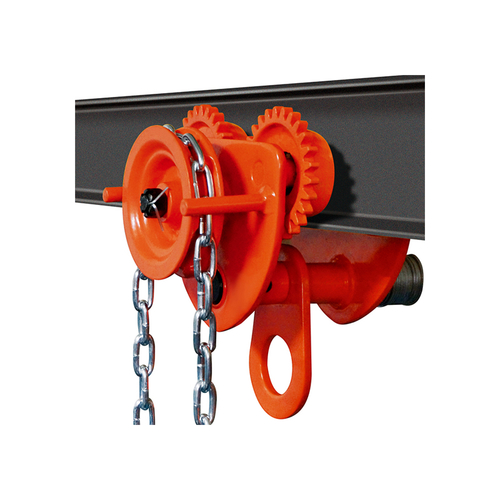
Unlike standard hooks that require complex disassembly to remove, these hooks are designed to "back out" easily. This isn't just about maintenance; it allows the hoist to be installed with a trolley directly without the need for additional adapters or lengthy setup times. For facilities that frequently switch between stationary lifting and moving loads along a rail, this feature is a significant productivity booster.
Unmatched Versatility: From Half a Ton to Fifty
A common misconception is that "mini" hoists are only for light-duty tasks. The current range of these hoists proves otherwise. While the standard capacity starts at a portable 0.5 tons, the engineering scales up significantly.
-
Standard Range: 0.5T to 20T for everyday industrial use.
-
Heavy Duty Options: Custom configurations for 30T and even 50T requirements.
This means a facility can standardize its equipment brand across all departments, using a small, lightweight unit for a machine shop and a heavy-duty version for a shipyard, all while maintaining the same operational logic and safety protocols.
Safety First: The Double-Pawl Advantage
Lifting several tons overhead is a high-stakes task. To mitigate risk, the modern manual hoist utilizes an Automatic Double Pawl System. This serves as a redundant safety brake; if one pawl fails to engage, the second acts as an immediate backup to prevent the load from slipping.
To ensure the chain moves smoothly and never jams—which is a leading cause of manual hoist accidents—the system includes double guide rollers. These keep the load chain perfectly aligned, even during rapid lifting or lowering.
Rigorous Testing and Global Standards
You shouldn't have to take a manufacturer's word for it when it comes to safety. The gold standard for modern lifting equipment is a 4:1 Safety Coefficient. This means the hoist is engineered to handle four times its rated capacity before structural failure occurs. Furthermore, every unit undergoes a 150% Test Load before leaving the factory.
Because the global supply chain moves fast, these hoists are built to comply with international regulations, including:
-
EN13157 (Europe): Ensuring strict quality control and material integrity.
-
ASME B30.16 (USA): Meeting the high demands of American industrial safety.
-
AS1418.2 (Australia): Complying with some of the strictest mining and construction standards in the world.
Robust Hooks and Rotation
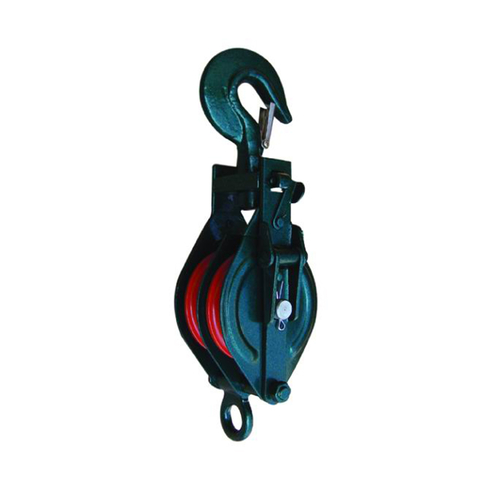
The point of contact is often the point of failure, but not in this case. The hooks are fitted with robust safety latches that stay locked under pressure, preventing accidental detachment. Additionally, the hooks themselves rotate 360 degrees, allowing the operator to position the load precisely without twisting the chain—a small detail that prevents long-term wear and tear on the equipment.
Conclusion: A Smarter Way to Lift
The shift toward more flexible, safety-conscious manual lifting tools is a clear response to the demands of modern industry. By removing the limitations of the pulling angle and ensuring the equipment meets every major global safety standard, the Mini Chain Hoist has transitioned from a niche tool to a site essential.
Whether you are working in a tight maintenance crawlspace or a massive manufacturing floor, the ability to lift safely from any angle is no longer a luxury—it’s a necessity.
.jpg?imageView2/2/w/500/h/500/format/jpg/q/100)