English
 Español
Content
- 1 What a Bulk Bag Lifter Is and Which Type Fits Your Bag
- 2 Start With the Lifting Machine, Not the Attachment
- 3 Specifications That Decide a Safe Match
- 4 Loop Layout, Bag Design and Headroom
- 5 Safety, Marking and Inspection Points to Confirm
- 6 Common Buying Mistakes in Bulk Bag Lifter Procurement
- 7 Sourcing the Lifter With the Rest of the Handling Equipment
A 1,000 kg flexible intermediate bulk container, or FIBC, sits on a loading dock, four corner loops gathered around a steel frame hanging from a crane hook. The lift takes under a minute. Whether that minute is routine or dangerous depends almost entirely on the bulk bag lifter.
The short answer first: a bulk bag lifter is a rigid load attachment, not a sling. Choose it by matching three numbers before anything else, the weight of the filled bag, the distance between the loops, and the capacity and headroom of the machine that will raise it.
Get the match right and one operator moves a tonne of powder or granules in a single lift, with the bag held square and all four loops sharing the load. Get it wrong and the failure is usually slow rather than dramatic: stretched loops, a bent arm, a bag swinging into racking, or a frame that cannot be lowered far enough to release the loops at the end of the lift.
What a Bulk Bag Lifter Is and Which Type Fits Your Bag
A bulk bag lifter, also called a big bag lifter or FIBC lifter, engages the loops of a bulk bag and transfers the load to a hook or to forklift tines. Because the frame geometry is fixed, the loops sit at a known spacing and the load is shared predictably, which is the main difference from using four separate slings.
Most units fall into four groups:
- Crane hung four arm lifter. A central plate with four arms and hooks under a single eye, commonly rated from 500 kg to 2,000 kg. The standard choice where an overhead crane or gantry already exists.
- Cross beam with bag hooks. Lighter and cheaper, but the hooks sit at a fixed span, so the bag loop centres must match the beam. Good for one repeat bag size, awkward for mixed stock.
- Forklift mounted lifter. A frame with tine pockets and a forward hook or arms reaching past the tines. No crane needed, but it consumes mast height and reduces rated capacity at the load centre.
- Two loop and single loop adapters. For bags with fewer lifting points, where a four arm frame would leave arms unused and the load unbalanced.
A standard four loop FIBC from 90 x 90 x 110 cm to 105 x 105 x 120 cm suits a four arm frame. A two loop bag, or one with a duffel top and a discharge spout, needs a different shape and more clearance underneath.
Start With the Lifting Machine, Not the Attachment
Buyers often compare lifters on capacity and price, then find the frame will not work with the machine on site. Two measurements cause most of these problems: the height of the lifting point above the floor, and the hook or tine interface at the top of the frame.
Where there is no overhead crane, a movable gantry crane is the usual answer, giving a temporary lifting point in a yard, a workshop bay or a container unloading area. What matters for bulk bag work is beam height at the required span, because a filled bag of 1.2 m, a frame of 0.7 m and a hook block can easily need 2.5 m of clear lift.
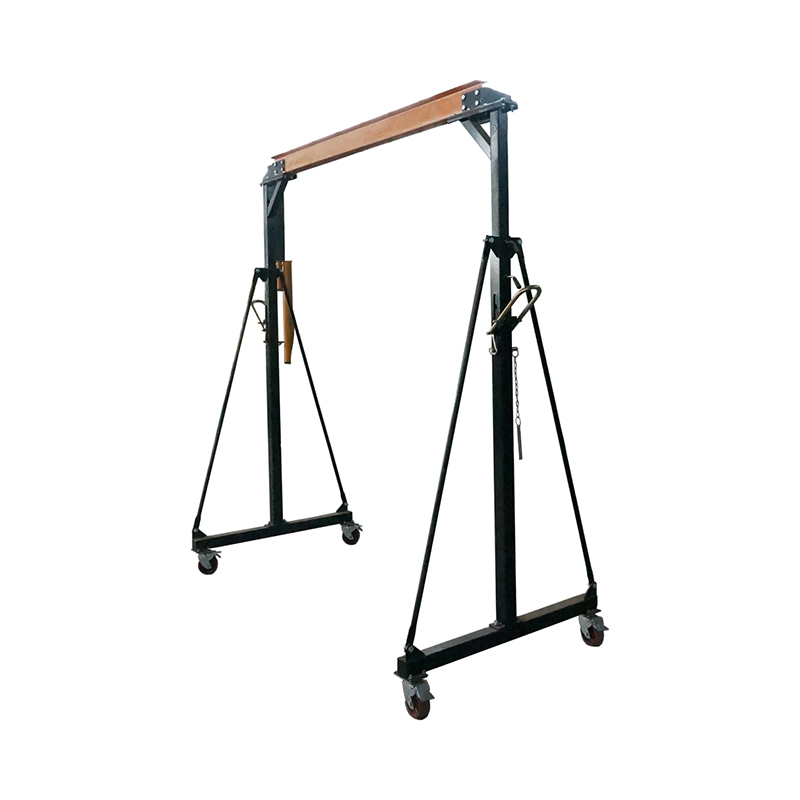 Movable Gantry Crane for Portable LiftingA portable gantry crane with adjustable height and 1000 kg or 2000 kg capacity, useful where no overhead crane exists and clear lift matters.View Product →
On an existing runway or jib, the hoist is usually the limiting factor rather than the structure. A compact electric chain hoist with a low headroom design can recover 200 mm to 400 mm of lifting height compared with a bulkier trolley hoist, which is often the difference between clearing a rack beam and not.
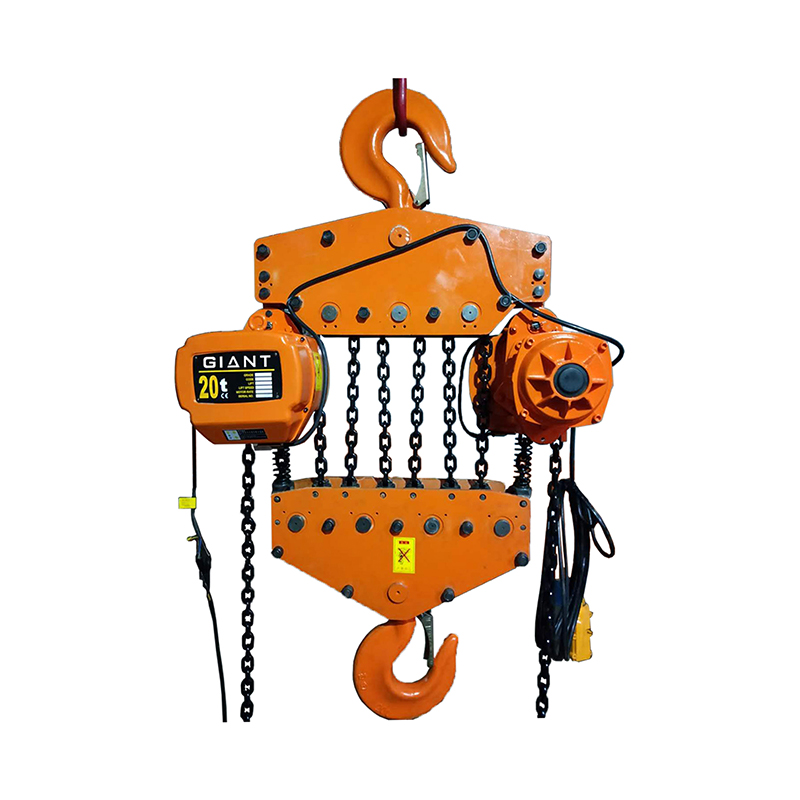 HHBD Classic Electric Chain Hoist for Industrial LiftingFor existing runway or jib lifting, this HHBD electric chain hoist features an aluminum alloy shell, limit switch, and side magnetic braking.View Product →
Hook, tine and boom checks
Check the hook opening against the eye on top of the lifter. A 45 mm eye is common, and a hook with a large spring latch may not seat properly inside it. On forklift mounted units, confirm the tine pockets accept your fork width and spread, and check the load centre, because a bag hanging 1 m forward of the mast can cut rated capacity well below the figure on the plate. In a workshop with a low ceiling, a shop crane with a folding or fixed boom handles smaller 500 kg to 1,000 kg bags where a full gantry will not fit, though the boom angle changes the rated capacity, so read the plate at the position actually used.
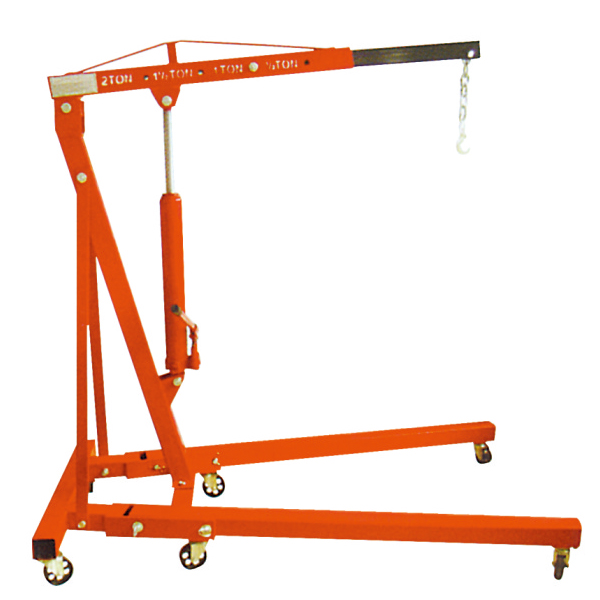 Standard Shop Crane-TL Folding Hydraulic CraneA folding hydraulic shop crane in 1-2 ton models with a four-position boom, useful in low-ceiling workshops for smaller bag lifting needs.View Product →
Specifications That Decide a Safe Match
Six numbers decide whether a lifter suits a given bag and machine. They are worth writing into a request for quotation rather than leaving the supplier to guess.
| Parameter | Why it matters | Values to check |
|---|---|---|
| Rated capacity, SWL | Must cover the heaviest filled bag plus product clinging to the bag wall | 500 kg, 1,000 kg, 1,500 kg, 2,000 kg |
| Design safety factor | Shows the margin built into arms, pins and hooks | 4:1 common, higher on some export models |
| Loop centres and arm span | Arms that do not align with the loops load one or two loops harder than the rest | 800 mm to 1,200 mm across |
| Closed height | Sets how much headroom the frame removes from the lift | 500 mm to 900 mm for four arm frames |
| Top eye opening | The frame must seat cleanly on the crane hook | 40 mm to 60 mm typical throat |
| Self weight | Reduces usable capacity on small cranes and forklift trucks | 40 kg to 120 kg |
| Fork pocket and load centre | Critical, but only on forklift mounted units | Fork width and spread 500 mm to 1,000 mm |
Loop Layout, Bag Design and Headroom
Four loop bags usually have loops sewn into the top corners, 250 mm to 400 mm long. Two loop bags place the load on two opposite sides, and single loop designs concentrate everything on one point. A lifter built for four loop bags will physically fit a two loop bag and still be unsafe, because the load path is nothing like the one the frame was designed for.
Filled height also differs from nominal height. A bag rated 1,100 mm tall can stand 1,250 mm or more once filled and bulging, and an under filled bag sags so the loops pull inward. Use the filled height, not the catalogue height, when checking headroom.
Bags with a discharge spout need a clear gap under the frame to untie and re tie the spout, typically 150 mm to 200 mm. If the bag must travel over a mixer or hopper lip, confirm the whole assembly, bag, frame and hook block, clears it at the highest point of travel.
Safety, Marking and Inspection Points to Confirm
A bulk bag lifter is lifting equipment and should be treated as such from the day it arrives. These are the checks worth building into the purchasing and operating routine.
- Marking and documentation. A legible plate with rated capacity, a unique identifier, the manufacturer and the date, plus the test certificate and, where the market requires it, a proof load certificate.
- Regional conformity. Non fixed load lifting attachments are covered by rules such as EN 13155 in Europe and equivalent national schemes elsewhere. Ask how the attachment will be marked for the target market before ordering.
- Inspection interval. Most regimes require a pre use visual check plus a periodic thorough examination, commonly every 6 or 12 months depending on jurisdiction and intensity of use. Start the register at commissioning.
- Load control. Nobody under a suspended bag, use a tagline rather than hands to steady it, and never travel with the bag resting on the arms.
- Electrostatics and worn loops. Type C and Type D bags are used for flammable dusts and need correct earthing during filling and emptying. Reject bags with cut or frayed loops, and check lifter hooks for burrs that abrade webbing.
Keep outdoor lifts out of gusty weather. A suspended bag has a large sail area and behaves like one.
Common Buying Mistakes in Bulk Bag Lifter Procurement
- Ordering by capacity alone. A 2,000 kg frame with a 1,100 mm arm span does not fit a bag with 900 mm loop centres, whatever the plate says.
- Forgetting the hook. A small eye that cannot take the hook already on site forces an extra shackle, which changes both headroom and rated capacity.
- Ignoring the forklift. Pockets that do not match tine width, or a load centre further forward than the truck chart allows, turn a safe lift into an overloaded one.
- Underestimating documentation. Importers often need test reports, marking in the local language and packing that satisfies customs and safety regulators.
- Treating the lifter as a consumable. Without a register and an inspection interval, wear on pins and hooks goes unnoticed until a loop slips off mid lift.
Sourcing the Lifter With the Rest of the Handling Equipment
Bulk bag handling rarely stops at one attachment. A distributor or plant usually needs the lifter together with the hoist that lifts it, the crane or gantry that carries the hoist, and the shackles, hooks and load cells that complete the lift. Buying them as one package removes the interface problems that cause most failures on site.
Hangzhou Giant Lift Co., Ltd., trading as Giant Lift, supplies lifting and material handling products from Hangzhou, China, and states that its products reach more than 50 countries. The company describes itself as a one stop supplier with in house product development and quality inspection departments, and says it can review products against local market standards and provide professional testing services. For an importer, that means the lifter, the hoist and the rigging hardware arrive as one consistent package instead of three shipments that do not quite fit together.
To see how these attachments sit alongside pallet trucks, stackers, lift tables and platform equipment, the material handling range gathers the main categories in one place. Buyers still working out what a job actually needs can use a practical guide on choosing material handling equipment by job requirement to separate a real requirement from a nice to have feature.
One practical point to finish on. Order the lifter with the bag specification in hand, not after the bags arrive. Loop centres, loop length, filled height and discharge clearance are cheap to match at quotation stage and expensive to work around on site. When the frame, the bag and the lifting machine are specified as one system, bulk bag handling becomes what it should be: a quick, predictable lift that any trained operator can repeat all day.